In a stunning political development that has captured global attention, the U.S. Congress has officially launched impeachment proceedings against President Donald Trump, marking one of the most consequential constitutional actions in recent American history.
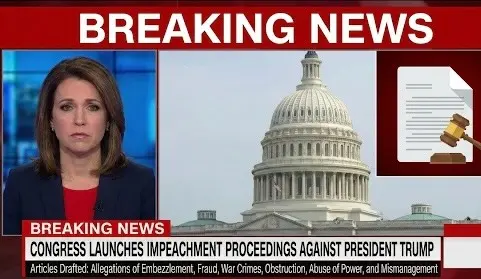
This article provides a comprehensive look at the unfolding impeachment move, the nature of the allegations, congressional strategy, political reactions, and what this means for the future of American governance — all structured for strong SEO performance around key terms like Trump impeachment, U.S.
Congress impeachment proceedings, abuse of power, obstruction of justice, war crimes allegations, and taxpayer funds mismanagement.
What Happened? Congressional Impeachment Proceedings Announced
In a historic session of the House of Representatives, lawmakers voted to begin formal impeachment proceedings against President Donald Trump. The move came after mounting pressure from members across both political parties who cited a series of alleged misconducts and constitutional violations.
Among the charges being detailed in draft articles of impeachment are:
Embezzlement and Financial Misconduct — Allegations that the President and certain cabinet members used government resources for personal gain.
Fraud — Claims that administration officials engaged in fraudulent reporting and misleading disclosures to federal agencies and the public.
War Crimes — Allegations tied to military operations and decisions in conflict zones that some lawmakers believe violated international law.
Obstruction of Justice — Accusations that efforts were made to impede federal investigations.
Abuse of Power — Broad claims that executive authority was misused for political advantage.
Mismanagement of Taxpayer Funds — Charges asserting wasteful or improper federal spending that harmed the public interest.
These draft articles represent some of the broadest and most serious allegations ever brought against a sitting U.S. president — expanding well beyond the traditional scope of impeachment inquiries previously seen in U.S. history.
Historical Context: Impeachment in the United States
To understand the gravity of the current proceedings, it’s essential to consider the precedent. Donald Trump has faced impeachment before.
In December 2019, the House of Representatives impeached President Trump on charges of abuse of power and obstruction of Congress in relation to interactions with Ukraine — a case grounded in concerns about pressure on Ukrainian authorities for political advantage. The Senate ultimately acquitted him in February 2020.
Despite past impeachment history, the current articles reportedly go further in scope, touching on financial misconduct and international law concerns that reflect new lines of inquiry.
Key Allegations Explained 1. Embezzlement and Financial Misconduct
Lawmakers drafting the impeachment articles argue that there is compelling evidence of misuse of government funds, including questions about contracts awarded to businesses linked to political allies. These allegations, if substantiated, could constitute a breach of public trust and violation of federal law.
2. Fraud
The articles accuse members of the administration of engaging in fraudulent activities — including misleading financial disclosures and misrepresentation of federal spending reports. Such actions, they contend, undermine the integrity of government operations.
3. War Crimes Allegations
Perhaps the most controversial aspect of the proceedings is the claim that decisions made related to U.S. military engagement overseas amount to war crimes. While international experts debate the legal definitions, some members of Congress argue specific actions violated the Geneva Conventions or U.S. commitments under international treaties.
4. Obstruction of Justice
Congress claims that steps were taken to hinder investigations by federal agencies. Obstruction of justice has long been a contentious topic in U.S. politics and has featured in prior impeachment inquiries.
5. Abuse of Power
Abuse of power remains a central impeachment charge. The U.S. Constitution allows impeachment for “Treason, Bribery, or other high Crimes and Misdemeanors” — a category that historically includes misuse of office for personal or political benefit.
6. Mismanagement of Taxpayer Funds
Critics argue that various spending decisions reflect inefficient or wasteful use of public funds, harming federal budgets and ignoring fiscal accountability.
Political Reactions: Deep Divisions
Supporters of Impeachment: Democratic lawmakers and some moderate Republicans supporting the impeachment process argue that no one should be above the law — including the President. They point to evidence gathered through committee investigations and believe the charges warrant a Senate trial.
Opposition and Criticism: Many Republicans have decried the impeachment move as politically motivated, arguing that it distracts from pressing national issues like economic policy and international tensions. Some label the broad scope of allegations as an attempt to score political points rather than uphold constitutional standards.
Public opinion remains deeply divided, reflecting broader polarization in U.S. politics.
What Happens Next?
Once the House of Representatives approves articles of impeachment, the process moves to the Senate, where a trial is conducted. Conviction and removal from office require a two-thirds majority vote in the Senate — a high threshold that historically has been difficult to meet.
If the Senate ultimately convicts, the President would be removed from office, and the Senate could additionally vote to bar him from holding future federal office.
Global Implications
The impeachment proceedings have reverberated far beyond U.S. borders. World leaders and international media are closely watching, noting the implications for:
International alliances and diplomatic relations
Global financial markets
U.S. military commitments abroad
Allies and adversaries alike are weighing how political upheaval in Washington impacts global stability and strategic partnerships.
The Broader Debate: Power, Accountability, and Democracy
At its core, impeachment raises fundamental questions about the nature of democratic governance:
What constitutes an impeachable offense?
How should separation of powers operate in practice?
Can institutional checks and balances withstand deep political division?
Constitutional scholars argue that impeachment is a vital tool for accountability — but warn it should not be undertaken lightly or for purely partisan reasons.
Conclusion: A High Stakes Moment for U.S. Politics
The launch of impeachment proceedings against President Donald Trump — with sweeping allegations encompassing embezzlement, fraud, war crimes, obstruction of justice, abuse of power, and mismanagement of taxpayer funds — represents a historic flashpoint in American governance.
Whether the process results in removal from office, political damage, or a Senate acquittal, its effects will resonate for years. It underscores the delicate balance between presidential authority and congressional oversight — and highlights the enduring importance of constitutional processes in addressing allegations of executive misconduct.
For ongoing developments, stay tuned as Congress continues its deliberations and the nation watches this pivotal chapter unfold.