President Donald Trump has reignited global economic and geopolitical tensions after announcing a sweeping new trade policy targeting nations that continue doing business with the Islamic Republic of Iran. Under the proposed measure, any country maintaining commercial ties with Iran would face a 25% tariff on all trade with the United States, a move Trump described as necessary to apply “maximum economic pressure” on Tehran.
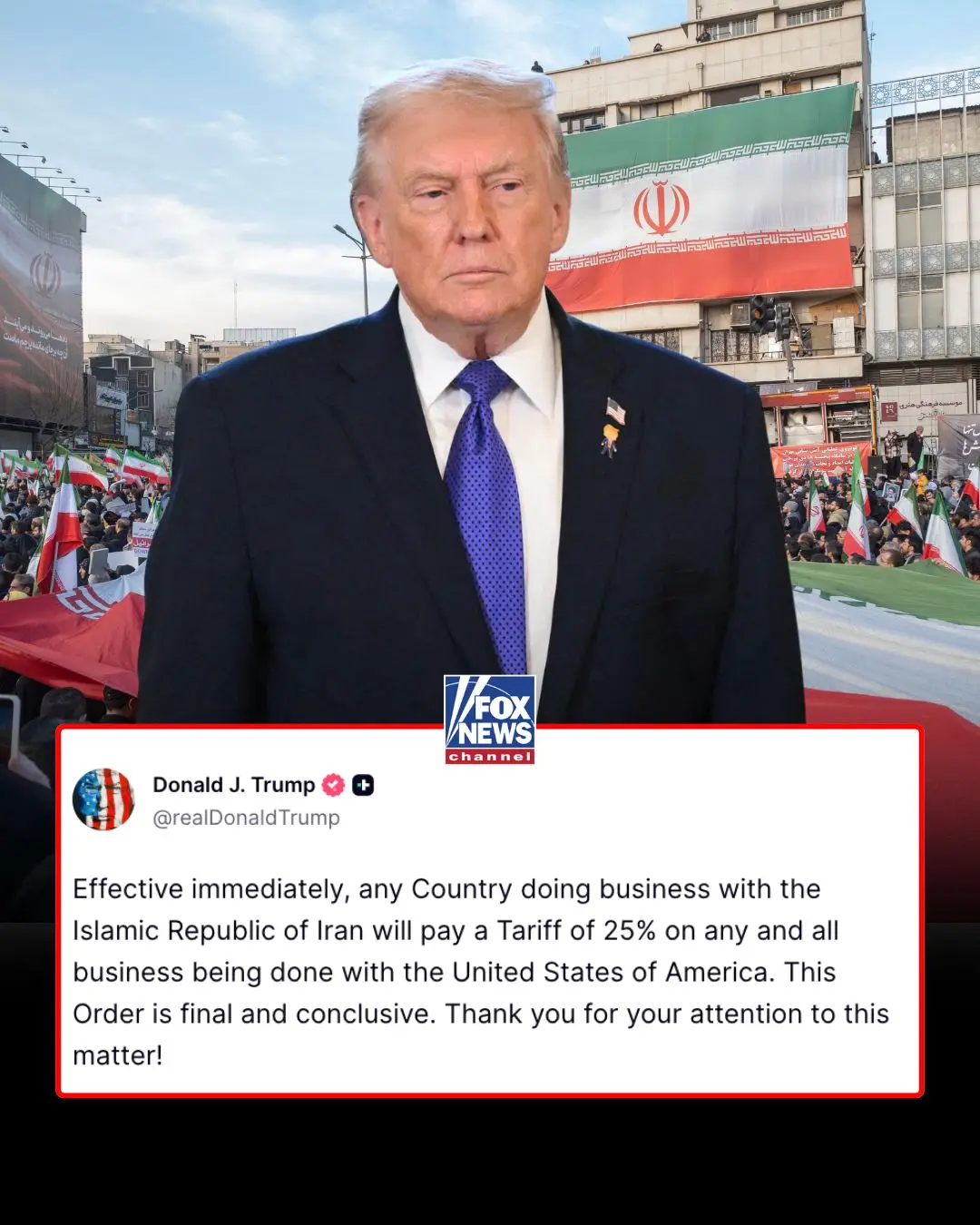
The announcement, quickly dubbed the “Ehran Tariffs” by political commentators and market analysts, represents one of the most aggressive secondary sanction-style trade threats ever issued by a U.S. president. If implemented, the policy could dramatically reshape global trade flows, strain diplomatic alliances, and escalate tensions across the Middle East and beyond.
What Are the Ehran Tariffs?
The Ehran Tariffs are designed as a blanket trade penalty rather than a targeted sanction.
Unlike traditional sanctions that focus on specific industries or individuals, Trump’s proposal would impose a 25% tariff on all goods and services traded with the United States by any country found to be conducting business with Iran.
According to Trump, the policy aims to eliminate what he called “economic lifelines” that allow Iran to fund its government, military activities, and regional influence. He emphasized that the United States would no longer tolerate indirect support for Tehran through international trade partnerships.
“This is about leverage,” Trump said in his announcement. “If you trade with Iran, you don’t trade freely with the United States.”
Why Iran Is at the Center of the Policy
Iran has long been a focal point of U.S. foreign policy, particularly during Trump’s presidency. His administration previously withdrew from the Joint Comprehensive Plan of Action (JCPOA), reimposed harsh sanctions, and pursued a strategy of economic isolation aimed at forcing Iran to renegotiate its nuclear and regional policies.
The Ehran Tariffs appear to revive and expand that approach, shifting pressure away from Iran alone and onto its global trading partners. This strategy mirrors earlier U.S. efforts to deter countries from purchasing Iranian oil, but at a far broader scale.
Which Countries Could Be Affected?
If enforced, the tariffs could impact a wide range of U.S. trading partners, including:
China, one of Iran’s largest oil buyers
India, which has historically balanced U.S. relations with Iranian energy needs
Turkey, a regional power with ongoing economic ties to Tehran
European Union member states, some of which continue limited trade under humanitarian exemptions
Even modest trade relationships with Iran could theoretically trigger the tariff, creating uncertainty for governments and multinational corporations alike.
Global Economic Implications
The economic consequences of the Ehran Tariffs could be substantial. A 25% tariff on all U.S. trade would dramatically increase costs for exporters, disrupt supply chains, and potentially spark retaliatory measures.
Impact on Global Markets
Financial markets reacted cautiously following the announcement, with analysts warning of increased volatility. Trade-sensitive industries such as manufacturing, energy, and agriculture could face higher costs and reduced competitiveness if partner nations are forced to choose between U.S. and Iranian markets.
Economists also warn that widespread tariffs could contribute to higher consumer prices in the United States, as imported goods become more expensive due to retaliatory actions or disrupted trade routes.
Strain on Alliances
U.S. allies may view the policy as an overreach of American economic power. European leaders, in particular, have previously resisted U.S. efforts to impose secondary sanctions, arguing that such measures undermine sovereignty and international trade norms.
The Ehran Tariffs could therefore deepen existing rifts between Washington and its allies, especially if exemptions are not clearly defined.
Legal and Practical Challenges
Implementing the Ehran Tariffs would not be straightforward. Legal experts note that enforcing such a sweeping measure could face challenges under World Trade Organization (WTO) rules, which restrict discriminatory trade practices.
Additionally, monitoring and verifying which countries are “doing business” with Iran would be complex. Iran’s trade networks often involve intermediaries, shell companies, and indirect transactions, making enforcement difficult without extensive international cooperation.
Supporters Say the Policy Restores U.S. Leverage
Supporters of the policy argue that the Ehran Tariffs would restore American leverage that has eroded in recent years. They contend that economic pressure is one of the few tools capable of compelling Iran to change its behavior without resorting to military action.
Proponents also claim that countries benefiting from access to the U.S. market should not simultaneously support a government viewed by Washington as destabilizing.
From this perspective, the tariffs are framed not as punishment, but as a choice: access to the world’s largest consumer economy or continued trade with Iran.
Critics Warn of Escalation and Blowback
Critics, however, warn that the policy could backfire. They argue that isolating Iran further may push it closer to rival powers, accelerate alternative trade systems, and weaken the global role of the U.S. dollar.
There are also concerns that broad tariffs could harm American exporters, provoke trade wars, and reduce U.S. influence over international economic rules.
Humanitarian organizations have additionally expressed concern that aggressive economic pressure could worsen living conditions for ordinary Iranians without significantly altering government policy.
What Happens Next?
At this stage, the Ehran Tariffs remain a policy announcement rather than an enacted regulation. Their implementation would likely require executive actions, regulatory guidance, and coordination across multiple U.S. agencies.
Key questions remain unanswered, including:
Will there be exemptions for humanitarian trade?
How will enforcement be verified?
Will allies negotiate waivers or retaliate?
How quickly could the tariffs take effect?
The answers to these questions will determine whether the Ehran Tariffs become a cornerstone of U.S. trade policy or remain a high-profile warning shot.
Conclusion
President Trump’s announcement of the Ehran Tariffs marks a dramatic escalation in the use of trade policy as a geopolitical weapon. By threatening a 25% tariff on all U.S. trade with countries doing business with Iran, the proposal forces governments and corporations worldwide to reassess their economic and diplomatic priorities.
Whether the policy ultimately reshapes global trade or sparks new conflicts, it underscores a broader trend toward aggressive, unilateral economic measures in an increasingly fragmented international system.
As markets, allies, and adversaries weigh their options, the world will be watching closely to see whether the Ehran Tariffs move from rhetoric to reality.