In a stunning new assessment of Iran’s financial stability, U.S. Treasury Secretary Scott Bessent publicly disclosed that Washington is tracking a significant surge of capital flight out of Iran by members of the country’s ruling elite — a development that some analysts interpret as evidence the regime fears economic collapse and is preparing for its own uncertain future.
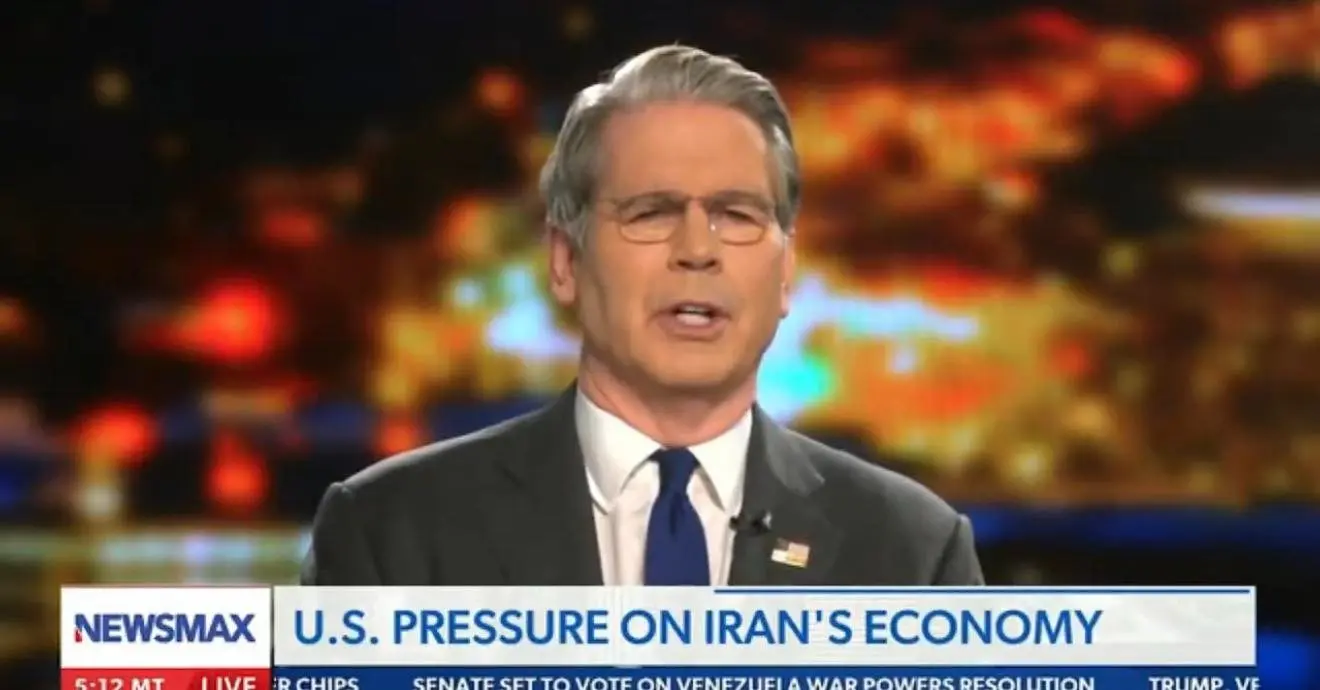
Bessent’s remarks have reverberated across global markets and geopolitical circles, as Tehran’s leadership appears increasingly desperate to secure assets abroad amid intensifying economic pressure, widespread unrest, and aggressive Western sanctions.
What Sec. Bessent Announced
Speaking in an interview on January 15, 2026, Bessent said that Iran’s ruling class is “wiring huge sums of money” out of the country, describing the phenomenon as capital flight on a massive scale. He noted that the U.S.
Treasury — which enforces sanctions and monitors suspicious financial activity — is seeing clear signs that elite figures within Iran’s political and military leadership are relocating their wealth abroad.
“As Treasury, who carries out the sanctions, what we can see is we are now seeing the rats fleeing the ship because we can see millions, tens of millions of dollars being wired out of the country, snuck out of the country by the Iranian leadership,” Bessent said.
“So they are abandoning ship, and we are seeing it come into banks and financial institutions all over the world.”
This stark language — referring to elite money movement as “rats fleeing the ship” — underscores how seriously U.S. officials view the situation.
Why This Matters: Capital Flight Signals Financial Anxiety
Capital flight occurs when wealthy individuals or political elites move their financial assets out of a country in response to perceived economic risk or instability. Such behavior can accelerate a downward economic spiral by draining liquidity and investor confidence.
In Iran’s case, several factors have contributed to a precarious economic environment:
1. Deepening Economic Crisis
Iran’s economy has struggled under years of international sanctions, particularly targeting its oil exports and financial networks. Inflation, currency depreciation, and currency restrictions have squeezed ordinary citizens and elites alike.
Merchants and traders — many of whom were historically supporters of the clerical regime — have recently turned against it, citing economic mismanagement and growing hardship.
2. Political Unrest and Widespread Protests
In late 2025 and early 2026, Iran saw escalating protests over economic conditions, high prices, and political repression. These demonstrations represent some of the most sustained opposition to the ruling clerics in years.
This unrest likely contributes to elite nervousness, as the regime’s monopoly on authority feels increasingly threatened from within.
3. Pressure from Western Sanctions
The United States and its allies have implemented a series of tight sanctions targeting Iran’s financial networks, oil exports, and even secondary “shadow banking” systems allegedly used to move money internationally.
These sanctions aren’t just economic measures — they aim to disrupt the regime’s ability to fund its security apparatus and regional proxy networks, placing greater strain on Tehran’s financial stability.
Where Is the Money Going?
Bessent’s remarks did not specify particular countries, banks, or assets receiving the outgoing funds. However, several patterns in past reporting and sanctions actions offer clues about likely destinations and methods used by Iranian elites to move or store wealth abroad:
Offshore Shell Companies and Shadow Banking Networks
Iran’s ruling elite have reportedly used “shadow banking” networks and front companies in places like the UAE and Hong Kong to send money overseas — often in ways that seek to circumvent sanctions and financial scrutiny.
These networks typically rely on intermediaries such as exchange houses, offshore entities, and complex financial webs designed to obscure origins and end points of transactions.
Cryptocurrency and Alternative Transfers
Reports have also documented how elements tied to Iran’s security forces engaged in cryptocurrency transfers to evade traditional banking restrictions, though such methods carry high risk and regulatory scrutiny.
Foreign Investments and Real Estate
Historically, some Iranian businessmen and political elites have pursued investments in real estate, luxury assets, and financial instruments abroad — often through intermediaries or shell ownership — as a hedge against domestic instability.
While this practice is not necessarily illegal in every case, it becomes politically charged when occurring at a time of domestic hardship and political upheaval.
“Abandoning Ship” — What It Might Mean
When a government’s political and economic elite begin moving wealth offshore on a large scale, it can be interpreted in several ways — not all of them benign:
1. Loss of Confidence in the Regime’s Stability
Shifts in financial behavior could signal that insiders believe the status quo cannot be maintained, prompting them to protect their wealth abroad before capital controls tighten further or currency collapses.
2. Planning for Contingencies
As protests intensify and sanctions bite, wealthy Iranians — including those connected to the regime — may be planning contingencies for themselves and their families, including potential relocation or diversified asset holdings outside of Iran.
3. Underground Financial Moves
In some cases, capital flight reflects the existence of dual economies, where funds tied to sanctioned or politically sensitive activities are moved through unofficial channels, exploiting loopholes or weak oversight.
Economic Impact on Iran’s Population
While elite capital flight attracts attention because of its political implications, the people of Iran often suffer the most from the economic conditions that drive such behavior:
Inflation and Currency Instability: Capital flight drains local currency reserves and can accelerate devaluation, leading to higher prices and reduced purchasing power for ordinary citizens.
Banking Sector Strain: As speculative pressure grows and deposits shrink, banks face greater risk, potentially leading to bank closures or state takeovers of failing institutions.
Unemployment and Business Uncertainty: Capital flight can further freeze investment and reduce job creation, worsening economic conditions for average Iranians.
International Response and Sanctions Enforcement
U.S. officials are monitoring financial flows and enforcing sanctions with the goal of restricting Iran’s ability to fund destabilizing activities, including weapons programs and support for militant proxies in the Middle East.
Treasury actions explicitly target networks tied to financial facilitators and shadow banking, aiming to choke off illicit flows of capital that support Iran’s military and geopolitical ambitions.
At the same time, Western nations have signaled that economic pressure will continue as long as Iran remains involved in regional aggression and nuclear proliferation concerns.
Conclusion: Signs of Stress in Tehran’s Elite
Sec. Bessent’s revelation that Iranian leadership is actively moving money out of Iran — described publicly as capital flight by senior U.S. officials — is a striking development that highlights the growing economic and political strain on the Islamic Republic.
Whether this financial behavior represents a tactical retreat, precautionary hedge, or deeper systemic unraveling, it underscores how sanctions, economic hardship, and domestic unrest are now intersecting in ways that could reshape Iran’s internal power dynamics.
For global markets, geopolitical analysts, and citizens watching events unfold, the message from Washington’s Treasury is clear: something significant is happening beneath the surface of Iran’s financial system — and elites are responding in real time.