The US has offered Ukraine a 15-year security guarantee, but Kyiv wants a period three times as long to deter future Russian aggression, Volodymyr Zelenskyy said on Monday
Ukraine’s long-term security has once again taken center stage as President Volodymyr Zelenskyy revealed that the United States has offered Kyiv a 15-year security guarantee, while Ukraine is seeking commitments lasting at least 45 years. Speaking on Monday, Zelenskyy emphasized that only extended and credible guarantees can effectively deter future Russian aggression and ensure lasting stability in the region.
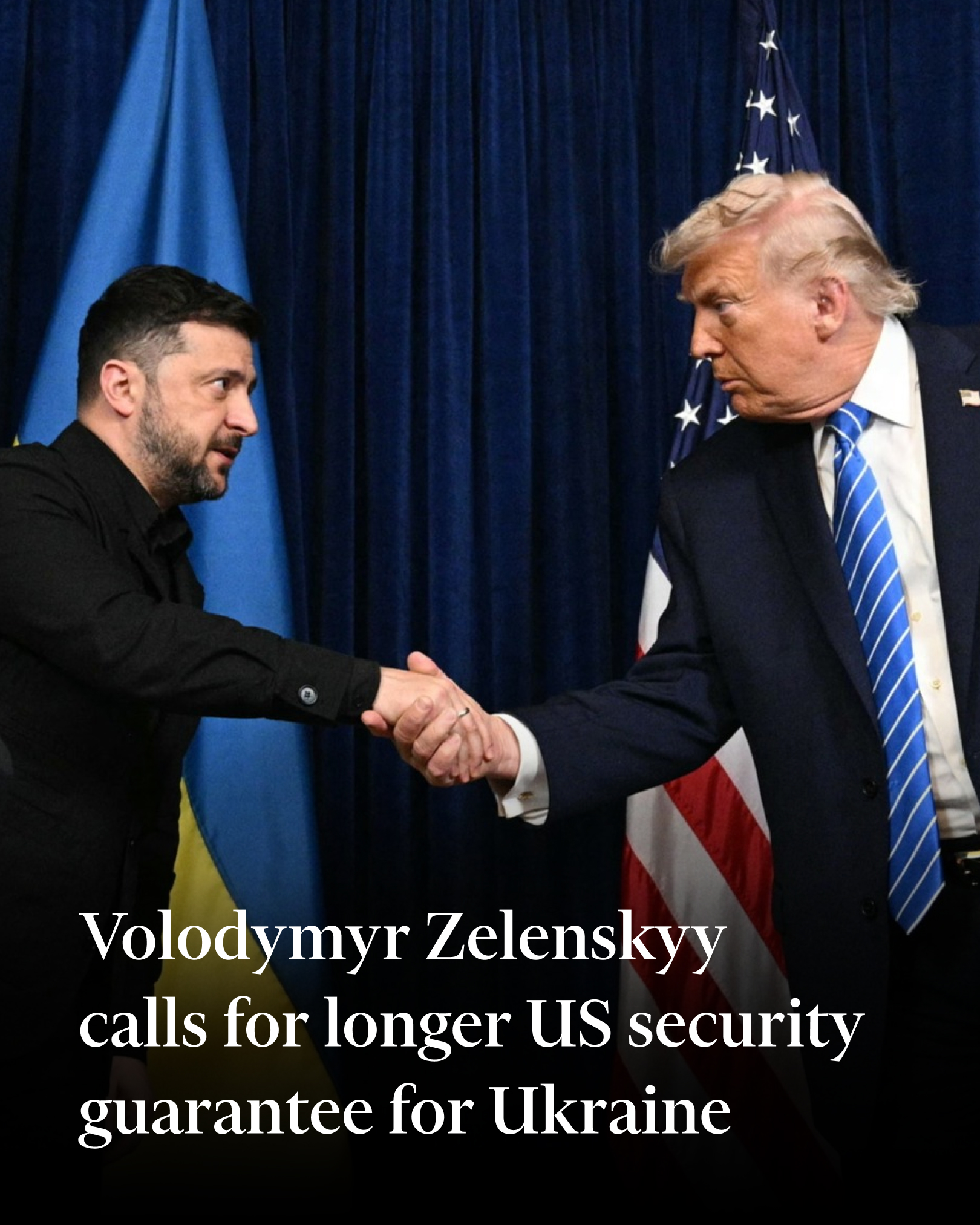
Understanding the Proposed Security Guarantee
According to Zelenskyy, the U.S. proposal would provide Ukraine with structured security assurances for 15 years, including military cooperation, defense support, and strategic alignment. While Kyiv welcomes continued U.S. backing, Ukrainian leadership believes the proposed duration falls short of what is needed to prevent renewed conflict once the guarantee expires.
Ukraine’s position reflects lessons learned from history. Past security assurances, including the 1994 Budapest Memorandum, failed to prevent Russia’s invasion. As a result, Ukrainian officials argue that short- or medium-term guarantees are insufficient when facing a long-term threat.
Why Ukraine Wants a 45-Year Commitment
President Zelenskyy stated that Ukraine is seeking security guarantees lasting three times longer than the U.S. offer to ensure generational stability. A 45-year framework would send a powerful signal to Moscow that aggression will not succeed—politically, militarily, or economically.
Ukrainian officials believe such a long-term commitment would:
-
Strengthen deterrence against future attacks
-
Encourage foreign investment and economic recovery
-
Support defense modernization and military planning
-
Provide citizens with confidence in long-term peace
From Kyiv’s perspective, security is not just about weapons or troop training—it is about predictability and permanence.
The Broader Geopolitical Context
The discussion around security guarantees comes as Ukraine continues to defend itself against Russian forces while pursuing closer integration with Western institutions. While NATO membership remains a long-term goal, security guarantees from the U.S. and its allies are seen as a critical bridge toward that future.
Washington, meanwhile, must balance support for Ukraine with domestic political considerations and global strategic priorities. A 15-year guarantee represents a significant commitment, but extending it to 45 years would require unprecedented long-term consensus across multiple U.S. administrations.
Reactions and Strategic Implications
Zelenskyy’s remarks have sparked debate among analysts and policymakers. Supporters argue that long-term guarantees are essential to avoid a frozen conflict and prevent Russia from regrouping. Critics caution that extended commitments could tie future governments to obligations that may be politically difficult to sustain.
Nevertheless, most experts agree that credible deterrence—whether through NATO membership or long-term security guarantees—is essential to preventing future escalation.
Conclusion
The contrast between the U.S. offer of a 15-year security guarantee and Ukraine’s request for a 45-year commitment highlights the fundamental challenge of ensuring lasting peace in Eastern Europe. As President Zelenskyy made clear, Ukraine is seeking not temporary reassurance, but durable protection against future Russian aggression. The outcome of these negotiations will play a critical role in shaping Europe’s security architecture for decades to come.