Elon Musk’s public fallout with former U.S. President Donald Trump became one of the most dramatic examples of how power, politics, and personal words can collide to produce real and brutal consequences. In an era where a single post on social media can move markets, Musk learned—perhaps more painfully than ever—that even the world’s richest individuals are not immune to the unforgiving logic of investor confidence and political polarization. What began as sharp words online quickly escalated into a financial storm, wiping out tens of billions of dollars in market value and placing Tesla at the center of a controversy far larger than cars or technology.
For years, Elon Musk had managed a careful, if uneasy, balance between political camps. He presented himself as an independent thinker, willing to criticize both sides while maintaining enough ambiguity to avoid alienating large segments of the public. Donald Trump, on the other hand, remained one of the most polarizing figures in modern American history—revered by loyal supporters and fiercely opposed by critics. When Musk openly distanced himself from Trump and later exchanged pointed remarks online, the reaction was immediate and fierce. This was not just a clash of egos; it was a collision of influence.
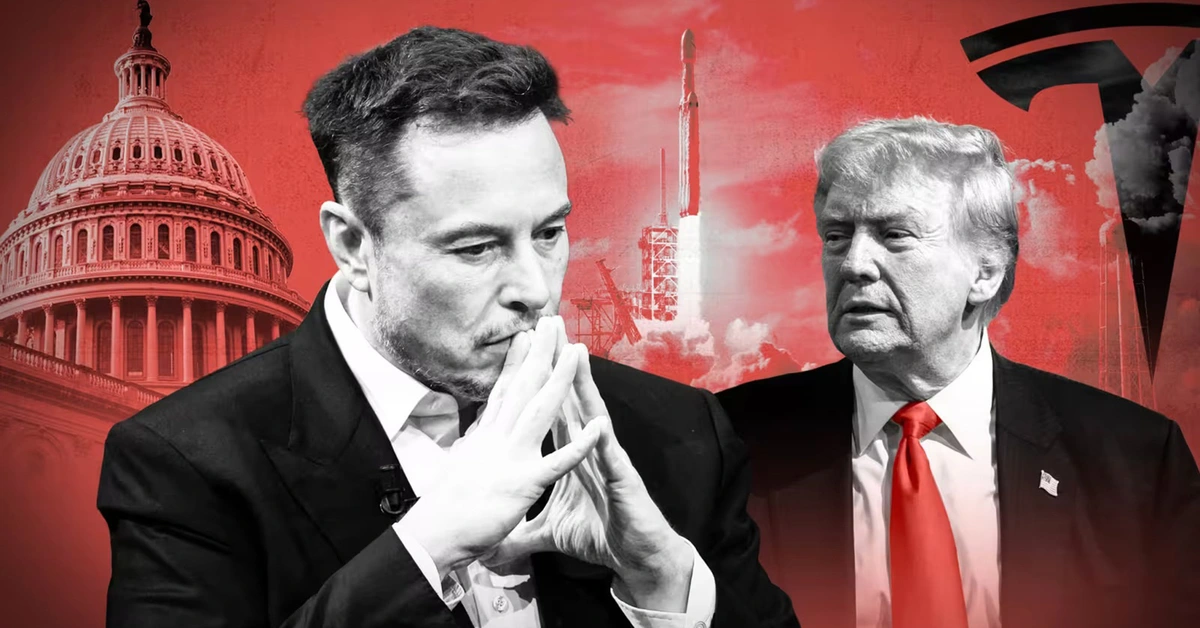
Investors, always sensitive to political risk, did not wait for long explanations or damage control. Tesla’s stock began to slide sharply as uncertainty spread. Was Musk aligning himself against a powerful political base that included millions of potential customers? Would government contracts, regulatory goodwill, or future policy support be affected? Markets hate uncertainty, and Musk’s words introduced plenty of it. Within days, Tesla experienced one of its most painful short-term declines in recent memory, erasing tens of billions of dollars in market capitalization almost overnight.
What made this episode especially striking was the speed of the fallout. There was no scandal involving faulty products or missed earnings targets. There were no leaked documents or legal indictments. It was, at its core, a war of words. In another era, such a dispute might have remained confined to interviews or opinion pages. In the age of social media, however, it unfolded in real time, amplified by algorithms, headlines, and endless commentary. Every tweet was dissected. Every reaction was magnified. And every dip in Tesla’s stock price became a symbol of how fragile even massive fortunes can be.
For Elon Musk, the situation was deeply ironic. He has long positioned himself as a champion of free speech, someone who believes ideas should compete openly in the public square. Yet this very openness exposed him to consequences that no amount of wealth could fully shield him from. When Musk spoke, markets listened—not because of the content alone, but because of who he is. As the face of Tesla, SpaceX, and multiple other ventures, his personal views are inseparable from the brands he leads. Investors do not buy shares in abstract companies; they buy into leadership, stability, and predictability. In this moment, predictability vanished.
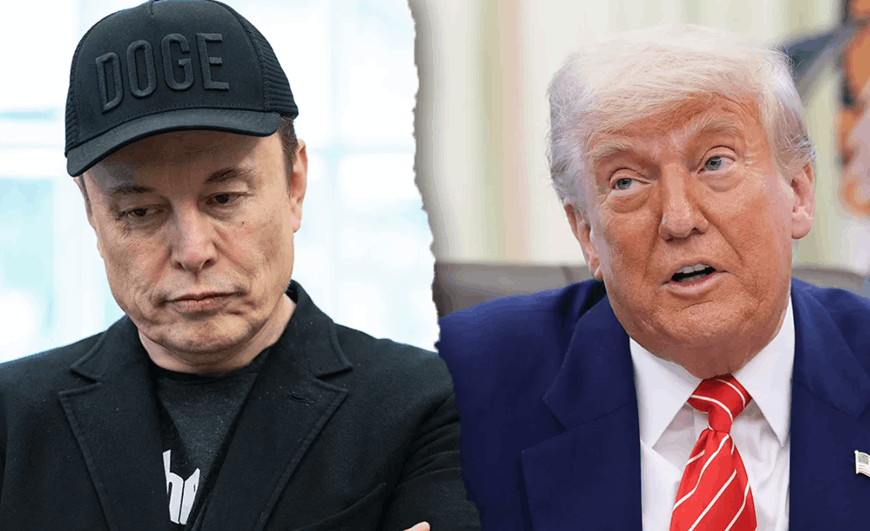
The clash with Trump also highlighted a harsh reality about modern capitalism: economic power and political power are deeply intertwined. Tesla’s success has benefited from government incentives, regulatory frameworks, and public trust in long-term innovation policy. Any perception that Musk might be positioning himself against influential political forces—especially ones that could regain power—was enough to trigger fear. Whether those fears were rational or exaggerated mattered less than the fact that they spread rapidly.
Public opinion followed a similar pattern. Supporters praised Musk for speaking his mind and refusing to bend to political pressure. Critics accused him of arrogance, arguing that his personal opinions were jeopardizing employees, shareholders, and the broader ecosystem built around Tesla. In this polarized environment, there was no neutral ground. Musk became not just a business leader, but a political symbol—something he has repeatedly claimed to dislike, yet seems unable to avoid.
Perhaps the most sobering aspect of this episode was how “ordinary” it was beneath the drama. No grand conspiracy. No secret deals. Just words, reactions, and market psychology. It demonstrated that even at the highest levels of wealth and influence, reputation remains a fragile asset. Decades of innovation, risk-taking, and visionary leadership can be temporarily overshadowed by a few sentences typed into a screen.
Calling this Musk’s “most pitiful ending” may sound extreme, but the phrase captures a deeper truth: this was a moment where power offered no protection. Money did not stop the losses. Fame did not control the narrative. Intelligence did not outpace emotion. Musk, often portrayed as untouchable, was suddenly subject to the same forces that govern everyone else—public perception, political backlash, and market fear.

In the end, Elon Musk did not lose his empire. Tesla did not collapse. But the episode left a lasting mark. It reminded the world that influence cuts both ways, that freedom of expression carries real costs, and that in a hyper-connected age, the line between personal opinion and financial consequence has almost disappeared. For Musk, the clash with Trump was more than a political disagreement. It was a stark lesson in how quickly the tides can turn when power confronts power—and the market is watching.
https://www.youtube.com/watch/i0OUwHhlTHQ