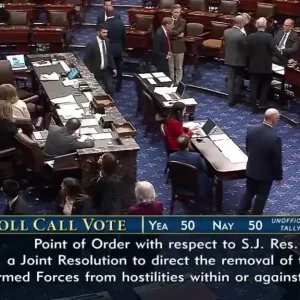
The U.S. House of Representatives has entered a moment of extreme political volatility as Speaker Mike Johnson’s Republican majority has effectively collapsed to just two votes, following a convergence of unexpected and destabilizing events.
The death of Representative Doug LaMalfa, the hospitalization of Representative Jim Baird, and Representative Thomas Massie’s refusal to follow GOP leadership have dramatically narrowed the margin of control, creating a rare and fleeting window of opportunity for Democrats.

With the balance of power hanging by a thread, Democrats and progressive activists are calling for immediate legislative action, urging House leadership to move swiftly before the numbers shift again. Observers warn that the window to act may be measured in days, not weeks.
How the House Majority Collapsed
Speaker Johnson’s razor-thin majority has been under strain for months, but recent events have pushed it to the brink.
Rep. Doug LaMalfa’s death removed a reliable Republican vote from the House, instantly shrinking GOP numbers.Rep. Jim Baird’s hospitalization has sidelined another Republican lawmaker, further weakening attendance and voting strength.Rep. Thomas Massie, known for his independent streak, has openly defied GOP leadership, refusing to support party-line votes and effectively neutralizing another Republican seat.
Together, these developments have reduced Speaker Johnson’s functional majority to just two votes, leaving House leadership unable to reliably pass controversial legislation or block Democratic procedural maneuvers.
A Rare Power Shift Without an Election
While no formal change in House control has occurred, the current dynamics amount to a temporary power vacuum. In such moments, procedural tactics, attendance, and unity become more important than party labels.
Democrats argue that this situation represents a constitutional and legislative opening—one that may not return once vacancies are filled, lawmakers recover, or party discipline tightens.
Political analysts note that similar moments in congressional history have often produced major legislative outcomes when one side recognized the urgency and acted decisively.
Democrats Call for Immediate Action
In response to the collapsing majority, Democratic lawmakers and grassroots organizers are urging leadership to seize the moment. Their calls focus on advancing legislation and oversight measures that have long been stalled by Republican opposition.
Key demands include:
1. Push Long-Stalled Bills to the Floor
Democrats are calling for immediate votes on legislation addressing healthcare access, voting rights, climate policy, and economic relief. With GOP leadership unable to guarantee the votes to block or delay proceedings, Democrats may be able to force consideration of bills that have languished in committee.
2. Release the Epstein Files
One of the most prominent demands involves the full public release of the Jeffrey Epstein files, including unredacted documents related to powerful individuals allegedly connected to Epstein’s crimes.
Democrats argue that transparency is essential and that political obstruction has prevented accountability. With Republican control weakened, pressure is mounting to bring disclosure resolutions to the floor.
3. Strip President Trump’s War Powers
Another major priority is limiting President Donald Trump’s unilateral war powers. Democrats are pushing for legislation that would require congressional approval for military actions, particularly amid concerns over escalating global conflicts.
Supporters say this is a critical moment to reassert Congress’s constitutional authority over war and peace.
4. End Tariffs
Democratic leaders are also calling for votes to end or roll back Trump-era tariffs, arguing they continue to raise consumer prices, strain international relations, and hurt American farmers and manufacturers.
With economic anxiety high, Democrats believe tariff reform could gain bipartisan public support—even if GOP leadership resists.
5. Restrain ICE Operations
Immigration advocates are urging immediate action to restrict Immigration and Customs Enforcement (ICE), including limits on detention practices and deportation authority.
Democrats argue that aggressive enforcement policies have harmed families and communities, and that Congress must act while Republican resistance is weakened.
Speaker Johnson’s Leadership Crisis
For Speaker Mike Johnson, the situation represents a severe leadership test. With so little margin for error, even minor defections or absences can derail Republican priorities.
Johnson now faces multiple challenges simultaneously:
Maintaining party discipline amid internal dissentManaging legislative scheduling with unpredictable attendancePreventing Democrats from exploiting procedural tools
Any miscalculation could allow Democrats to advance legislation or force votes that place Republicans on record in politically damaging ways.
Republican Strategy: Delay and Damage Control
Republicans are expected to respond by attempting to delay proceedings, limit floor activity, and avoid votes until their numbers stabilize. GOP leaders may also seek to accelerate special elections or pressure dissenting members to fall in line.
However, such strategies carry risks. Delays could fuel public perception that Republicans are unable to govern, while internal pressure campaigns may deepen divisions within the party.
Why Timing Is Everything
Political experts emphasize that this moment is extraordinarily fragile. The GOP majority could recover quickly if:
A replacement is sworn inHospitalized members returnParty discipline is restored
That is why Democrats and activists stress urgency. In congressional terms, opportunities like this are measured in hours and days, not legislative sessions.
Public Reaction and Political Stakes
Online, Democratic voters and progressive groups have amplified calls to “act now,” framing the moment as a test of leadership courage. Many argue that failure to move decisively would represent a missed opportunity with long-term consequences.
Meanwhile, Republican voters are watching closely, with some expressing concern about instability while others applaud lawmakers who resist party leadership.
What Happens Next
The coming days will be critical. If Democrats successfully force votes or advance legislation, it could reshape the legislative agenda and redefine power dynamics heading into the next election cycle.
If not, the moment may pass quietly—remembered as a near-miss rather than a turning point.
Conclusion
The collapse of Speaker Johnson’s majority to just two votes has plunged the House into one of its most precarious moments in years.
With death, illness, and defiance reshaping the balance of power, Democrats see a fleeting chance to advance long-blocked priorities—from transparency and war powers to tariffs and immigration enforcement.
As the clock ticks, the message from Democratic leaders and activists is clear: time is razor-thin, and hesitation could mean losing everything. Whether Congress rises to the moment—or lets it slip away—will soon become clear.