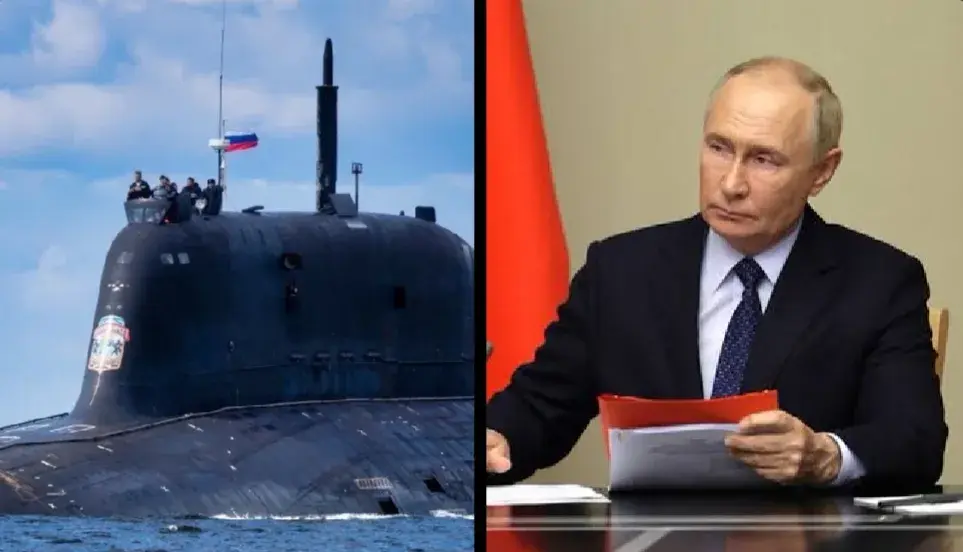
In a dramatic escalation of U.S.–Russia tensions on the high seas, Russia has deployed a submarine and additional naval vessels to escort an oil tanker that the United States had been pursuing near Venezuela.
The development, reported by The Wall Street Journal and confirmed by multiple sources, marks one of the most significant maritime standoffs involving the two global powers in recent years.
The Tanker at the Center of the Dispute
The vessel involved, previously known as Bella 1, has been under intense scrutiny by the U.S. Coast Guard after being linked to oil shipments allegedly aimed at evading U.S. sanctions on Venezuela’s oil sector.
The ship, described as aging and rust-streaked, attempted to approach Venezuelan waters to deliver oil but was blocked by a U.S. naval presence enforcing sanctions.
After a December 2025 attempt by U.S. forces to board the vessel was repelled, its crew made a controversial decision: they hastily painted a Russian flag on the ship, renamed it Marinera, and switched its registration to Russia while at sea.
Experts argue this maneuver doesn’t automatically grant legal protection under international maritime law, but it complicates U.S. enforcement efforts and provides a pretext for Russian naval involvement.
Russia’s Naval Response
According to U.S. officials quoted in Western outlets, Russia’s decision to send a submarine accompanied by other naval craft to escort the tanker is aimed at shielding the vessel from U.S. seizure attempts as it sails through the Atlantic toward Russian ports.
This move signals a willingness by Moscow to project naval power far from its home waters to protect assets that it claims fall under its flag.
The type of submarine and the specific surface vessels involved have not been publicly detailed, but the deployment represents a bold assertion of military presence in a zone traditionally dominated by U.S. and NATO naval patrols.
Observers note that such an escort for a single commercial vessel is highly unusual outside wartime or declared conflict, underscoring just how far the situation has escalated.
U.S. Perspective and Legal Implications
From the U.S. standpoint, the Bella 1/Marinera represents an oil tanker engaged in sanction-busting. Washington maintains that the vessel participated in an illicit oil network circumventing U.S. sanctions on Venezuela and potentially Iran. As such, U.S.naval forces have pursued the tanker for weeks after its refusal to comply with boarding orders and U.S. blockade measures. investingLive
Legal experts share that unilaterally painting a flag and claiming jurisdiction mid-voyage is not recognized under standard maritime law unless proper re-registration procedures are followed. The U.S. position is that the ship’s actions do not legitimize its new status, making continued pursuit lawful under U.S. sanction enforcement mechanisms.
Despite this, Moscow has formally protested the pursuit, calling on U.S. forces to stand down and accusing Washington of overreach. Russia’s foreign ministry stated it was monitoring the situation “with concern,” emphasizing the need to protect what it deems a Russian-registered vessel.
Escalation in the Atlantic
The chase has moved far beyond the Caribbean. Recent reports suggest the tanker, now under Russian escort, may be traveling near European waters, drawing attention from multiple Western governments. One outlet reported sightings of the vessel roughly 250 miles west of Ireland, where it remains under surveillance by U.S.and allied intelligence assets.
This international dimension adds layers of complexity, as NATO member states monitor the situation while balancing diplomatic relations with both Washington and Moscow. The fact that a Russian naval force is actively escorting a vessel pursued by U.S.
forces highlights how maritime law enforcement can rapidly become entangled with great-power rivalry.
Geopolitical Stakes and Broader Implications
The confrontation occurs amidst a backdrop of geopolitical competition far greater than a single tanker. U.S. sanctions on Venezuela’s oil industry were tightened following political turmoil in Caracas, including legal actions taken against former Venezuelan President Nicolás Maduro in U.S. courts.
These sanctions aim to cut off revenue streams for the Maduro government and its international partners.
For Russia, maintaining access and influence in Venezuela serves broader strategic goals. Moscow has invested significantly in the Venezuelan energy sector and maintains military and economic ties that predate the current crisis. Escalating naval involvement to defend a reflagged vessel signals a broader willingness to defy U.S.pressure and protect allies, particularly in Latin America where U.S. influence has traditionally been strong.
Analysts warn that the incident could embolden other sanction-evasion efforts by so-called “dark fleet” tankers—vessels that operate outside normal tracking and regulatory mechanisms to transport oil in defiance of international sanctions. A successful Russian deterrence against U.S. interception might encourage more such tactics, further complicating global efforts to enforce economic penalties.
Risk of Broader Military Confrontation
While the situation has not yet ignited open conflict at sea, the risks are tangible. U.S. and Russian naval forces shadowing each other in the Atlantic—especially around a contentious civilian vessel—raise concerns about miscalculation.
Close encounters, communications misunderstandings, or unintended collisions could escalate into direct military confrontation, a scenario both governments publicly claim to want to avoid.
Moreover, the episode is likely to reverberate through transatlantic security discussions, with NATO partners assessing the implications of Russia’s willingness to use military assets to protect economic interests and challenge U.S. enforcement actions far from Russian territorial waters.
Conclusion: A Flashpoint in U.S.–Russia Relations
The deployment of a Russian submarine and naval escort to protect an oil tanker after a U.S. seizure attempt off the coast of Venezuela represents a new flashpoint in international relations. What began as a sanction enforcement operation has evolved into a high-stakes maritime standoff implicating some of the world’s most powerful military forces.
With ongoing surveillance, diplomatic protests, and naval posturing, the situation remains fluid and unpredictable. As global markets watch oil prices and governments weigh their next moves, this episode may well shape future U.S.–Russia interactions on the world stage