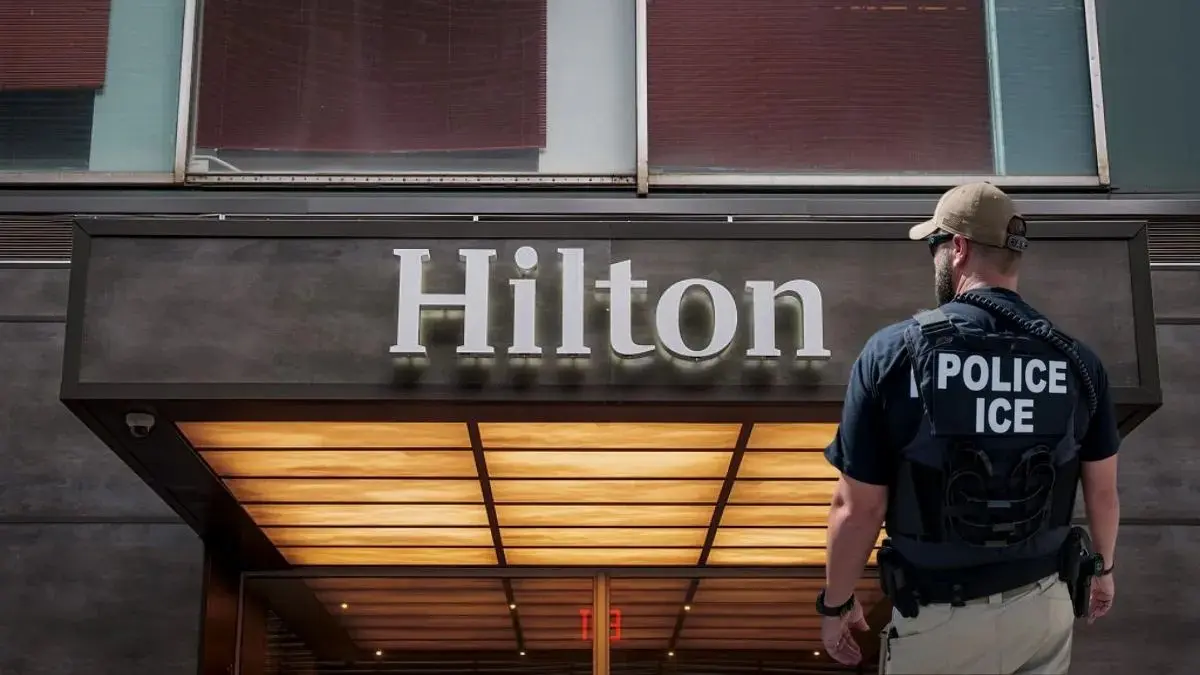
In a rapidly unfolding national controversy, Hilton Hotels & Resorts has revoked the franchise license of a Minnesota hotel after the property allegedly refused to provide rooms to Immigration and Customs Enforcement (ICE) agents and Department of Homeland Security (DHS) personnel. The decision by Hilton — one of the world’s largest hotel brands — underscores the intensifying scrutiny surrounding corporate policies, federal law enforcement, and the responsibilities of franchise operators as political tensions over immigration enforcement continue to mount.

This article explores what occurred, how Hilton responded, the reactions from federal authorities and the public, and the broader implications for corporate governance and franchise operations.
What Happened: ICE Agents Denied Accommodation
The controversy began in early January 2026 when a Hampton Inn hotel in Lakeville, Minnesota, operating under the Hilton brand, canceled reservations made by federal immigration enforcement officers. According to the Department of Homeland Security, screenshots shared on social media showed messages from the property stating that the hotel would not allow any ICE or immigration agents to stay at the property — even when bookings were made using official government email addresses and government travel rates.
The incident drew swift attention after a video posted by conservative influencer Nick Sortor showed a front desk clerk telling him that the policy of refusing Immigration and Customs Enforcement personnel was in effect, contradicting earlier statements from hotel management claiming the matter had been resolved.
The exchange and accompanying screenshots quickly circulated online, prompting a public backlash and significant media coverage. The Department of Homeland Security condemned the hotel’s actions, labeling the cancellation of reservations as “unacceptable” and “discriminatory,” and accusing the franchise of deliberately refusing service to law enforcement.
Hilton’s Response and Franchise Action
In response to the incident, Hilton Worldwide Holdings issued a statement clarifying that the hotel in question was independently owned and operated under a franchise agreement, rather than directly managed by Hilton corporate. The company emphasized that the franchise’s behavior did not reflect Hilton’s values of inclusivity and non‑discrimination, and the situation was being investigated.
However, after reviewing additional evidence — including the viral video of the policy still being enforced — Hilton took decisive action by revoking the franchise license of the Minnesota hotel, removing it from the Hilton booking system and severing corporate ties. Hilton stated that it was also engaging with all of its franchisees to reinforce brand standards and ensure that similar incidents do not happen again.
The swift move by Hilton highlights the challenges global brands face when franchise owners make independent decisions that conflict with corporate policies and values. Hilton reaffirmed that it is committed to creating welcoming environments for all guests and does not tolerate discrimination against any individuals or agencies.
Federal Government Reaction
The controversy drew responses from federal officials and agencies. The Department of Homeland Security and ICE publicly criticized the hotel’s rejection of reservations, sharing screenshots and condemning the property’s actions as harmful to federal law enforcement operations.
Moreover, the U.S. General Services Administration (GSA) took separate action by removing the Minnesota property from all government lodging programs, including federal travel booking systems like FedRooms, which help government employees find approved lodging at government rates.
According to the GSA, the property violated the requirements of these programs by refusing to accommodate federal agents. U.S. General Services Administration Assistant Secretary of DHS Tricia McLaughlin publicly supported Hilton’s decision to revoke the franchise and stressed that business practices targeting federal law enforcement personnel are unacceptable and undermine national law enforcement efforts.
Public Reaction and Social Media Backlash
The incident quickly became a flashpoint on social media and among political commentators. Conservative commentators and activists criticized the Minnesota hotel’s actions as inappropriate and discriminatory, with some calling for boycotts. Others applauded Hilton’s decision to revoke the franchise, seeing it as a necessary step to uphold corporate standards and ensure that law enforcement officers are treated fairly.
Some social media users expressed frustration that the situation occurred in the first place, claiming that hotels should not deny service to individuals based on their profession, particularly when federal law enforcement duties are involved.
Meanwhile, others framed the episode within the broader debate over immigration enforcement policy and the role of private businesses in political controversies. The rapid spread of videos and screenshots showing the reservation cancellations played a significant role in fueling public debate and compelling corporate and government responses.
Corporate Governance and Franchise Standards
This incident raises significant questions about corporate governance and franchise standards in hospitality chains. Hilton is one of many hotel brands that operates primarily through a franchise model, meaning individual properties are independently owned but operate under corporate branding and standards. Maintaining consistent adherence to brand values across disparate franchise locations can be challenging, particularly when local operators make autonomous decisions that contradict corporate policies.
In response to the controversy, Hilton indicated it would work more closely with franchisees to ensure they adhere not only to brand standards but also to laws and corporate policies regarding non‑discrimination and inclusivity. Many industry analysts note that large hotel chains must continually adapt their franchise agreements and monitoring systems to prevent similar conflicts.
Broader Implications for Corporate and Federal Relations
The Hilton incident illustrates how deeply business decisions can intersect with national politics and federal operations, especially in charged areas such as immigration enforcement. As federal agencies conduct increasingly high‑profile operations — like the ongoing immigration enforcement activity in Minnesota — private sector entities may find themselves pressured by public opinion, political advocacy, and social media.
Corporations like Hilton must balance their brand reputation, legal obligations, and relationships with government entities, while also navigating the expectations of customers and the public. In this case, the quick revocation of the franchise may serve as a precedent for how corporate headquarters manage controversial actions taken by franchisees that impact broader political or public safety concerns.
What This Means for Travelers and Franchise Owners
For travelers, the Hilton decision serves as a reminder that corporate brands may remove properties from their network if local management decisions violate overarching policies. Guests should be aware that franchise policies and individual hotel practices may differ, but the corporate brand retains ultimate authority to enforce compliance and protect its reputation.
For franchise owners, this controversy underscores the importance of understanding and adhering to the terms of franchise agreements. Franchise contracts typically require compliance with brand standards — including non‑discrimination policies — and allow corporate partners to take corrective action, including termination of the agreement, when standards are violated.
Looking Ahead
As the story continues to develop, industry observers will be watching how Hilton and other hotel chains adjust their franchise management practices to prevent similar controversies. The overlap of hospitality operations with political and social issues illustrates how private enterprises are increasingly called upon to take transparent, consistent stances on matters that extend beyond traditional business concerns.
At the same time, federal agencies and advocacy groups may continue to monitor how corporate partners interact with government personnel and programs, especially in contexts involving federal enforcement actions. The Hilton revocation could lead to further policy clarifications and contractual safeguards within franchise systems nationwide.
Conclusion
The revocation of a Minnesota Hilton franchise license after a hotel refused to accommodate ICE and DHS agents marks a significant moment in the ongoing intersection of corporate policy and federal law enforcement. Hilton’s prompt action to sever ties highlights its commitment to non‑discrimination and inclusivity, while also reinforcing the importance of adherence to corporate standards in franchise operations.
As political and social debates over immigration continue to play out nationwide, incidents like this will likely shape how businesses, government agencies, and the public navigate complex and often contentious issues within the hospitality industry and beyond.