The fatal shooting of Renee Nicole Good, a 37-year-old Minnesota mother, during an Immigration and Customs Enforcement (ICE) operation has ignited a nationwide debate over immigration enforcement, use of force, and political accountability. In response to the incident, U.S.
Representative Eric Swalwell, a Democrat from California, delivered a statement that quickly went viral:
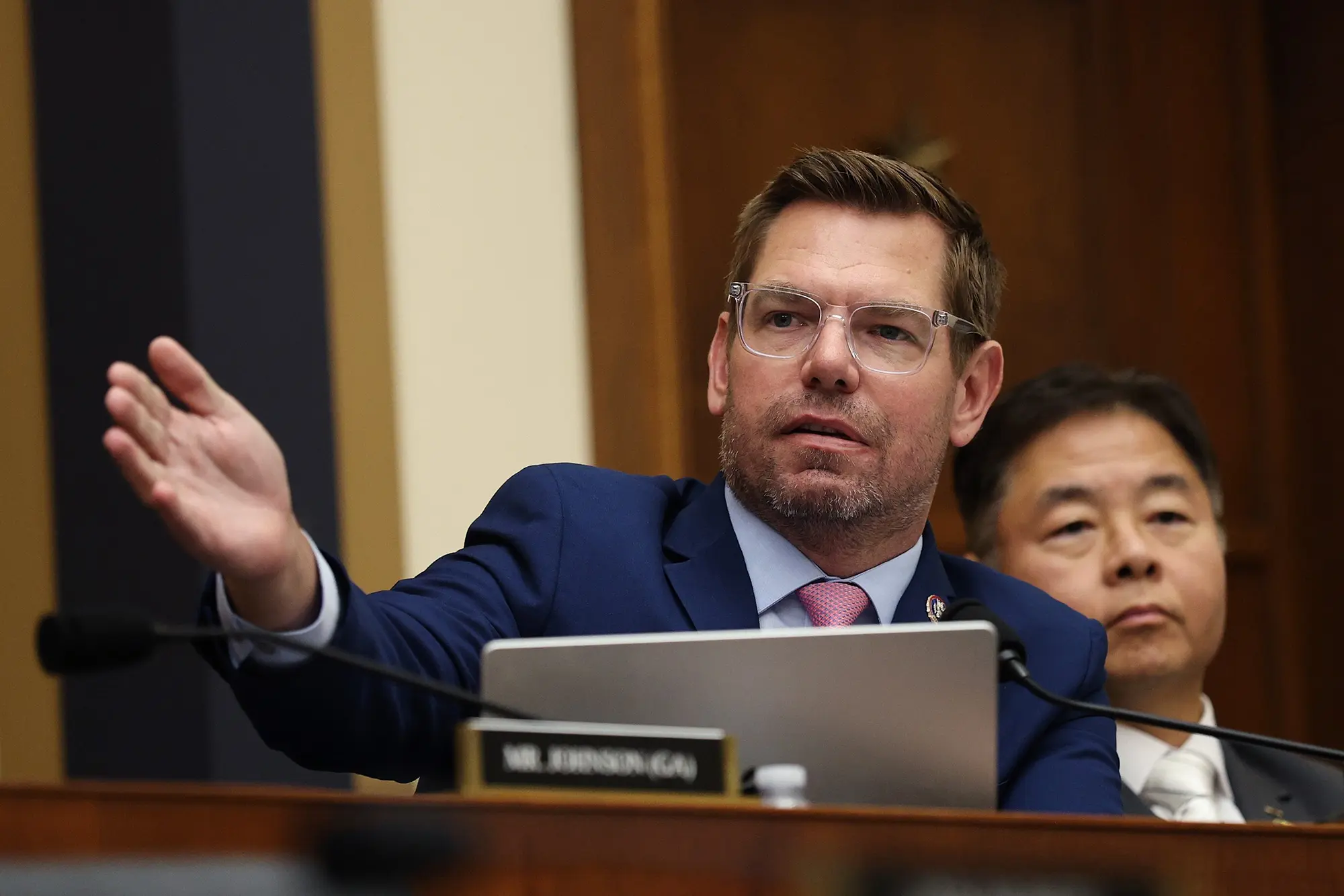
“Renee Good wasn’t a threat—she was a mom with stuffed animals in her glove box. If the GOP won’t act, we will.”

The remark has become a rallying cry for critics of ICE and for Democratic lawmakers calling for investigations and legislative reform, while also drawing sharp backlash from Republicans. The case has come to symbolize deeper tensions surrounding immigration policy, federal law enforcement, and partisan divides in the United States.
Who Was Renee Good?
Renee Nicole Good was a U.S. citizen, a mother of three, and a local writer and artist, according to family members and media reports.
On the morning of the incident in January 2026, she had just dropped her six-year-old child off at school in Minneapolis when she encountered ICE agents conducting an immigration raid in her neighborhood.
What happened next remains disputed. Federal authorities claim Good attempted to interfere with agents and used her vehicle in a threatening manner.
Witnesses, family members, and civil rights advocates dispute that account, arguing that Good appeared confused and frightened and was attempting to leave the area rather than confront law enforcement.
One detail repeatedly cited in media coverage—and referenced directly by Swalwell—is that stuffed animals were found in Good’s glove box, a fact her family says reflects her life as a mother rather than any violent intent.
The ICE Shooting and Public Outcry
The shooting sparked immediate protests in Minneapolis, followed by demonstrations in cities including Chicago, New York, Los Angeles, and Seattle. Protesters accused ICE of excessive force and demanded an independent investigation into the killing.
Civil rights groups argue that the incident illustrates how aggressive immigration enforcement tactics can endanger not only undocumented immigrants, but also U.S. citizens and bystanders. Legal experts have also raised questions about ICE’s rules of engagement and the expanding scope of federal immigration raids.
The Department of Homeland Security has defended the agents involved, stating that the use of force was justified under the circumstances. However, local officials in Minnesota have called for greater transparency, and a state-level review is reportedly underway.
Eric Swalwell’s Statement: Meaning and Message
Representative Eric Swalwell’s statement was not merely an expression of sympathy—it was a political challenge. By saying, “If the GOP won’t act, we will,” Swalwell directly accused Republicans of failing to hold ICE accountable or support reforms to immigration enforcement.
The comment serves two purposes:
Humanizing the victim By emphasizing Good’s role as a mother and the presence of stuffed animals in her car, Swalwell sought to counter narratives portraying her as dangerous.
The imagery is powerful and intentional, designed to resonate emotionally with the public.Calling for political action Swalwell’s message signals that Democrats are prepared to pursue legislative or investigative action—even without bipartisan support—if Republicans continue to block reform.
Republican Response and Political Divide
Republican lawmakers have criticized Swalwell’s remarks as inflammatory and irresponsible. Some argue that Democratic rhetoric undermines law enforcement and prejudges investigations that are still ongoing.
Conservative commentators have also accused Democrats of politicizing a tragedy to advance broader goals, such as limiting ICE’s authority or defunding immigration enforcement agencies.
This divide reflects a long-standing clash in Washington: Democrats tend to emphasize civil liberties and oversight, while Republicans prioritize border security and law enforcement discretion.
Broader Implications for Immigration Policy
The Renee Good case arrives at a time when immigration remains one of the most polarizing issues in American politics. ICE operations have expanded in recent years, and critics say oversight has not kept pace.
Swalwell and other Democrats have floated several potential responses, including:
Independent investigations into ICE use-of-force incidentsClearer national standards for federal raidsIncreased transparency and public reportingCongressional hearings and budgetary restrictions
While none of these proposals have yet advanced with bipartisan backing, the political pressure is growing.
Why the Statement Resonates
Swalwell’s words have spread widely across social media and news platforms because they capture public anxiety about safety, accountability, and power. For many Americans, the idea that a mother could be killed during a federal operation—regardless of legal justifications—raises unsettling questions.
At the same time, supporters of ICE argue that agents operate in dangerous environments and must make split-second decisions. The clash between these perspectives ensures that the debate will continue.
Conclusion
“Renee Good wasn’t a threat—she was a mom with stuffed animals in her glove box.” With that sentence, Representative Eric Swalwell crystallized a national controversy into a single, emotionally charged image.
His follow-up—“If the GOP won’t act, we will”—makes clear that the political battle over immigration enforcement is far from over.
Whether the Renee Good case leads to concrete policy changes remains uncertain. What is clear, however, is that her death has become a powerful symbol in America’s ongoing struggle to balance law enforcement authority, human rights, and political accountability.