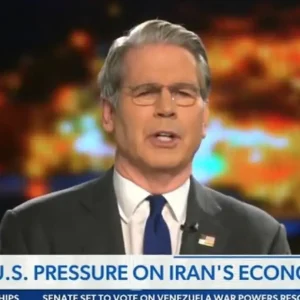
John Scott: “Breaking news now, the United States has launched an attack in Syria. Good afternoon, I’m John Scott and this is The Fox Report. It’s the second time the U.S. military has launched airstrikes against Islamic State in Syria since December 19th, to avenge the killing of two Iowa National Guard soldiers and their American interpreter by a lone ISIS gunman.”

U.S. Airstrikes in Syria Signal Renewed Military Pressure on ISIS
In a dramatic escalation of U.S. military activity in the Middle East, reports indicate that the United States has carried out new airstrikes targeting Islamic State (ISIS) positions in Syria. The development was highlighted during a breaking news segment on The Fox Report, where anchor John Scott announced that American forces had launched a fresh attack aimed at degrading ISIS’s operational capabilities.
According to the broadcast, this marks the second round of U.S. airstrikes against ISIS in Syria since December 19, underscoring Washington’s determination to respond forcefully to recent attacks against American personnel. The strikes are reportedly connected to the killing of two Iowa National Guard soldiers and their American interpreter, who were allegedly targeted by a lone ISIS gunman.
Why the U.S. Is Targeting ISIS in Syria Again
ISIS, despite suffering territorial defeat in Iraq and Syria in recent years, continues to pose a persistent threat through sleeper cells, lone-wolf attacks, and cross-border operations. U.S. defense officials have repeatedly warned that the group is attempting to regroup, especially in unstable regions of eastern Syria where governance remains fragile.
The latest U.S. airstrikes appear to be part of a broader strategy to:
Deter further attacks on U.S. troops and alliesDisrupt ISIS leadership and logistics networksSignal American resolve in the regionPrevent ISIS from exploiting ongoing regional instability
By striking ISIS targets from the air, the United States aims to limit the group’s ability to plan and execute future attacks without committing additional ground forces.
Context: The December 19 Attack and Its Impact
The reported catalyst for the renewed strikes was a deadly attack attributed to an ISIS-affiliated gunman. The killing of two members of the Iowa National Guard, along with their interpreter, sent shockwaves through the U.S. military community and reignited debate over America’s continued presence in Syria.
Such attacks highlight the ongoing risks faced by U.S. service members deployed overseas, even in missions officially described as “advise and assist.” They also reinforce the argument made by military leaders that ISIS remains dangerous despite its diminished territorial control.
Strategic Importance of Syria in the Fight Against ISIS
Syria remains a critical battleground in the fight against ISIS for several reasons:
Geographic Position – Syria connects multiple conflict zones, making it a strategic corridor for militant movements.Power Vacuums – Years of civil war have left areas with limited governance, ideal for extremist groups to hide and reorganize.Detention Camps – Thousands of ISIS fighters and family members are held in camps guarded by U.S.-backed forces, posing ongoing security risks.
U.S. airstrikes are often designed to neutralize high-value targets, weapons caches, and command centers that could enable ISIS to resurge.
Political and Military Reactions
While official Pentagon statements are often measured, such operations typically receive bipartisan support when framed as defensive actions to protect American lives. At the same time, critics question whether airstrikes alone can permanently eliminate the ISIS threat.
Military analysts note that these strikes are consistent with past U.S. policy: swift, targeted responses rather than large-scale deployments. The Biden administration, like previous administrations, has emphasized minimizing American casualties while maintaining counterterrorism pressure.
Regional Implications and Global Security
The U.S. attack on ISIS in Syria also sends a message beyond the battlefield. Allies and adversaries alike are watching closely to assess Washington’s willingness to act decisively. For regional partners, the strikes may offer reassurance that the U.S. remains committed to combating terrorism. For extremist groups, they serve as a warning that attacks on Americans will be met with force.
However, there are risks. Airstrikes can heighten tensions with other actors operating in Syria and raise concerns about civilian casualties, making precision and intelligence accuracy critical.
What Comes Next?
While the full results of the latest U.S. airstrikes are still emerging, defense experts expect continued monitoring and potential follow-up operations if ISIS retaliates or attempts further attacks. The situation remains fluid, and U.S. military commanders are likely to maintain heightened alert levels for forces stationed in the region.
For now, the message from Washington appears clear: attacks on American personnel will not go unanswered, and ISIS will continue to be targeted wherever it seeks to reestablish itself.
Final Thoughts
The reported U.S. strike on ISIS in Syria marks another chapter in America’s long-running fight against global terrorism. As highlighted by John Scott on The Fox Report, the operation reflects both retaliation and deterrence—aimed at honoring fallen service members while preventing future violence.
As events continue to unfold, the world will be watching to see whether these actions successfully curb ISIS activity or signal a broader shift in U.S. engagement in the region.