Allied Governments Explore Joint Action Against Social Media Platform X
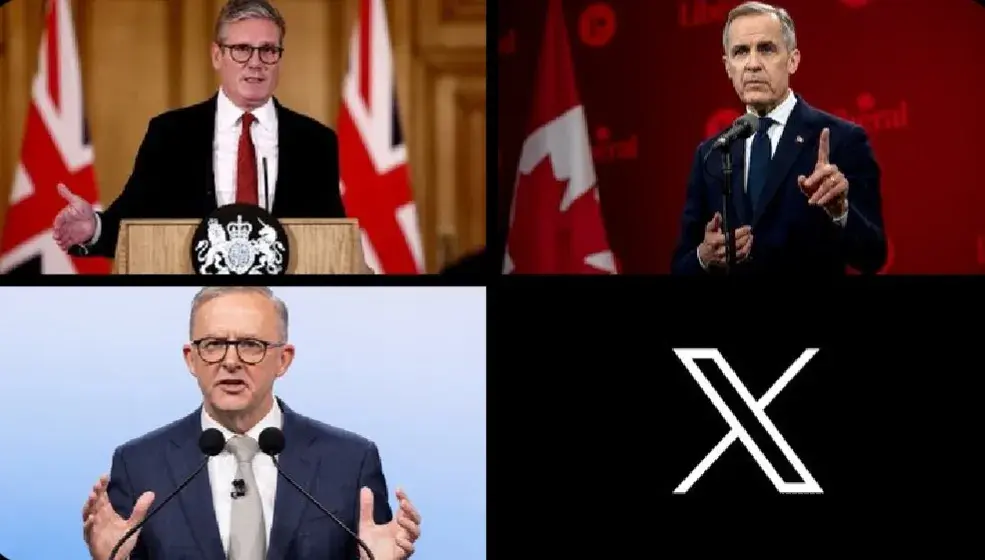
In a significant development that could reshape the global digital landscape, reports indicate that the United Kingdom, Canada, and Australia are considering a coordinated plan to ban X, the social media platform formerly known as Twitter.
The discussions, which are still in early stages, signal growing concern among Western democracies about online safety, misinformation, platform governance, and the influence of major tech companies on public discourse.
If implemented, such a move would represent one of the most consequential collective actions ever taken against a major social media platform, with wide-ranging implications for free speech, digital regulation, and international cooperation.
Why Governments Are Targeting X
Officials in all three countries have expressed increasing frustration with X over issues including content moderation, the spread of misinformation, online harassment, and alleged non-compliance with national digital safety laws.
Since its rebranding and leadership changes, X has faced repeated criticism from regulators who argue that the platform has weakened safeguards designed to protect users from harmful content. Lawmakers claim that these changes have allowed extremist material, hate speech, and coordinated disinformation campaigns to proliferate.
Government sources suggest that the potential ban is being considered as a last-resort enforcement mechanism, should regulatory pressure and fines fail to achieve compliance.
The Power of a Coordinated Ban
What makes this development particularly notable is the coordinated nature of the discussions. Rather than acting independently, the UK, Canada, and Australia are reportedly exploring a unified approach to maximize pressure and reduce the risk of regulatory loopholes.
Together, the three countries represent tens of millions of users and serve as influential models for digital governance. A joint ban could encourage other nations—particularly within Europe and the Commonwealth—to consider similar measures.
Policy experts say such coordination reflects a broader shift toward multinational regulation of global technology platforms.
Legal and Regulatory Frameworks at Play
Each of the three countries already has digital laws that could be used to justify action against X:
United Kingdom: The Online Safety framework grants authorities power to penalize or restrict platforms that fail to address harmful content.Canada: Digital safety and broadcasting reforms emphasize platform responsibility and transparency.Australia: The country has some of the world’s strictest online safety laws, including heavy fines for non-compliance.
A coordinated ban would likely rely on these frameworks, arguing that X has failed to meet minimum safety and governance standards.
Free Speech Concerns and Political Backlash
The prospect of banning X has sparked immediate backlash from free speech advocates and political figures who warn that such a move could set a dangerous precedent.
Critics argue that banning a major platform risks government overreach and could undermine democratic principles. They caution that content moderation disputes should be resolved through transparency and due process, not outright prohibition.
Supporters of regulation counter that free speech does not absolve platforms of responsibility, particularly when harmful content leads to real-world consequences.
Impact on Users and Public Discourse
A ban on X in the UK, Canada, and Australia would significantly alter how millions of people communicate, organize, and consume news. Journalists, activists, businesses, and public officials rely heavily on the platform for real-time engagement.
Experts predict that users would migrate to alternative platforms, potentially fragmenting online discourse. Others warn that pushing users off mainstream platforms could drive harmful content into less regulated digital spaces.
Still, proponents argue that the disruption could encourage healthier online ecosystems and force platforms to prioritize safety over engagement.
X’s Position and Response
X has consistently defended its approach to content moderation, emphasizing free expression and user choice. The company has previously argued that government pressure threatens innovation and open debate.
While no official response has yet been issued regarding the coordinated ban discussions, analysts expect X to push back strongly through legal challenges, public campaigns, and negotiations with regulators.
The platform’s future in these countries may hinge on whether it is willing to adjust policies to meet regulatory demands.
A Broader Global Trend in Tech Regulation
The potential ban fits into a wider global trend of governments reasserting control over digital platforms. From Europe’s Digital Services rules to Asia-Pacific online safety laws, regulators are increasingly willing to confront tech companies once seen as untouchable.
This shift reflects growing recognition that social media platforms wield immense influence over elections, public opinion, and social cohesion.
The case of X could become a landmark moment in defining the limits of platform autonomy.
What Happens Next?
At this stage, discussions remain exploratory. Any ban would require:
Legal review and regulatory findingsPolitical approval at the national levelClear timelines and enforcement mechanisms
Governments may also use the threat of a ban as leverage to force changes without implementing a full shutdown.
Observers expect weeks or months of debate before any final decision is made.
Conclusion: A Defining Moment for Digital Governance
The possibility that the United Kingdom, Canada, and Australia could jointly ban X marks a pivotal moment in the global struggle to regulate social media. It highlights escalating tensions between governments seeking accountability and platforms defending autonomy.
Whether the plan results in an actual ban or a negotiated compromise, it signals a new era in which no digital platform is beyond the reach of coordinated state action.
As the situation develops, the world will be watching closely—not just to see what happens to X, but to understand how far governments are willing to go to shape the future of online communication.