The political and financial worlds reeled after Elon Musk sharply escalated his long-running feud with Bill Gates, publicly branding the Microsoft cofounder a “liar” amid intensifying controversy surrounding U.S. foreign aid cuts and global responsibility.
Musk’s accusation did not emerge in isolation, but landed in a volatile moment when governments, humanitarian organizations, and taxpayers are questioning who should bear the moral and financial burden of international crises.
By choosing such direct language, Musk reframed a policy disagreement into a personal credibility battle, instantly transforming a complex debate about aid priorities into a high-profile clash between two of the world’s most powerful private citizens.

Supporters of Musk argue that his bluntness reflects frustration with what he sees as performative philanthropy, claiming that wealthy elites often speak in moral absolutes while avoiding scrutiny of outcomes and unintended consequences.
Critics counter that Musk’s rhetoric oversimplifies nuanced issues, warning that public accusations between billionaires risk reducing serious humanitarian debates into ego-driven spectacles that distract from real-world suffering.
At the center of the controversy lies a fundamental question, who gets to define moral authority when immense wealth grants individuals outsized influence over public discourse and policy framing.
Musk has positioned himself as a challenger to what he views as entrenched moral consensus, suggesting that large-scale aid programs deserve skepticism rather than reverence, especially when accountability and effectiveness remain contested.
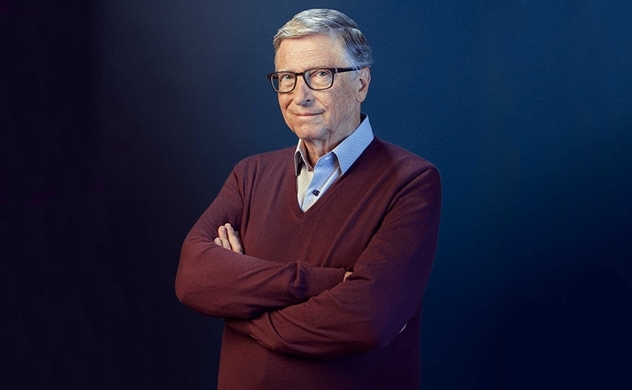
Gates, long associated with global health and development initiatives, represents a contrasting model of billionaire influence rooted in institutional partnerships and technocratic solutions.
The collision between these philosophies exposes a deeper ideological rift about whether wealth confers responsibility to stabilize existing systems or license to disrupt them entirely.
Musk’s defenders praise his willingness to confront peers openly, arguing that polite deference among elites perpetuates unexamined assumptions about charity, governance, and global intervention.
Opponents argue that labeling rivals as dishonest without presenting verifiable evidence risks eroding trust and normalizing accusation as argument.
Media analysts note that the word “liar” carries particular force, shifting discourse from policy critique to character judgment, a move that virtually guarantees viral traction and polarized reaction.
Social platforms amplified the clash instantly, with supporters and detractors projecting broader political anxieties onto the feud, treating it as symbolic of larger battles over globalization and national priorities.
Some observers see the dispute as a proxy war between two visions of progress, one grounded in institutional reform and incremental improvement, the other driven by skepticism of centralized authority and elite consensus.
The timing of Musk’s remarks intensified their impact, arriving as governments debate budget constraints and voters increasingly question whether foreign aid aligns with domestic needs.
Critics warn that billionaire-driven narratives risk distorting democratic processes, as personal platforms rival institutional channels in shaping public understanding of policy.
Supporters respond that traditional institutions have failed to earn trust, leaving space for influential outsiders to challenge orthodoxies and force uncomfortable conversations.
The feud also highlights how modern power operates, not merely through capital allocation, but through attention control and narrative dominance.
By escalating the conflict publicly, Musk ensured that questions about aid, responsibility, and moral authority would be filtered through personality rather than policy alone.
Gates’ allies emphasize decades of data-driven work, arguing that dismissing global aid frameworks ignores measurable progress in health, education, and poverty reduction.
Musk’s allies counter that metrics can obscure inefficiency, corruption, or dependency, insisting that skepticism is not cruelty but a prerequisite for genuine reform.
The exchange has left policymakers navigating a more polarized environment, where billionaire commentary shapes expectations before legislation even enters formal debate.
For the public, the spectacle reinforces unease about concentrated influence, as two unelected figures dominate conversation over issues affecting millions worldwide.
Some commentators argue that the feud exposes an accountability vacuum, where wealth amplifies voice without corresponding obligation to transparency or democratic constraint.
Others see it as an inevitable consequence of a world where private fortunes rival state budgets, blurring lines between civic duty and personal ideology.
As reactions continue to ripple globally, the dispute remains unresolved, not because evidence has settled the matter, but because the underlying question transcends individual claims.
It asks whether moral authority in the modern age flows from data, intention, disruption, or results, and who gets to decide when the most powerful disagree.
In that sense, the billionaire brawl is less about Musk versus Gates, and more about a world struggling to reconcile wealth, influence, and truth in an era where power speaks louder than consensus.