For more than a century, cars have been sold on a familiar promise: go faster, go farther, and do it more safely than ever before. Seatbelts, airbags, crumple zones, collision warnings, and now autonomous driving systems have steadily shifted the focus away from raw driving and toward protection, automation, and risk reduction.
But with a few carefully chosen words about the upcoming Tesla Roadster, Elon Musk may be signaling something radical — and controversial: a farewell to the era of the human-driven car as we know it.

According to Musk, the new Roadster is not meant to be practical. It is not meant to be safe in the conventional sense. It is meant to be the ultimate expression of driving itself — a machine built for speed, adrenaline, and the fading art of humans controlling powerful vehicles with their own hands.
And that claim has ignited a firestorm.
A car built against the tide
The automotive industry is racing toward autonomy. Regulators, manufacturers, and tech companies are all betting on a future where human drivers are the weakest link — unpredictable, emotional, prone to distraction.
Tesla itself has been one of the loudest voices pushing Full Self-Driving, promising a world where accidents are rare and cars operate like coordinated machines.
So why, in the middle of that transition, would Musk champion a car that seems to reject it?
Because, in his words, “This might be the last time a human-driven car even matters.”
The Roadster is being positioned not as transportation, but as a final statement — a swan song for an era when driving was about sensation rather than safety metrics.
Speed over safety — intentionally
What shocked many listeners was Musk’s apparent willingness to downplay safety as a core selling point. This doesn’t mean the Roadster will be unsafe by regulatory standards — it will still have to meet legal requirements.
But philosophically, safety is not the goal.
The goal is thrill.
With rumored sub-1-second 0–60 acceleration, aerospace-inspired engineering, and even speculative SpaceX cold-gas thrusters, the Roadster is being framed as something closer to a rocket than a car.
“This is not about optimizing crash statistics,” Musk has suggested in past comments.
“This is about reminding people what it feels like to drive.”
For some fans, that’s exhilarating. For critics, it’s reckless.
Is this irresponsible… or honest?
Safety advocates argue that glorifying extreme speed sends the wrong message at a time when road fatalities remain a global concern. They worry that Musk’s framing romanticizes danger, especially when his influence reaches millions.
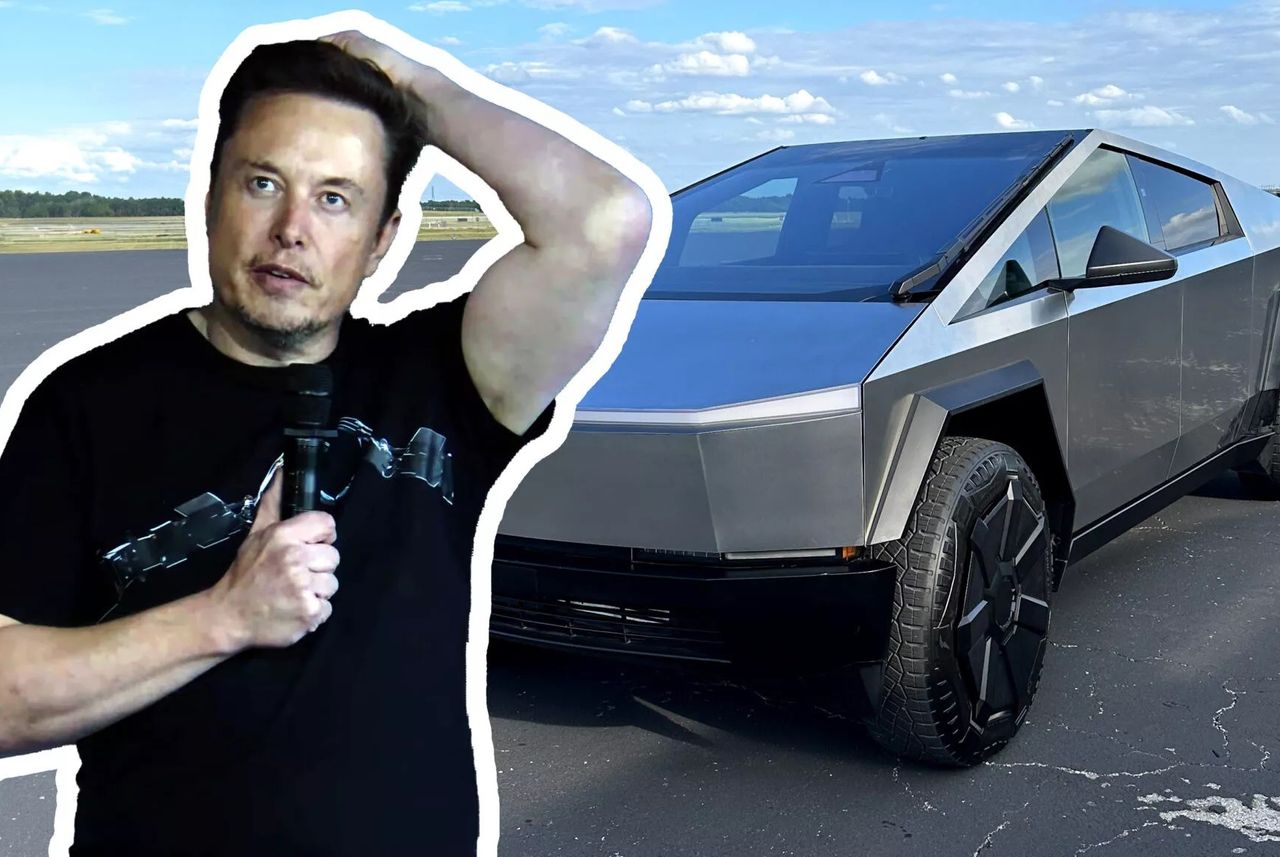
But supporters counter with a different perspective: choice.
They argue that in a future dominated by AI-driven transport pods — safe, slow, efficient, and soulless — there should still be room for machines built purely for passion. The Roadster, in this view, is not a daily commuter. It’s a collector’s item. A controlled indulgence.
Like riding a motorcycle.
Like flying a small plane.
Like climbing a mountain.
Not everything meaningful is risk-free.
The symbolism of “the last”
What makes Musk’s comments resonate isn’t just the car — it’s the implication.
If autonomous vehicles truly take over, then human driving may become rare, regulated, or even prohibited on public roads in the future. Insurance companies, governments, and AI systems may eventually decide that humans simply aren’t safe enough to be trusted at the wheel.
If that happens, the Roadster won’t just be another supercar.
It will be a time capsule.
A reminder of an age when humans accepted responsibility for speed, danger, and control — and found joy in it.
Fans divided, internet explodes
Online reactions have been predictably polarized.
Some fans are ecstatic:
“This is what cars were always supposed to be.”
Others are deeply uneasy:
“Downplaying safety from the most influential car CEO on Earth is dangerous.”
Still others see it as inevitable:
“AI will drive us everywhere. Let humans have one last machine.”
The debate isn’t really about the Roadster at all.
It’s about what we’re willing to give up as technology makes life safer, smoother, and more automated.
Tesla’s paradox
The irony is impossible to ignore.
Tesla is leading the charge toward autonomous driving — yet also releasing a car that celebrates the opposite. A machine that exists precisely because its days are numbered.
Some see this as hypocrisy. Others see it as self-awareness.
Musk himself seems to acknowledge the contradiction. He has repeatedly suggested that when AI driving becomes dominant, human driving will no longer make sense at scale.
So the Roadster becomes something else entirely:
Not progress — but closure.
A car for humans, not algorithms
Perhaps the most provocative idea behind the Roadster is that it is deliberately inefficient in an AI-optimized world. It doesn’t maximize safety per mile. It doesn’t optimize traffic flow. It doesn’t reduce human error.
Instead, it maximizes feeling.
Acceleration that pins you to the seat.
Steering that demands attention.
A machine that punishes mistakes — and rewards skill.
In a future where cars make decisions for us, that may feel almost rebellious.
The bigger question
Is Musk being irresponsible by framing safety as secondary?
Or is he simply being honest about what this car is — and what it isn’t?
The Roadster is not for everyone.
It’s not for cities.
It’s not for families.
It’s for a shrinking group of people who still want to drive — really drive — before that option quietly disappears.

The end of an era?
Whether the Roadster ever fully delivers on its promises remains to be seen. Tesla timelines are famously flexible. But the idea behind it is already doing its work.
It has forced a conversation the industry avoids:
What happens when humans are no longer the best drivers?
And when that day comes —
will we miss the danger, the control, the responsibility…
or will we be relieved to let machines take over?
If Elon Musk is right, the Tesla Roadster isn’t just a car.
It’s a farewell letter.