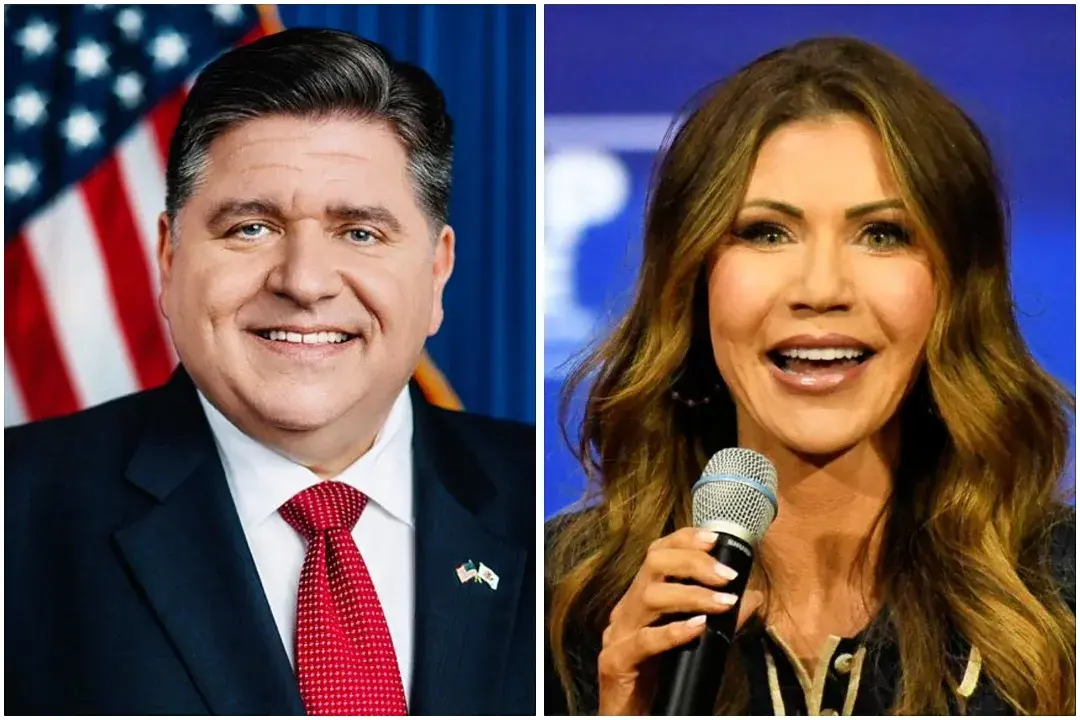
In a rapidly unfolding political controversy, Illinois Governor JB Pritzker has publicly called for U.S. Homeland Security Secretary Kristi Noem to either resign from her post or face impeachment following a series of contentious immigration enforcement actions and a fatal shooting involving a U.S. Immigration and Customs Enforcement (ICE) agent.
The demand marks one of the most direct confrontations between a state governor and a federal cabinet official in recent U.S. history — and highlights deepening divisions over immigration policy, law enforcement oversight, and executive accountability.
The Flashpoint: A Fatal Shooting in Minneapolis
The immediate catalyst for Gov. Pritzker’s statement was a fatal shooting in Minneapolis involving a federal ICE agent, in which a 37-year-old woman, identified as Renee Nicole Good, was killed during an enforcement operation. The incident triggered national outrage, widespread protests, and intense scrutiny of both federal immigration tactics and DHS leadership.
While DHS Secretary Noem has defended the actions of the ICE agent as justified — labeling the situation “domestic terrorism” and asserting that the officer acted in self-defense — local officials, eyewitnesses, and video evidence have sharply contested that narrative, noting that Good appeared to be reversing or driving away when she was shot.
Pritzker’s Call for Resignation or Impeachment
During an appearance on CNN’s State of the Union, Governor Pritzker stated unequivocally that Noem should either step down or be impeached. He criticized the Department of Homeland Security’s handling of this and several other incidents, claiming that repeated federal use of force — including in Chicago — was unjustified, poorly communicated, and indicative of broader leadership failures at DHS under Noem’s direction.
Pritzker’s comments did not emerge in a political vacuum. He referenced past incidents in Chicago and the Chicago area where ICE operations resulted in controversial uses of force — including shootings where DHS’s initial public statements were later contradicted by video evidence and witness accounts. These events helped fuel his belief that the department has been operating without the necessary transparency and accountability. Under federal law, impeachment of a cabinet secretary would require a vote in the U.S. House of Representatives, followed by a trial in the Senate.
With Republicans controlling the House, an impeachment effort is widely viewed as unlikely to succeed, but it has nonetheless gained support from several Democratic lawmakers, including U.S. Representative Robin Kelly of Illinois, who has indicated plans to file articles of impeachment against Noem.
Political and Public Backdrop
The controversy comes amid broader national debates about immigration enforcement under the second Trump administration, which has prioritized aggressive ICE operations in cities across the country. Chicago has been a particular flashpoint, with large-scale ICE raids known as Operation Midway Blitz drawing intense criticism from local leaders and immigrant advocacy groups who say the tactics erode trust and endanger everyday residents.
These federal operations — which include arrests, deportation efforts, and enforcement actions in traditionally sanctuary-oriented cities — are designed to target individuals who have criminal records or violations of federal law.
However, critics argue that the aggressive enforcement strategy has increased fear in immigrant communities and led to instances of alleged misconduct or excessive force.
Illinois has also been at the center of another dimension of the controversy over DHS policy. Previously, Gov. Pritzker asked Noem to pause ICE enforcement operations in Chicago during Halloween to prevent the disruption of community events and to ensure public safety, particularly for children trick-or-treating — a request that Noem rejected outright.
Furthermore, Noem’s earlier public criticisms of Illinois sanctuary policies and her administration’s broader stance on immigration have already sparked tensions between state and federal officials.
In mid-2025, she urged Illinois to abandon sanctuary city protections, arguing that undocumented immigrants had contributed to crime — a claim that Pritzker rebuffed as misinformation and political posturing.
National Reaction and Impact
The debate has reverberated far beyond Illinois. Amid nationwide protests sparked by the Minneapolis shooting and other immigration enforcement actions, tens of thousands of demonstrators have taken to the streets in cities like New York, Chicago, and Pittsburgh. Within Washington, reactions have split largely along party lines. Some Democrats have amplified calls for oversight hearings, additional investigations, and even impeachment proceedings, citing concerns over due process, civil liberties, and federal accountability. Others — including many Republicans — defend DHS actions as lawful enforcement of immigration laws and criticize calls for Noem’s resignation as politically motivated.
Legal analysts note that impeachment of a cabinet secretary is historically rare and unlikely to move forward unless there is a significant shift in House control or a dramatic new development implicating clear legal wrongdoing.
Critics of Pritzker’s position argue that demanding a cabinet member’s removal over policy disagreements sets a precarious precedent. Supporters counter that no official should be above scrutiny when actions taken under their leadership result in loss of life and ongoing legal controversy.
What Comes Next?
At the center of this storm is the question of accountability: how far should state leaders go in challenging federal authorities? Governor Pritzker’s statements underscore an aggressive stance that seeks not just policy change but direct consequences for top federal officials deemed unfit to serve.
For Secretary Noem, defending federal immigration enforcement and maintaining her leadership position remains a priority. DHS has emphasized the legality of ICE actions and reiterated that its agents operate within the bounds of federal law, even as scrutiny mounts.
As investigations continue, including state and federal reviews of the Minneapolis shooting, additional developments are likely to unfold, possibly shaping the broader national dialogue on immigration enforcement, civil liberties, and executive oversight.
Whether Pritzker’s call will translate into tangible political action — such as congressional hearings, formal impeachment procedures, or broader legal challenges — remains an open question.