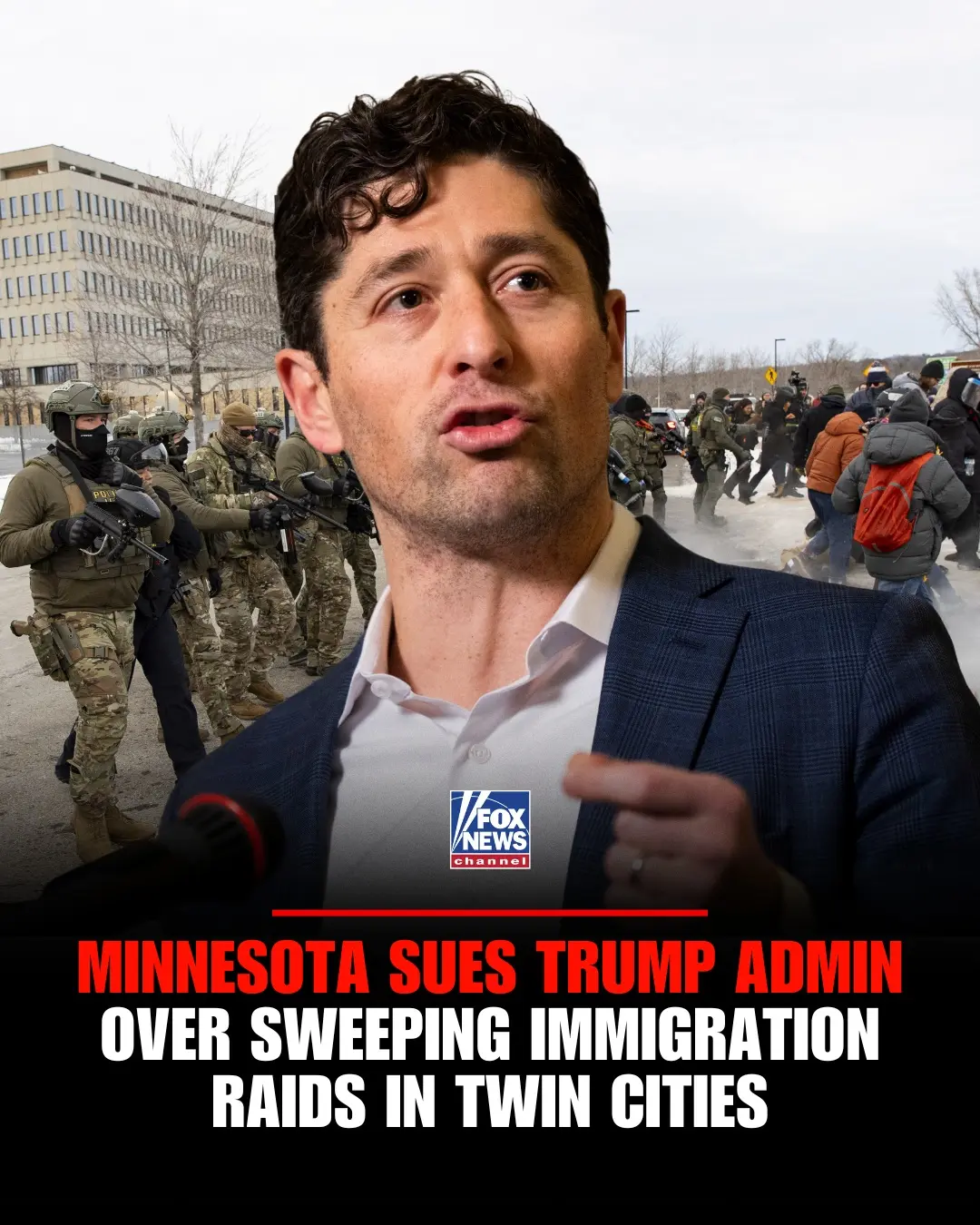
In early January 2026, the state of Minnesota, together with the cities of Minneapolis and Saint Paul, filed a sweeping lawsuit against the Trump administration and the U.S. Department of Homeland Security (DHS) — a legal challenge aimed at halting what plaintiffs describe as an unprecedented and unconstitutional surge of federal immigration agents deployed to the Twin Cities.
The lawsuit, filed in federal court on January 12, alleges that the enforcement operation has destabilized local communities, violated constitutional rights, and interfered with state and local authorities’ ability to govern effectively.
Background: Operation Metro Surge
The controversy centers on a federal initiative informally known as Operation Metro Surge, a massive immigration enforcement effort launched in late 2025 and continuing into 2026.
According to both Minnesota officials and independent reporting, DHS deployed thousands of armed agents — including personnel from Immigration and Customs Enforcement (ICE) and Customs and Border Protection (CBP) — into the Minneapolis–Saint Paul metropolitan region.
Federal authorities characterize the operation as part of a nationwide crackdown on illegal immigration and associated criminal activity, but state and city leaders have taken a starkly different view.
Minnesota Attorney General Keith Ellison labeled the operation an “unlawful, unprecedented surge of federal law enforcement agents into Minnesota,” accusing the administration of overreach and constitutional violations during a press conference announcing the lawsuit.
Core Allegations in the Lawsuit
The legal complaint — filed on behalf of the state, Minneapolis, and Saint Paul — outlines multiple grievances:
1. Constitutional Violations
Plaintiffs argue that the surge of federal agents violates core constitutional protections, including:
The First Amendment: Alleging that the federal operation has chilled free speech and peaceful assembly.
The Tenth Amendment: Claiming that the surge unlawfully interferes with the sovereignty and autonomy of state and local governments.
Equal Protection and Due Process: Asserting that enforcement actions have been conducted in a discriminatory and arbitrary manner.
According to court filings, these constitutional violations have created an atmosphere of fear, uncertainty, and unrest across neighborhoods where federal agents are operating.
2. Excessive Force and Public Safety Concerns
The lawsuit includes allegations that federal agents engaged in aggressive and excessive tactics, including warrantless arrests, use of force in sensitive locations, and encounters that led to school and business disruptions.
Officials point to examples of federal presence around hospitals, schools, and other community spaces, which they say has caused panic, school lockdowns, and strained local emergency resources.
A pivotal moment that galvanized public reaction was the fatal shooting of 37-year-old Minneapolis resident Renee Nicole Good by an ICE agent, an incident that sparked protests and intensified scrutiny of federal methods.
Federal authorities contend the shooting was justified as self-defense, but local leaders and many witnesses dispute aspects of the official account.
3. Improper Federal Interference and Resource Strain
Minnesota officials argue that the influx of federal agents has directly impaired the function of state and local law enforcement. Municipalities report diverting significant resources — including police and emergency responder hours — from routine duties to handle situations arising from the federal operation.
Businesses have reported closures, and school districts have experienced disruption due to heightened enforcement activities.
The lawsuit also contends that federal agents have operated without adequate coordination with local authorities, leading to confusion and undermining community trust.
What the Plaintiffs Are Seeking
Minnesota and the Twin Cities are asking the court to:
Issue a temporary restraining order to immediately halt “Operation Metro Surge” or limit its scope.
Declare the federal actions unlawful and unconstitutional.
Block further deployments of DHS personnel in the region until a full hearing can be held.
In their filing, the plaintiffs assert that the federal government’s actions have gone far beyond routine immigration enforcement and have instead created a “federal invasion” of local communities — language that underscores the seriousness with which Minnesota leaders view the situation.
Federal Perspective and Response
The Trump administration, for its part, maintains that the enforcement surge is a legitimate effort to address illegal immigration and related criminal activities.
DHS has defended its actions as lawful, asserting that immigration authorities have the constitutional authority to operate throughout the United States and that the surge targets individuals believed to be in violation of immigration laws.
In response to the fatal shooting that heightened tensions, DHS Secretary Kristi Noem doubled down on federal deployment plans and emphasized the agency’s commitment to law enforcement objectives, even as local officials called for greater transparency and oversight.
Public Reaction and Broader Implications
The lawsuit has ignited a broader debate over federal immigration enforcement strategies and the balance of power between national and local authorities. Nationwide protests have erupted in solidarity with Minnesota residents, with demonstrators decrying the tactics as heavy-handed and disproportionate.
Meanwhile, other states and cities — including Illinois and Chicago — filed a separate lawsuit over similar federal immigration operations, suggesting that Minnesota’s legal challenge could be part of a larger national movement against aggressive enforcement tactics.
Legal analysts say the case could have long-term implications for federal-state relations, particularly in how much authority the federal government can assert when enforcing immigration laws in communities that oppose such actions.
Constitutional scholars have noted that the lawsuit raises complex questions involving the scope of federal power, administrative law, and civil liberties.
What Happens Next?
The lawsuit will proceed in federal court, where a judge will consider requests for immediate relief and eventually hear full arguments on the underlying constitutional claims.
If the court grants a temporary restraining order, it could temporarily freeze federal enforcement actions in Minnesota, at least until the legal issues are fully litigated.
Regardless of the outcome, the case represents a significant flashpoint in the ongoing national debate over immigration policy, law enforcement tactics, and the complex interplay between federal authority and local governance.