Vice President JD Vance just killed the anti‑Trump War Powers resolution on Venezuela — casting the tie‑breaking vote to make it 51–50. The resolution has OFFICIALLY FAILED. With the Senate deadlocked, VP Vance stepped in and did exactly what he was elected to do: stand the line.
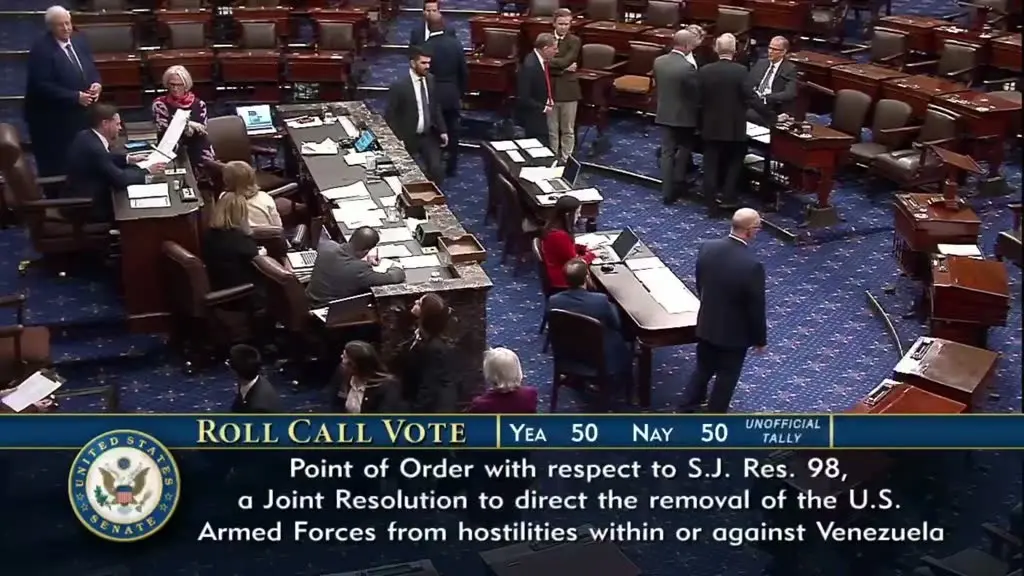
In a dramatic turn of events on Capitol Hill, the U.S. Senate narrowly defeated a War Powers resolution aimed at restricting President Donald Trump’s ability to conduct further military action in Venezuela — after Vice President JD Vance cast the deciding vote in a 51‑50 tally.
The resolution’s failure marks a major political victory for the Trump administration and underscores the ongoing tensions over executive authority and congressional oversight of military engagements.
The War Powers Resolution: What Was It?
The War Powers resolution brought to the Senate floor sought to limit the president’s ability to pursue military operations in or against Venezuela without prior congressional approval. It was largely in response to a controversial military action earlier this month that saw U.S. forces conduct a raid in Caracas, resulting in the capture of Venezuelan President Nicolás Maduro and his wife.
Supporters of the resolution — including Senate Democrats and a few Republican allies — argued that the Constitution gives Congress a central role in authorizing military force, and any sustained military action should not proceed without that authorization.
The measure initially cleared a procedural hurdle late last week with bipartisan support, as five Republican senators voted alongside Democrats to advance the resolution.
The Vote That Changed Everything
By Wednesday evening, the atmosphere in the Senate was tense. As debate concluded, the Senate was split 50‑50 on whether to advance a procedural motion that would allow a final vote on the resolution.
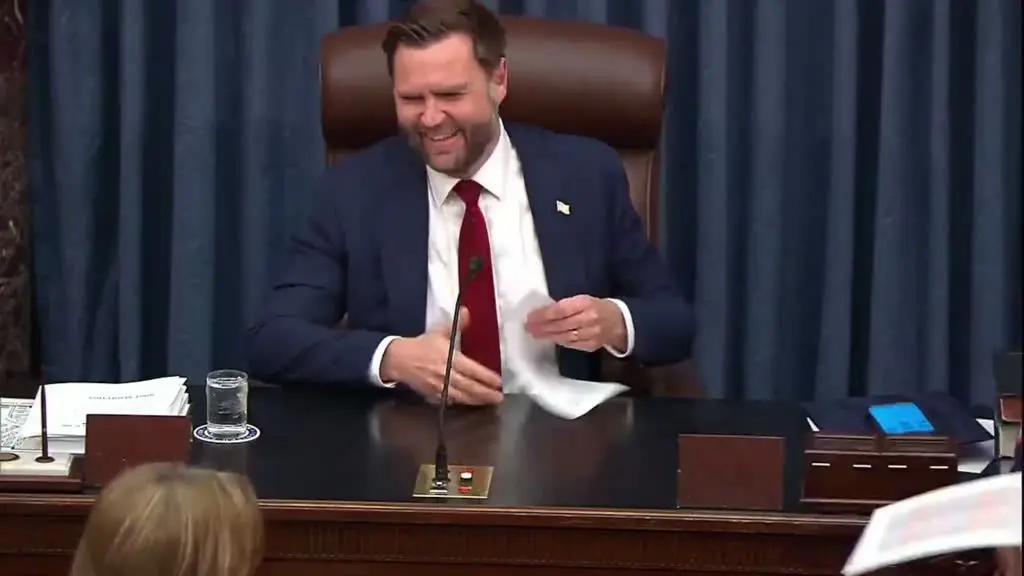
This tied vote triggered the constitutional role of the vice president, JD Vance, as the President of the Senate, who then stepped in to cast the tie‑breaking vote — siding with Republicans and effectively killing the resolution.
The Senate’s decision means the resolution will not proceed to a final vote and has officially failed, allowing the Trump administration to retain broad authority for future military actions related to Venezuela without new congressional approval.
Why the Vote Was So Close
The 51‑50 vote margin reflects a deep divide in Congress over how to balance presidential power and congressional oversight. Initially, five Republicans — including Senators Josh Hawley (Missouri) and Todd Young (Indiana) — joined all Senate Democrats in voting to advance the resolution earlier in the week.
However, under pressure from the Trump administration — and following private assurances about the scope of future actions — both Hawley and Young reversed their positions ahead of Wednesday’s decisive procedural vote. Their withdrawals were pivotal in creating the 50‑50 split that gave Vance the opportunity to break the tie.
What the Trump Administration Said
The White House and its allies framed the war powers resolution as unnecessary because, in their view, the U.S. is not currently engaged in ongoing hostilities that would warrant restrictions on military authority. Republican leaders argued that since there are no U.S.
ground forces in Venezuela and the situation is not akin to a full‑blown armed conflict, the resolution should not be fast‑tracked or given priority on the Senate floor.
President Trump himself publicly criticized Republican lawmakers who had supported the resolution, claiming they were undermining national security and the president’s constitutional role as commander‑in‑chief.
Democrats’ Response
Senate Democrats decried the resolution’s failure as a missed opportunity to assert congressional authority over prolonged and unapproved military engagements.
Leaders such as Senator Chuck Schumer and Senator Tim Kaine had been outspoken supporters of the measure, arguing that the constitutional requirement for congressional approval cannot be sidestepped — even under expansive interpretations of executive power.
Critics also voiced concern about recent military actions in Caracas, which they said lacked clear legal justification and bypassed congressional consultation. Those criticisms helped give initial momentum to the resolution earlier in the week.
The Constitutional Debate
The showdown brought renewed attention to the War Powers Resolution of 1973, a law intended to check the president’s ability to engage U.S. forces in hostilities without congressional approval.
While presidents of both parties have frequently viewed the law as overly restrictive or unconstitutional, supporters argue that it is a crucial check on unilateral military action.
The recent Senate debate highlights the ongoing struggle between the executive branch’s desire for flexibility in national security operations and Congress’s constitutional role in declaring war and authorizing military force.
Political Stakes and Broader Implications
The failure of the war powers resolution signifies more than just a legislative defeat. It has important political implications for both parties:
For the Trump administration, it represents a consolidation of presidential authority over military decision‑making, particularly in foreign theaters like Venezuela.
For congressional critics, the vote underscored the challenges in rallying enough bipartisan support to curb executive actions — even in high‑profile cases involving unexpected military operations.
For Republicans, the episode illustrated Trump’s continued influence over members of his party, as evidenced by the reversal of key GOP lawmakers under presidential pressure.
Overall, the Senate showdown and Vance’s decisive vote shine a spotlight on America’s constitutional mechanisms for addressing war powers, and how political strategy — not just policy — plays a critical role in determining outcomes.
Public Reaction and Future Outlook
Public reaction to the Senate vote has been mixed. Supporters of the resolution celebrated the effort as an important defense of congressional authority, while opponents hailed Vance’s action as a necessary defense of executive flexibility in national security matters.
Some commentators predict that the close vote may encourage future legislative efforts to refine or revisit the War Powers Act, potentially setting the stage for new proposals that seek to clarify the balance of war powers between Congress and the White House.
Lawmakers on both sides of the aisle have indicated they may bring forward new legislation in coming months — each with competing visions for how the U.S. should define its role in Venezuela and beyond.
Conclusion
The Senate’s 51‑50 decision with Vice President JD Vance casting the tie‑breaking vote has officially killed the War Powers resolution targeting President Trump’s actions in Venezuela.
The resolution’s failure reflects deep partisan divisions and ongoing debates over presidential authority, congressional oversight, and the scope of American military engagement on the global stage.
As the political fallout unfolds, both advocates and critics of the resolution are likely to remain engaged in shaping future policy and legislative strategies — a testament to the enduring complexities of war powers in U.S. governance.