U.S. foreign policy toward Venezuela has long been a flashpoint in American politics, drawing sharp divisions across party lines.
In one of the most pointed internal Republican critiques in recent years, Representative Thomas Massie of Kentucky publicly rebuked former President Donald Trump’s approach to Venezuela, arguing that the policy was driven less by democracy or human rights and more by oil interests and regime change.
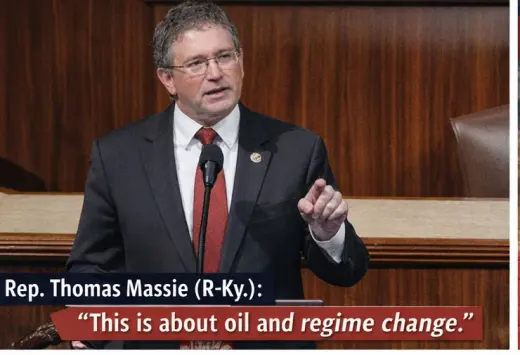
Massie’s blunt assessment—summed up in the phrase “This is about oil and regime change”—has reignited debate over America’s role in Latin America, the ethics of foreign intervention, and the constitutional limits of executive power.
His remarks stand out not only for their content but also for their source: a Republican lawmaker challenging a Republican president from within the same party.
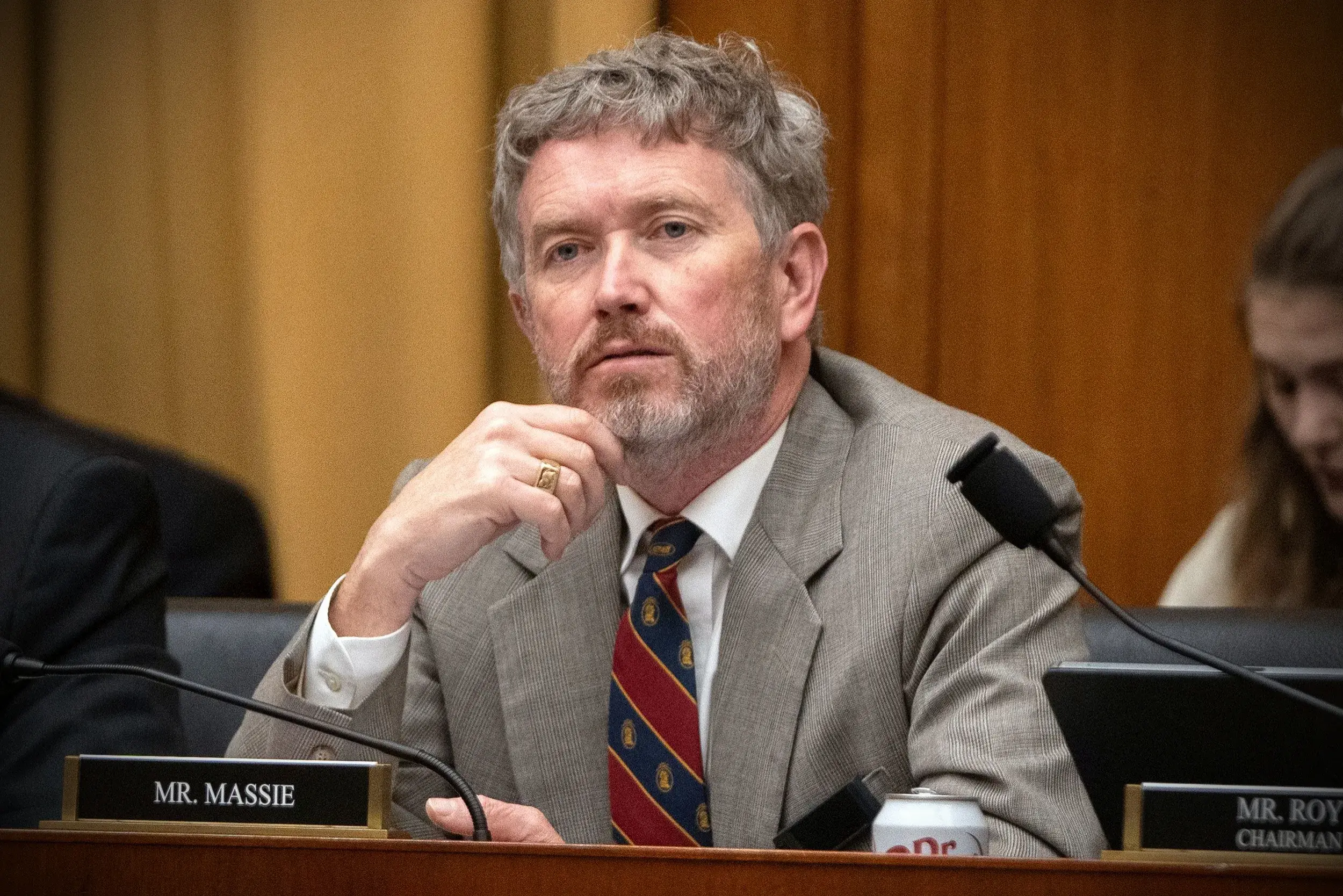
Who Is Rep. Thomas Massie?
Thomas Massie is a Republican congressman representing Kentucky’s 4th District and is widely known for his libertarian-leaning ideology. Throughout his time in Congress, Massie has built a reputation as:
A consistent opponent of foreign military interventionA defender of congressional authority over war powersA critic of both Democratic and Republican administrations when he believes they overstep constitutional boundaries
Unlike many lawmakers who align closely with party leadership, Massie has often voted against bipartisan foreign policy measures, arguing that endless intervention abroad weakens the United States morally, economically, and strategically.
Venezuela: Oil, Crisis, and U.S. Pressure
Venezuela holds the largest proven oil reserves in the world, making it a strategic focal point for global energy politics. However, the country has also endured years of economic collapse, political instability, and a deep humanitarian crisis marked by shortages of food, medicine, and basic services.
Under the Trump administration, U.S. policy toward Venezuela included:
Sweeping economic sanctionsDiplomatic recognition of opposition leadershipRepeated rhetoric supporting regime changePublic discussion of military options, though no direct intervention occurred
Supporters of the policy argued it was necessary to restore democracy and counter authoritarianism. Critics countered that sanctions and pressure worsened civilian suffering while failing to produce meaningful political reform.
“This Is About Oil and Regime Change”
Massie’s rebuke directly challenged the moral framing of Trump’s Venezuela policy. According to Massie, the emphasis on democracy and freedom masked a more familiar pattern in U.S. foreign policy: strategic intervention tied to natural resources and geopolitical dominance.
By describing the situation as “about oil and regime change,” Massie highlighted several core arguments:
Resource-Driven Motivation Venezuela’s vast oil reserves, Massie suggested, made it a target for intervention under the guise of humanitarian concern.Historical Parallels His critique echoed past U.S. interventions in countries such as Iraq and Libya, where regime change efforts produced long-term instability rather than peace.Civilian Consequences Massie emphasized that sanctions and external pressure often harm ordinary citizens more than political elites.
A Rare GOP Dissent Against Trump
Massie’s comments were notable because they represented one of the clearest Republican criticisms of Trump’s foreign policy from within the party. While most GOP lawmakers supported the administration’s hardline stance on Venezuela, Massie stood apart.
This internal dissent underscored broader ideological tensions within the Republican Party:
Interventionists who support aggressive foreign policy to protect U.S. interestsNon-interventionists who argue for restraint, diplomacy, and constitutional limits
Massie firmly belongs to the latter camp, aligning with a smaller but vocal faction skeptical of overseas entanglements.
Constitutional Concerns and War Powers
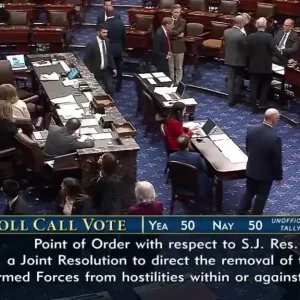
Beyond oil and regime change, Massie framed his criticism in constitutional terms. He has repeatedly warned that presidents from both parties have expanded executive power at the expense of Congress, particularly in matters of war and foreign intervention.
According to Massie:
Military action without congressional authorization undermines the ConstitutionEconomic warfare through sanctions can be as destructive as armed conflictForeign policy decisions should prioritize American security without exploiting other nations
These arguments resonate with voters who are wary of “forever wars” and skeptical of elite-driven foreign policy agendas.
Public and Political Reactions
Massie’s remarks sparked mixed reactions:
Anti-war advocates and civil liberties groups praised his honesty and consistency.Trump supporters and foreign policy hawks criticized him as undermining U.S. leadership and ignoring human rights abuses in Venezuela.Independent media outlets highlighted the statement as evidence of growing skepticism toward interventionism across the political spectrum.
On social media, the phrase “oil and regime change” was widely shared, often accompanied by debates over whether U.S. policy truly serves democratic values or economic interests.
The Broader Debate: Intervention vs. Restraint
At the heart of Massie’s rebuke lies a fundamental question: Should the United States intervene in other nations to influence political outcomes, especially when strategic resources are involved?
Supporters of intervention argue that:
U.S. leadership is necessary to counter authoritarian regimesEnergy security is a legitimate national interestFailing to act can embolden hostile governments
Critics, including Massie, counter that:
Intervention often destabilizes regions and fuels resentmentResource-driven policies undermine moral credibilityLong-term peace is better achieved through diplomacy and humanitarian aid
Why Massie’s Criticism Still Matters
Even years after the height of U.S.-Venezuela tensions, Massie’s critique remains relevant. Global competition for energy resources continues to intensify, and debates over sanctions, regime change, and military power are far from settled.
His blunt framing cuts through political rhetoric and forces a reassessment of motives behind foreign policy decisions. Whether one agrees with him or not, Massie’s remarks challenge Americans to ask difficult questions about power, responsibility, and the true cost of intervention.
Conclusion
Rep. Thomas Massie’s rebuke of Donald Trump’s Venezuela policy—declaring that it was fundamentally about oil and regime change—stands as a rare moment of internal party dissent and a broader critique of U.S. foreign interventionism.
His message highlights enduring tensions between strategic interests and moral principles, between executive power and constitutional restraint.
As the United States continues to navigate complex global challenges, Massie’s warning serves as a reminder that foreign policy decisions should be judged not only by their intentions but by their consequences—especially for the people who bear the greatest cost.