Democratic Representative Eric Swalwell of California has ignited fresh political debate after stating that Democrats are prepared to impeach officials from President Donald Trump’s administration if they regain control of the U.S. House of Representatives in the 2026 midterm elections.
His remarks signal a renewed focus on oversight and accountability as partisan tensions continue to dominate Washington politics.
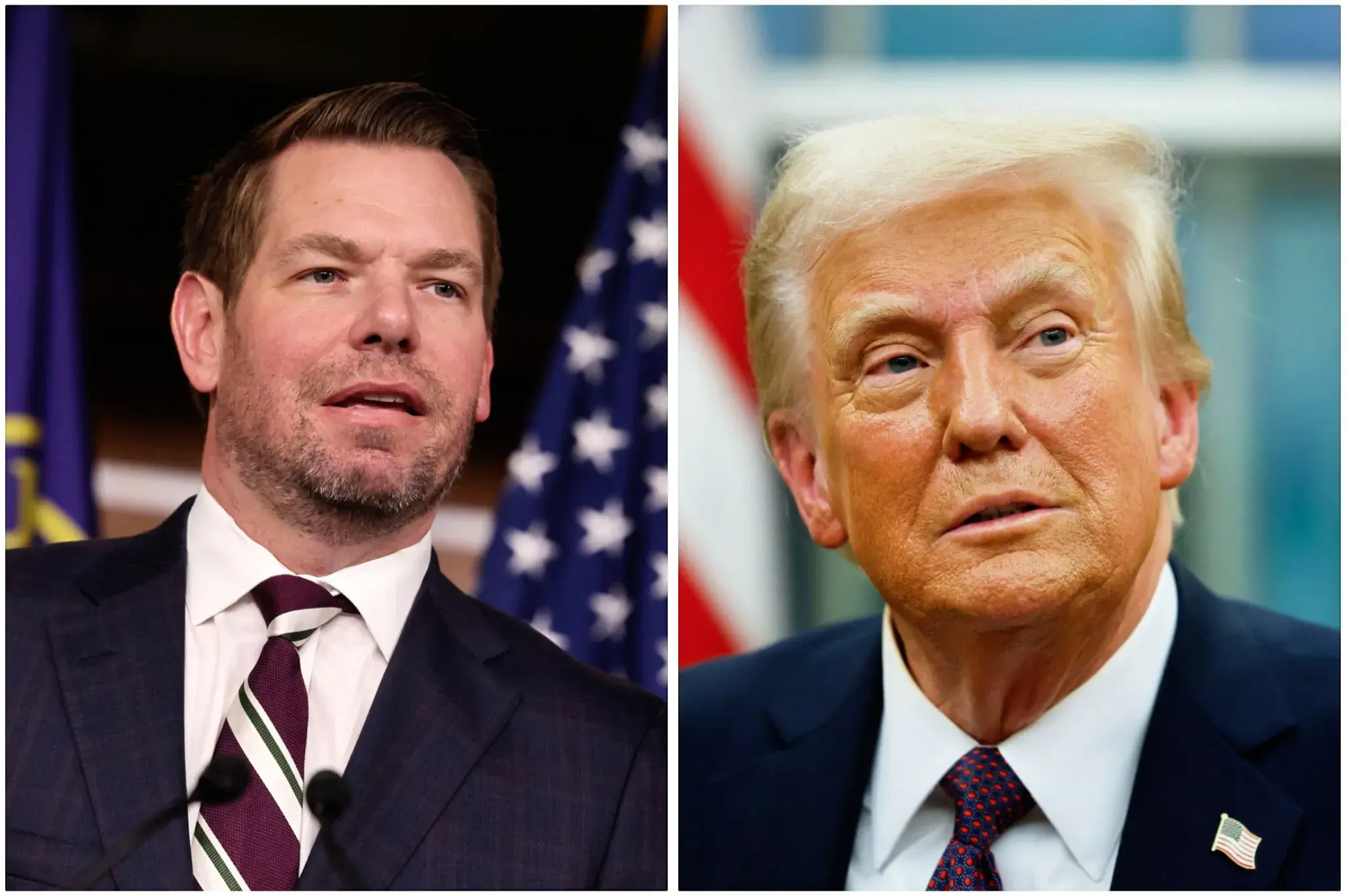
Swalwell’s comments reflect broader Democratic concerns about executive power, rule of law, and democratic norms, while Republicans have dismissed the statements as politically driven and divisive. As the 2026 elections approach, the prospect of impeachment once again looms large in the American political landscape.
Eric Swalwell’s Warning on Accountability
Speaking during a recent interview, Rep. Swalwell emphasized that impeachment is not a political goal in itself but a constitutional mechanism available to Congress when serious misconduct is alleged. According to Swalwell, Democrats believe that no administration officials should be above the law, regardless of party affiliation or political influence.
He argued that if Democrats regain a House majority, they would not hesitate to use oversight tools—including subpoenas, investigations, and impeachment—should evidence warrant such actions. Swalwell framed the issue as one of responsibility rather than retaliation, asserting that Congress has a duty to act when democratic institutions are threatened.
Impeachment as a Political Flashpoint
Impeachment has become one of the most polarizing issues in modern U.S. politics. President Trump was impeached twice during his first term, though acquitted both times by the Senate. Those proceedings deepened partisan divisions and reshaped how Americans view congressional oversight.
Swalwell’s statement suggests that impeachment could again play a central role if Democrats return to power in the House. While he did not name specific officials, he referenced concerns over potential abuses of authority, misuse of federal agencies, and efforts that Democrats believe undermine democratic governance.
Democratic Strategy Ahead of the 2026 Elections
The comments come as Democrats begin laying the groundwork for the 2026 midterm elections, which will determine control of Congress. For Democrats, reclaiming the House would provide leverage to challenge the Trump administration’s policies and actions more aggressively.
Party leaders have increasingly emphasized themes of checks and balances, transparency, and ethical governance. Swalwell’s remarks align with this strategy, signaling to Democratic voters that the party is prepared to confront what it sees as executive overreach.
At the same time, Democratic leadership has been cautious about explicitly promising impeachment, aware that such rhetoric can energize opponents as much as supporters.
Republican Response and Criticism
Republicans quickly criticized Swalwell’s comments, accusing Democrats of prioritizing political revenge over governance. GOP leaders argued that repeated impeachment threats undermine public trust in democratic institutions and distract from pressing national issues such as inflation, national security, and border policy.
Some Republicans characterized Swalwell’s statement as evidence that Democrats are focused on relitigating past political battles rather than offering solutions. They warned that constant impeachment talk could alienate independent voters who are frustrated by partisan gridlock.
Public Opinion on Impeachment Fatigue
Public reaction to impeachment discussions remains mixed. While Democratic voters often support aggressive oversight of the Trump administration, polls in recent years have shown signs of impeachment fatigue among the broader electorate.
Many Americans express concern that impeachment has become overly politicized, potentially weakening its constitutional significance. Analysts note that voters may be more interested in economic stability, healthcare, and public safety than prolonged political conflict.
Swalwell acknowledged these concerns but argued that accountability should not be abandoned for the sake of political convenience.
Legal and Constitutional Framework
Under the U.S. Constitution, impeachment is a two-step process: the House votes to impeach, and the Senate conducts a trial to determine removal from office. Even if Democrats regain the House in 2026, any impeachment effort would still require significant political momentum and evidence to succeed.
Legal experts note that impeaching administration officials—rather than the president himself—is relatively rare and would require clearly defined grounds. Nonetheless, the House has broad authority to investigate executive branch conduct.
Swalwell’s comments suggest Democrats are willing to explore these constitutional options if they believe circumstances justify such action.
Impact on U.S. Governance
The renewed discussion of impeachment underscores how deeply divided American politics remain. Frequent threats of impeachment can strain relationships between the executive and legislative branches, complicating efforts to pass legislation or respond to national crises.
However, supporters argue that strong oversight is essential in a democracy, particularly when one party controls the presidency and potentially limits internal accountability. The debate highlights a fundamental tension between political stability and rigorous enforcement of democratic norms.
What This Means for President Trump’s Administration
For the Trump administration, Swalwell’s remarks serve as a warning that intensified scrutiny could return if Democrats gain power. Even without impeachment, a Democratic-led House could launch investigations into policy decisions, administrative conduct, and financial matters.
Such scrutiny could slow legislative priorities and dominate media coverage, shaping public perception ahead of the 2028 presidential election.
Looking Ahead to 2026
As the 2026 midterms draw closer, impeachment rhetoric is likely to remain a potent political weapon. Democrats will need to balance calls for accountability with voter concerns about unity and governance, while Republicans will frame such efforts as partisan overreach.
Rep. Eric Swalwell’s statement has ensured that impeachment is once again part of the national conversation, reinforcing how deeply the issue is embedded in modern American politics.
Conclusion
Democratic Rep. Eric Swalwell’s declaration that Democrats are willing to impeach President Trump officials if they regain control of the House in 2026 highlights the ongoing struggle over power, accountability, and democratic norms in the United States.
While impeachment remains a controversial and divisive tool, it continues to serve as a symbol of congressional authority and political conflict.
As voters look ahead to the next election cycle, the question remains whether impeachment will be viewed as a necessary safeguard of democracy—or as yet another chapter in America’s era of intense partisan division.