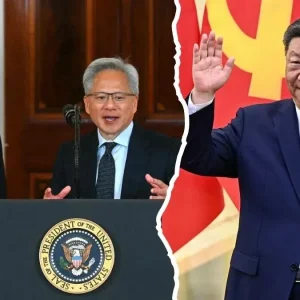
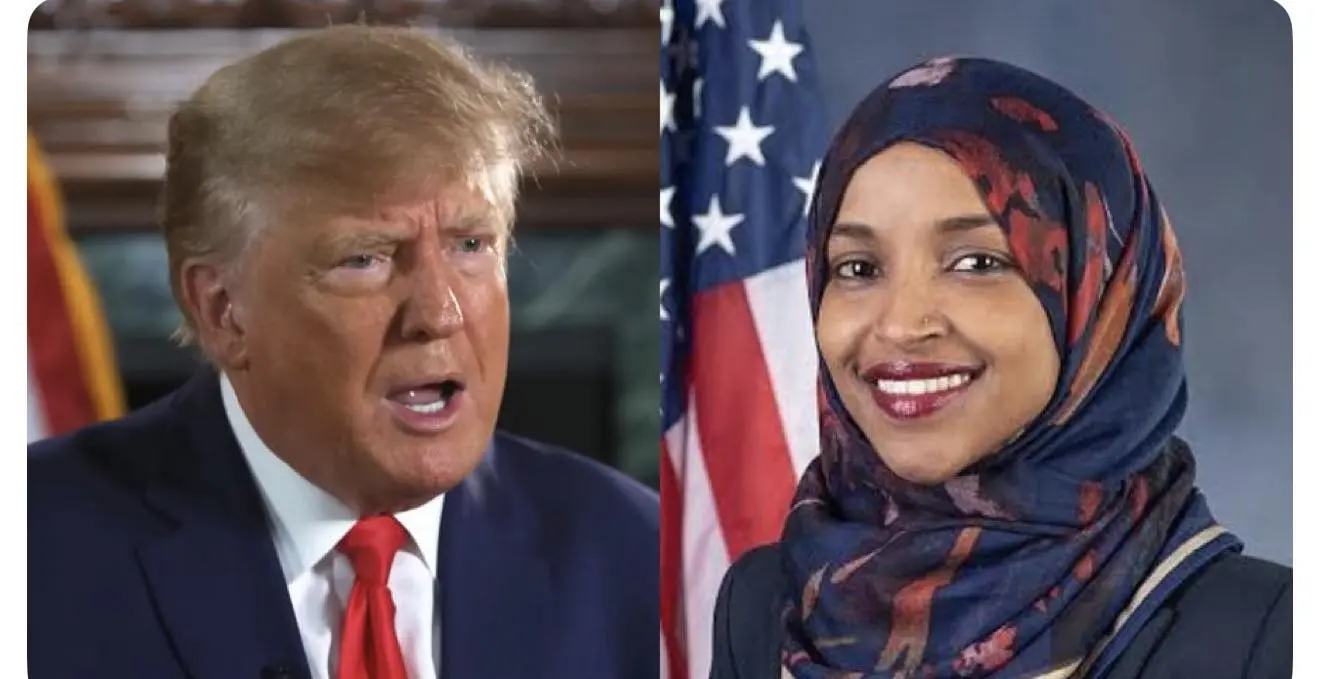
Former President Donald Trump has sparked intense national debate after stating that every Somali individual engaged in fraud should be deported from the United States, explicitly naming Representative Ilhan Omar in his remarks. The comments, made during a recent public appearance and amplified across social media, immediately drew sharp reactions from political leaders, legal experts, civil rights groups, and voters across the country.
Trump’s Statement and Its Immediate Impact
According to reports circulating widely online, President Trump argued that fraud within federal and state assistance programs must be met with strict enforcement, including deportation where legally applicable. In his remarks, Trump asserted that no one should be exempt from accountability, “even members of Congress,” and referenced Rep. Ilhan Omar as an example while discussing alleged fraud tied to immigration or public benefit systems.
The statement quickly went viral, dominating headlines and reigniting debates over immigration enforcement, fraud prevention, and the limits of executive power. Supporters praised Trump’s tough stance on fraud, while critics accused him of making inflammatory claims that blur legal facts and target specific communities.
Legal Reality: Citizenship and Deportation
Legal scholars were quick to note a critical distinction often missing from public discourse: deportation under U.S. law applies to non-citizens, not American citizens. Representative Ilhan Omar is a naturalized U.S. citizen, and under the Constitution, citizens cannot be deported.
Experts emphasize that allegations of fraud—if substantiated—are handled through the judicial system, not immigration enforcement. Criminal charges, investigations, and due process are required, and deportation is not a legal option for citizens regardless of political rhetoric.
Who Is Rep. Ilhan Omar?
Rep. Ilhan Omar, a Democrat representing Minnesota’s 5th Congressional District, has long been a polarizing figure in American politics. Born in Somalia, she came to the United States as a refugee and later became a U.S. citizen. Omar has been a vocal advocate for progressive policies, immigration reform, and expanded social programs, while also facing repeated criticism from conservative lawmakers.
Over the years, Omar has been the subject of various allegations and political controversies, though she has consistently denied wrongdoing and has not been convicted of fraud. Her supporters argue that she is being unfairly targeted because of her background and political views.
Fraud Allegations and Immigration Enforcement
Fraud within public assistance programs is a legitimate concern for policymakers across the political spectrum. Federal and state agencies regularly investigate cases involving Medicaid, unemployment benefits, tax credits, and grant funding. When fraud is proven, penalties can include fines, restitution, and prison sentences.
However, immigration enforcement intersects with fraud cases only when non-citizens are involved and when immigration status is directly affected by criminal convictions. Immigration attorneys stress that broad statements about deporting entire groups based on nationality are not aligned with existing law.
Political Strategy or Policy Signal?
Political analysts suggest Trump’s remarks may serve multiple strategic purposes. As immigration remains a top issue among Republican voters, strong language on fraud and deportation reinforces Trump’s image as a law-and-order candidate. Mentioning a high-profile Democrat like Ilhan Omar also energizes his political base and draws media attention.
At the same time, critics argue that such statements risk oversimplifying complex legal issues and inflaming tensions around race, religion, and immigration. Civil rights organizations warn that rhetoric tying criminal behavior to nationality can stigmatize entire communities.
Reaction From Lawmakers and Advocacy Groups
Democratic leaders swiftly condemned Trump’s comments, calling them misleading and dangerous. Several lawmakers emphasized that fraud should be prosecuted based on evidence and due process, not political attacks or generalized accusations. Advocacy groups representing Somali Americans expressed concern that the remarks could fuel discrimination and misinformation. They stressed that the vast majority of Somali immigrants and refugees are law-abiding residents who contribute positively to American society.
Republican responses were mixed. Some echoed Trump’s call for strict enforcement against fraud, while others avoided endorsing the specific language used, focusing instead on the importance of legal procedures.
The Role of Misinformation and Social Media
Social media played a significant role in amplifying Trump’s statement, often stripping it of legal context. Viral posts and headlines sometimes implied immediate deportation actions, despite no such authority existing over U.S. citizens.
Fact-checkers have urged the public to distinguish between political rhetoric and enforceable policy. They note that while public officials can call for investigations, actual legal consequences depend on courts, evidence, and existing statutes.
Broader Implications for the 2026 Political Landscape
Trump’s remarks arrive amid heightened scrutiny of government spending, immigration enforcement, and alleged fraud within public programs. As these issues gain prominence ahead of upcoming elections, similar statements are likely to continue shaping campaign narratives.
The controversy also highlights a broader challenge in American politics: balancing legitimate concerns about fraud and accountability with constitutional protections, civil rights, and factual accuracy.
What Happens Next?
At present, there is no indication of new legal action against Rep. Ilhan Omar stemming from Trump’s comments. Any investigation into fraud—regardless of the individual involved—would require credible evidence and follow established legal channels.
For voters, the episode serves as a reminder to critically evaluate political claims and understand the legal frameworks behind them. While calls for accountability resonate with many Americans, the rule of law ultimately determines what actions are possible.
As the debate continues, Trump’s statement has once again placed immigration, fraud enforcement, and political rhetoric at the center of the national conversation—underscoring how powerful words can be, even when they collide with legal reality.