New York City commuters are waking up to higher transportation costs as subway fares have officially increased to $3 per ride, effective today, according to announcements from city and transit officials. The fare hike has immediately sparked controversy across the five boroughs, particularly because it appears to directly contradict Mayor Mamdani’s highly publicized campaign pledge to make public transit free for all New Yorkers.
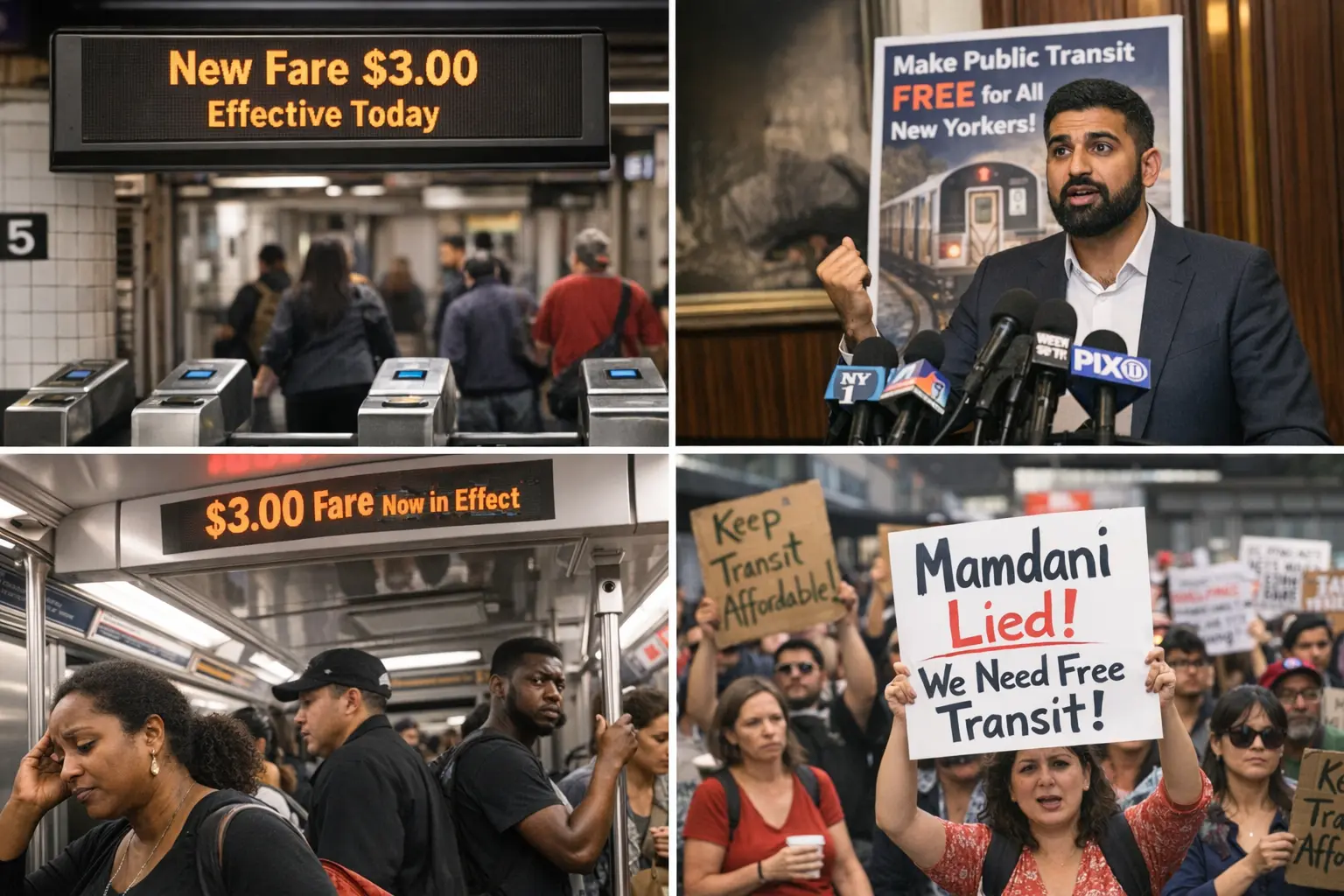
The sudden increase has reignited debates over affordability, transit equity, and the future of mass transportation in America’s largest city.
Subway Fare Increase Hits Riders Immediately
For millions of New Yorkers who rely on the subway system daily, the fare increase represents yet another financial burden amid rising living costs. The move from the previous fare level to $3 per ride may seem modest on paper, but for low-income riders, students, seniors, and working-class families, the added expense quickly adds up over weeks and months.
Transit advocates argue that public transportation should be treated as an essential service, not a profit-driven system, especially in a city where many residents depend on it to get to work, school, and medical appointments.
A Direct Clash With Mayor Mamdani’s Promise
The fare hike has drawn particular scrutiny because Mayor Mamdani previously pledged to make public transit free or significantly more affordable. During his campaign, Mamdani positioned himself as a champion of economic justice, repeatedly emphasizing that free public transportation would reduce inequality, cut traffic congestion, and help combat climate change.
Critics now argue that the $3 subway fare directly contradicts that promise. Opponents accuse the mayor of failing to follow through on a central commitment, while supporters claim the decision reflects complex fiscal realities beyond the mayor’s sole control.
Who Controls Subway Fares in New York City?
While the mayor plays an influential role in shaping transportation policy, subway fares are ultimately set by the Metropolitan Transportation Authority (MTA), a state-run agency. The MTA has long argued that fare increases are necessary to maintain service levels, fund infrastructure upgrades, and address budget shortfalls.
According to transit officials, rising operational costs, inflation, labor expenses, and aging infrastructure have placed immense financial pressure on the system. Fare revenue remains a critical funding source, despite repeated calls for alternative financing models.
Public Reaction: Frustration and Anger
Reaction from the public has been swift and emotional. Social media platforms were flooded with posts criticizing the fare increase, with many riders expressing disappointment and frustration. Some commuters questioned how city leaders could justify higher fares while promising a more affordable and equitable transit system.
Transit unions and advocacy groups have also weighed in, warning that fare hikes may discourage ridership at a time when the city is still working to fully recover from post-pandemic declines in subway use.
Equity Concerns Take Center Stage
One of the most significant criticisms of the fare increase centers on equity. Advocates for low-income New Yorkers argue that higher fares disproportionately affect communities already struggling with housing costs, food insecurity, and healthcare expenses.
While programs such as reduced-fare MetroCards exist, critics say they do not go far enough. Many riders either do not qualify or face bureaucratic barriers when applying for assistance. As a result, the $3 fare is seen by some as a step backward in the fight for transportation justice.
Environmental and Economic Implications
Public transportation plays a key role in reducing carbon emissions and traffic congestion. Environmental advocates warn that raising subway fares could push more people toward driving, increasing pollution and undermining the city’s climate goals.
Economically, reliable and affordable transit is essential for workforce participation. Higher fares may limit job access for lower-income workers, particularly those who rely on multiple daily trips across boroughs.
City Hall Responds
In response to the backlash, City Hall officials have emphasized that the administration remains committed to long-term transit affordability. Supporters of Mayor Mamdani argue that while free public transit remains a goal, achieving it requires cooperation with state lawmakers and sustainable funding solutions.
They point to pilot programs, expanded fare discounts, and negotiations with the state government as evidence that progress is still being made, even if immediate fare elimination has not yet occurred.
Calls for Alternative Funding Solutions
The fare increase has intensified calls for alternative ways to fund New York City’s transit system. Proposals include congestion pricing, increased taxes on luxury real estate transactions, corporate contributions, and expanded state and federal funding.
Advocates argue that shifting the financial burden away from riders would better align with the mayor’s vision and reduce inequality across the city.
What Happens Next?
As the $3 subway fare takes effect, pressure is mounting on city and state leaders to explain the decision and outline a clear path forward. Public hearings, protests, and policy debates are expected in the coming weeks as commuters demand accountability.
For now, New Yorkers are left grappling with higher fares and unanswered questions about the future of public transit. Whether Mayor Mamdani can reconcile this decision with his promise of free transportation remains to be seen—but the controversy has already reshaped the conversation around affordability, governance, and trust in city leadership.
One thing is certain: the subway fare increase has struck a nerve, and the debate over who should pay for public transportation in New York City is far from over.