Minnesota politics may be on the brink of a major shift as a breaking report indicates that Governor Tim Walz is expected to announce on Monday that he is dropping out of the 2026 gubernatorial race. The report, attributed to respected political insider Blois Olson, has quickly spread across political circles, media outlets, and social platforms, triggering intense speculation about the future of Minnesota’s political landscape.
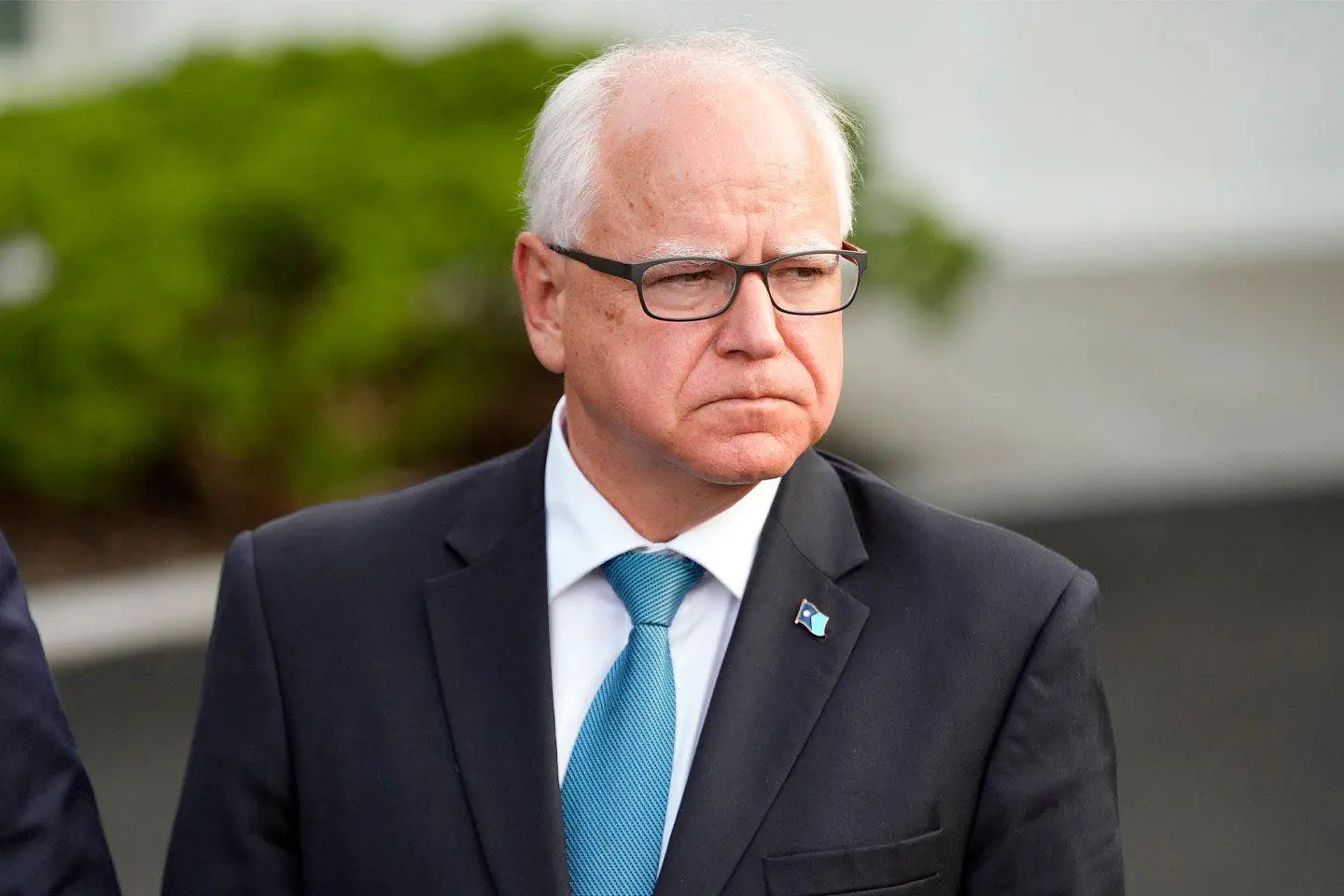
If confirmed, Walz’s decision would mark the end of a significant chapter in Minnesota Democratic–Farmer–Labor (DFL) leadership and open the door to a highly competitive and unpredictable 2026 race.
Breaking News Shakes Minnesota Politics
According to Blois Olson, a long-time Minnesota political analyst with deep connections inside state government and campaign networks, Governor Walz is preparing to step aside rather than seek another term.
While no official statement has yet been released by the governor’s office, the report has been treated seriously by political observers due to Olson’s track record of accurate insider reporting.
The expected announcement comes amid growing scrutiny of Walz’s administration, including ongoing debates over budget priorities, public safety, education funding, and the performance of major state agencies.
Tim Walz’s Political Career in Context
Tim Walz has been a central figure in Minnesota politics for over a decade. Before becoming governor, he served multiple terms in the U.S. House of Representatives, representing southern Minnesota.
Elected governor in 2018 and reelected in 2022, Walz positioned himself as a pragmatic Democrat focused on healthcare access, education, labor rights, and social programs.
During his tenure, Walz oversaw significant legislative changes, particularly after Democrats gained control of the state legislature. Supporters credit him with advancing progressive priorities, while critics argue that his administration struggled with implementation, oversight, and fiscal discipline.
Why Walz May Be Stepping Aside
Political analysts point to several possible factors behind Walz’s reported decision to exit the 2026 gubernatorial race. First, incumbency fatigue may be setting in, both among voters and within the governor’s own political coalition. After multiple election cycles, long-serving governors often face diminishing enthusiasm and heightened opposition.
Second, recent controversies and audits involving state agencies have placed Walz’s administration under increased scrutiny. While the governor has not been personally accused of wrongdoing, critics argue that leadership ultimately bears responsibility for systemic failures within state government.
Third, national political considerations may also be at play. Some observers speculate that Walz could be positioning himself for a federal appointment, a role within a future Democratic administration, or a return to private life after years in public service.
Impact on the 2026 Gubernatorial Race
If Governor Walz formally announces his withdrawal, the 2026 Minnesota gubernatorial race will instantly become one of the most closely watched state elections in the country. An open-seat race dramatically changes the dynamics for both major parties.
For Democrats, Walz’s exit would trigger a competitive primary, with multiple high-profile candidates likely to step forward. Potential contenders could include statewide officeholders, legislators, and rising figures within the DFL coalition.
Republicans, meanwhile, would see a major opportunity to reclaim the governor’s office. GOP strategists have long argued that an open race, rather than running against an incumbent, significantly improves their chances in a state that has become increasingly competitive in recent elections.
Reaction From Political Insiders and Lawmakers
Following Blois Olson’s report, reactions from political insiders have ranged from cautious confirmation to outright surprise. Some lawmakers privately acknowledged that rumors of Walz stepping aside have circulated for months, while others said the timing of the expected announcement caught them off guard.
Public responses from elected officials have been measured, with most declining to comment until the governor makes an official statement. However, behind the scenes, campaign operatives are already assessing potential strategies and recalibrating plans for 2026.
What This Means for Walz’s Legacy
Should Tim Walz indeed drop out of the 2026 race, attention will quickly turn to how his governorship will be remembered. Supporters emphasize landmark legislation on paid family leave, climate policy, and education investment. They argue that Walz governed during unprecedented challenges, including the COVID-19 pandemic and economic disruptions.
Critics, however, highlight concerns about government accountability, rising costs of living, and perceived mismanagement within state agencies. These contrasting narratives are likely to shape both historical assessments of Walz’s tenure and the messaging used by future candidates.
Voter Sentiment and Public Trust
The report also raises questions about voter sentiment in Minnesota. Polling over the past year has shown mixed approval ratings for the governor, reflecting broader national trends of dissatisfaction with political leadership across party lines.
An open gubernatorial race could energize voters who feel disengaged, while also increasing uncertainty about the direction of state policy. Issues such as public safety, housing affordability, transportation, and government transparency are expected to dominate the 2026 campaign.
Waiting for the Official Announcement
As of now, the governor’s office has not confirmed Blois Olson’s report. Political observers expect clarity on Monday, when Walz is reportedly set to address his future plans. Until then, speculation will continue to dominate headlines and political discussions throughout the state.
If confirmed, the announcement would mark a turning point in Minnesota politics and signal the start of an intense and high-stakes race to succeed Tim Walz.
Conclusion
The breaking report that Governor Tim Walz is expected to drop out of the 2026 gubernatorial race has sent shockwaves through Minnesota’s political community. Whether driven by political strategy, personal considerations, or broader shifts within the Democratic Party, the decision—if finalized—will reshape the state’s political future.
As Minnesotans await an official announcement, one thing is clear: the 2026 governor’s race is already taking shape, and the absence of an incumbent will ensure that it becomes one of the most consequential elections in recent state history.