Reports of a dramatic U.S. military operation in the North Sea are rapidly escalating global tensions, as American airborne forces allegedly boarded an oil tanker believed to be part of Russia’s so-called “shadow fleet,” despite heavy Russian naval protection.
A Rapidly Developing Situation in the North Sea
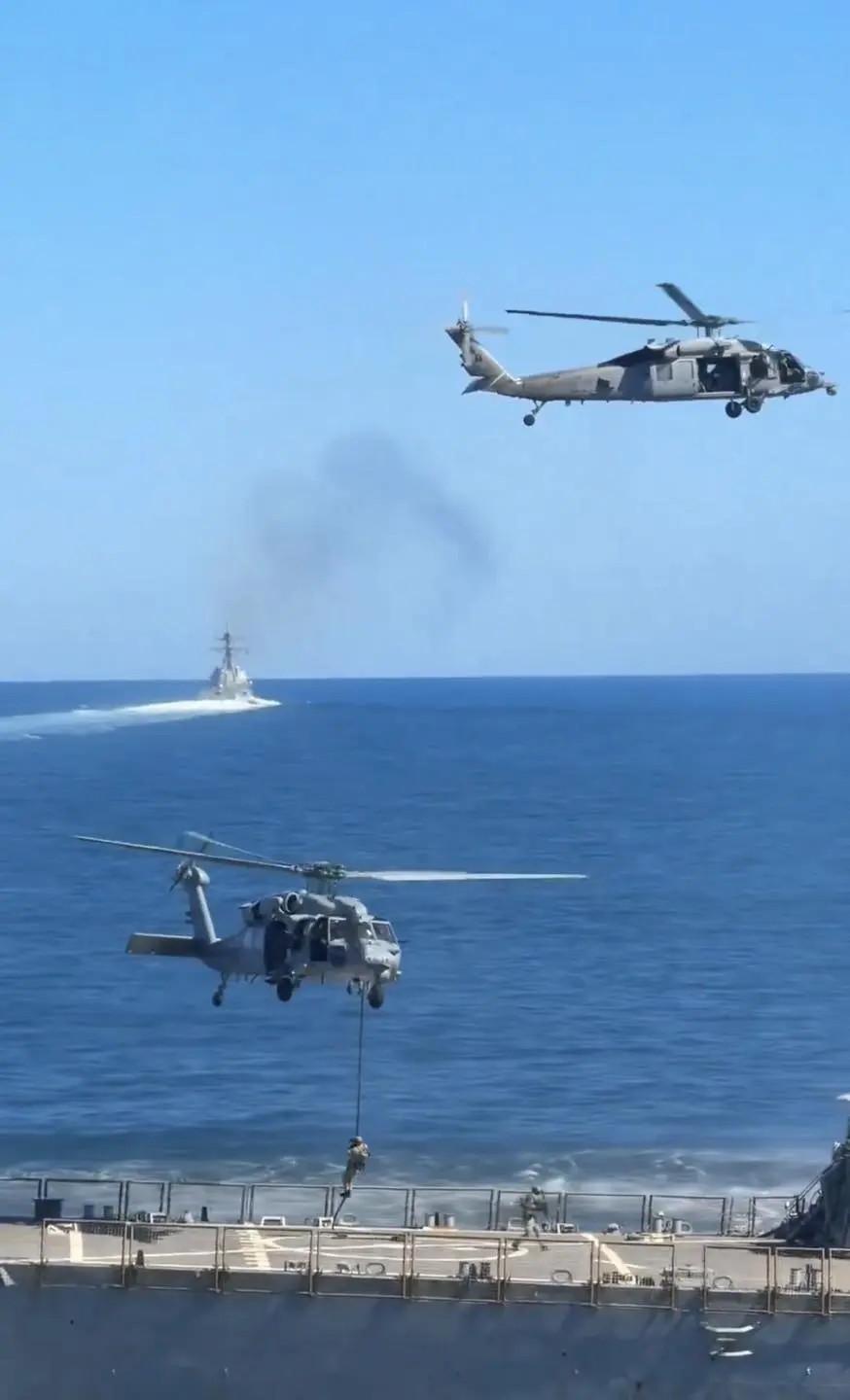
According to multiple emerging reports, U.S. airborne forces began helicopter landings on the oil tanker Bella 1 just minutes ago, even as Russia had reportedly deployed a submarine and several warships to protect the vessel. The operation is said to be unfolding in the North Sea, a region already strained by heightened NATO–Russia tensions.
While official confirmation remains limited at the time of writing, defense analysts describe the situation as one of the most serious maritime confrontations between U.S. and Russian interests in recent years. If verified, the boarding of Bella 1 would mark an unprecedented escalation involving Russia’s covert oil transportation network.
What Is the Bella 1 and Why Does It Matter?
The oil tanker Bella 1 is believed to be a renamed Venezuelan-registered vessel now operating under Russian flags, a tactic commonly associated with Russia’s alleged shadow fleet. This fleet reportedly consists of aging tankers that operate under false or frequently changed identities to bypass international sanctions on Russian oil exports.
Key characteristics often linked to shadow fleet vessels include:
Reflagging under multiple jurisdictionsOperating with limited or disabled tracking systemsTransferring oil ship-to-ship at seaTransporting sanctioned crude under false documentation
Western governments have repeatedly warned that such ships pose environmental, legal, and security risks, particularly in congested waterways like the North Sea.
U.S. Helicopter Boarding: A High-Risk Maneuver
Helicopter landings on a moving oil tanker represent a high-risk airborne assault operation, typically conducted only under extreme strategic necessity. Military experts note that such operations require:
Full air superiority or suppression of enemy defensesPrecise intelligence on crew, cargo, and onboard threatsTight coordination between air, naval, and intelligence assets
The reported involvement of U.S. airborne forces suggests that Washington views the situation as more than a routine maritime interdiction. The presence of Russian naval escorts—including a submarine—raises the stakes significantly.
Russian Naval Escort: A Signal of Escalation
Russia’s reported decision to deploy warships and a submarine to protect Bella 1 sends a clear geopolitical message. Analysts interpret this move as:
A declaration that Russia considers the tanker a strategic assetA warning to NATO against interference with Russian oil exportsA test of Western resolve in enforcing sanctions
Naval experts warn that even a minor miscalculation in such close-contact scenarios could lead to direct military confrontation between nuclear-armed powers.
The Shadow Fleet and Global Oil Politics
Russia’s shadow fleet has become a central issue in global energy geopolitics. Since the expansion of Western sanctions, Moscow has increasingly relied on alternative shipping networks to keep oil flowing to international markets.
Stopping or seizing a vessel like Bella 1 would have implications far beyond a single tanker, including:
Disrupting sanctioned oil supply chainsSetting a precedent for direct enforcement actions at seaForcing countries and companies to reassess involvement in gray-market oil trade
This is why the alleged U.S. operation is being closely watched by governments, energy markets, and military strategists worldwide.
Political Fallout and the Trump Factor
Adding another layer of complexity is the political narrative emerging in the United States. Commentators have framed the operation as part of a broader political gambit, suggesting it could place critics in a difficult position.
Some analysts argue that former President Donald Trump may leverage the situation to challenge political opponents, portraying them as soft on Russia if they oppose intervention against the shadow fleet. The narrative could force uncomfortable debates over whether stopping Russian oil shipments constitutes escalation or enforcement of international norms.
International Law and Maritime Enforcement
From a legal standpoint, the seizure or boarding of a foreign-flagged vessel on the high seas raises serious questions. Under international maritime law, such actions generally require:
Clear evidence of illegal activityAuthorization under sanctions enforcement mechanismsMultinational or UN-backed justification
If Bella 1 is indeed operating under false flags and carrying sanctioned oil, legal experts argue that enforcement actions could be justified—but only with transparent evidence and international coordination.
Market Reactions and Energy Security Concerns
News of the operation has already begun to ripple through energy and shipping circles. Even unconfirmed reports of a confrontation involving Russian oil exports can trigger:
Short-term oil price volatilityIncreased insurance premiums for tankersHesitation among shipping firms operating near conflict zones
The North Sea, critical for European energy security, is particularly sensitive to any disruption.
What Happens Next?
As the situation continues to unfold, several key questions remain unanswered:
Have U.S. forces successfully secured the Bella 1?How will Russia respond if the vessel is seized or diverted?Will NATO allies publicly support or distance themselves from the operation?
What is clear is that this incident—if confirmed—represents a major flashpoint in the ongoing struggle between Western sanctions enforcement and Russia’s efforts to maintain its oil exports.
Conclusion
The reported helicopter boarding of the oil tanker Bella 1 by U.S. airborne forces, despite Russian naval protection, marks a potentially historic moment in modern maritime conflict.
Whether this operation proves to be a limited enforcement action or the opening move in a broader confrontation will depend on decisions made in the coming hours and days.
For now, the world is watching the North Sea—where geopolitics, energy security, and military power have collided in dramatic fashion.