🚨 FAKE NARRATIVE JUST COLLAPSED — THE PHYSICAL EVIDENCE TELLS THE STORY 🚨
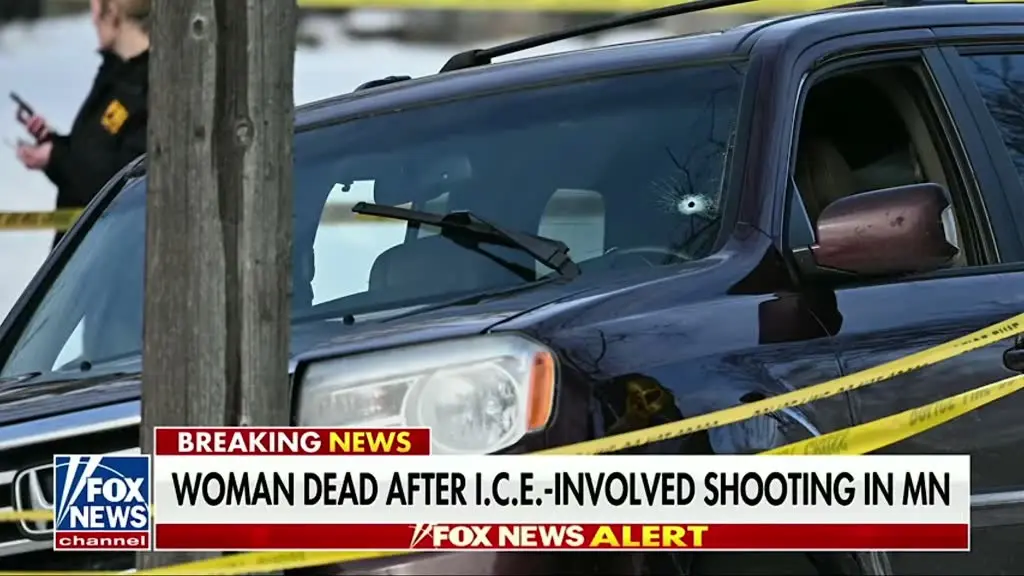
A shocking development in the Minneapolis ICE shooting has exposed a stark contrast between initial claims and physical evidence. For weeks, the narrative circulating online and in some media outlets suggested that an ICE agent fired through the driver’s side window during the operation that resulted in the death of Renee Nicole Good, 37. However, newly analyzed evidence clearly shows that the bullet struck the windshield, not the driver’s side window, fundamentally changing the understanding of what transpired.
This revelation has significant implications for law enforcement accountability, community safety, and the legal and political ramifications of federal immigration enforcement operations. In this article, we explore what the physical evidence reveals, how it contradicts previous narratives, and why it matters in the broader debate over ICE operations in American cities.
The Original Narrative
When news first broke of the fatal shooting, a dominant narrative quickly emerged: the ICE agent had allegedly fired through the driver’s side window, hitting the victim while the car was parked or moving slowly.
This narrative suggested that the officer acted in self-defense or precaution without imminent threat.Many social media posts, pundit commentaries, and even some news outlets amplified this version of events.Public perception was shaped by this narrative, influencing debates about law enforcement use of force and federal accountability.
However, as investigators and journalists obtained more evidence, critical details from the physical scene began to emerge, casting serious doubt on this story.
Physical Evidence: The Windshield
Forensic analysis and on-site investigations have now confirmed that the bullet penetrated the windshield, not the side window:
A windshield strike indicates a direct line of fire toward the ICE agent.This means the vehicle was moving toward the officer, consistent with witnesses reporting that the car made contact with the agent prior to the shooting.Forensic experts note that a bullet through the windshield often occurs in cases where a threat is actively advancing, not from a parked or stationary car scenario.
This piece of evidence is crucial because it reframes the context of the officer’s decision to use lethal force. Instead of firing through a side window at a perceived non-threatening situation, the ICE agent was responding to a vehicle being used as a weapon.
Implications of a Windshield Strike
Understanding the trajectory of the bullet and its point of entry matters for several reasons:
Threat Assessment – A windshield strike suggests that the agent was in the direct path of a moving vehicle, implying a legitimate immediate threat.Vehicle as a Weapon – The incident can now be classified as an attempted vehicular assault on a federal officer, which changes both legal interpretations and public opinion.Use-of-Force Justification – Officers are typically trained to respond with appropriate force when facing a direct threat. The windshield evidence supports the argument that the ICE agent’s response was defensive.
Experts emphasize that small details like the location of the bullet hole can drastically alter both the narrative and potential legal outcomes.
Witness Accounts Corroborate Evidence
Multiple witnesses in the residential neighborhood where the shooting occurred reported seeing the vehicle make contact with the ICE agent:
The car swiped the officer and ran over part of his foot.Witnesses confirmed that the ICE agent was limping immediately afterward, aligning with the physical evidence of the vehicle striking him.Earlier videos failed to capture this sequence clearly, which contributed to the spread of the inaccurate narrative.
These firsthand accounts, coupled with the forensic evidence, paint a picture of a sudden, dangerous encounter, rather than an unprovoked shooting.
Political and Community Reactions
The correction of the narrative has sparked a wave of discussion at local, state, and national levels:
Local Leaders – Mayor Jacob Frey and Minneapolis city officials continue to stress the importance of accountability while acknowledging the complexity of the situation. They emphasize that residents’ safety must remain the top priority during federal operations.State Government – Governor Tim Walz has reiterated the call for a full investigation, now considering the new evidence and its implications for officer conduct.Community Response – Some community members express relief that the agent may have faced a legitimate threat, while others remain concerned about federal agents operating in residential neighborhoods.
The incident continues to fuel discussions about sanctuary cities, federal authority, and appropriate use-of-force standards.
Legal Considerations
The windshield strike alters the legal analysis significantly:
Civil Liability – The ICE officer’s defense in civil court is strengthened because evidence shows the threat was immediate and potentially lethal.Criminal Charges – Prosecutors may consider that the officer acted under duress and in self-defense, making criminal charges less likely.Federal and Local Oversight – Minneapolis officials may still review whether ICE protocols for urban enforcement are adequate, but the agent’s actions may now be viewed as consistent with federal guidelines for responding to vehicle-based threats.
Legal experts caution that the new evidence does not automatically close the case; investigations into policy, procedure, and accountability are ongoing.
Broader Implications for ICE Operations
This revelation highlights several ongoing issues in federal immigration enforcement:
Operational Risks – ICE operations in populated urban areas carry inherent risks, including potential vehicle-based threats.Public Perception – Misreported narratives can influence public opinion, protest activity, and political debate, underlining the importance of accurate reporting and evidence-based assessment.Policy Reform – Incidents like this reinforce calls for better coordination between federal and local authorities to ensure community safety and transparent enforcement practices.
Nationally, the case serves as a reminder that physical evidence is often the most reliable indicator of what occurred, especially in high-stakes law enforcement situations.
Media and Narrative Management
The collapse of the original narrative demonstrates how misinformation can spread rapidly:
Initial reporting suggested side-window shooting, which framed the incident as potentially excessive or unjustified.Social media amplification and speculation fueled outrage before full evidence was analyzed.Now, with the bullet hole confirmed in the windshield, media coverage and public discourse are shifting to contextualizing the threat faced by the officer.
Analysts emphasize that careful, evidence-based reporting is essential to maintain trust between law enforcement, media, and the public.
Conclusion
The Minneapolis ICE shooting and the newly clarified physical evidence dramatically change the narrative surrounding the tragic death of Renee Nicole Good.
With the bullet confirmed to have struck the windshield, it is clear that the ICE officer faced a direct threat from the vehicle, framing the use of lethal force as a response to immediate danger rather than an unprovoked act.
While public debate over federal enforcement policies, community safety, and accountability continues, this case highlights the critical importance of physical evidence in determining the truth. The incident is now shaping discussions about ICE operations, use-of-force protocols, and how law enforcement balances enforcement with public safety in densely populated urban areas.