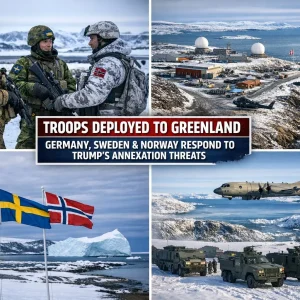
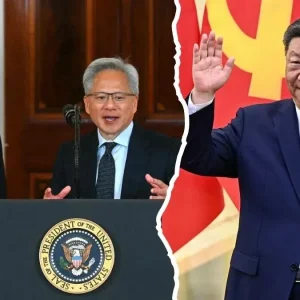
Reports circulating across international media and diplomatic circles indicate that Denmark has issued a strong warning regarding Greenland, stating it would respond decisively if United States military forces were to move toward an invasion of the autonomous territory. According to the reports, Danish officials conveyed that any unauthorized military action against Greenland would be treated as a hostile act, prompting an immediate defensive response.

While no official confirmation has been released detailing the exact wording of the warning, sources familiar with diplomatic communications say the message has now reached U.S. authorities, escalating attention around one of the Arctic region’s most strategically sensitive territories.
Greenland’s strategic importance fuels tensions
Greenland, an autonomous territory within the Kingdom of Denmark, has become increasingly central to global geopolitics due to its strategic location, vast natural resources, and growing military significance in the Arctic. As climate change opens new shipping routes and access to minerals, major powers have intensified their interest in the region.
The United States already maintains a military presence at Pituffik Space Base (formerly Thule Air Base), a key component of U.S. missile defense and space surveillance systems. Any suggestion of expanded military control or unilateral action, however, touches directly on Danish sovereignty and international law.
Danish officials have repeatedly emphasized that Greenland is not for sale, not negotiable, and not subject to foreign military occupation outside existing agreements.
Denmark’s reported warning and its implications
According to the reports, Denmark’s warning was intended as a clear deterrent rather than an escalation. The message reportedly underscored that Greenland’s defense falls under Denmark’s responsibility and that Copenhagen would act swiftly to protect its territory if sovereignty were threatened.
The phrase “shoot first and ask questions later,” widely circulated online, has not been officially confirmed and may reflect paraphrasing rather than a direct quote. Analysts caution that such language, while dramatic, is often amplified in breaking-news environments and may not represent formal diplomatic phrasing.
Nevertheless, the warning itself—if accurately reported—signals Denmark’s intent to draw firm red lines regarding Greenland.
How the message reportedly reached the United States
Sources suggest the warning was delivered through diplomatic channels, possibly involving NATO frameworks or direct communications between defense officials. Denmark and the United States are longstanding allies, making the reported warning all the more notable.
U.S. officials have not publicly responded to the reports, and there is no indication that Washington has plans to invade or seize Greenland. Experts stress that the scenario described is highly unlikely and that the warning may be preemptive, aimed at preventing misinterpretation of military movements or strategic discussions.
Still, the fact that such a message was reportedly deemed necessary reflects heightened sensitivity around Arctic security.
NATO dynamics and alliance tensions
Both Denmark and the United States are members of NATO, which complicates the narrative of any potential military confrontation. Under NATO’s collective defense principles, conflict between member states would represent an unprecedented crisis for the alliance.
Security analysts argue that Denmark’s reported warning should be viewed as internal alliance signaling rather than a threat aimed at provoking confrontation. By making its position unmistakably clear, Denmark may be seeking to ensure that all future U.S. actions involving Greenland remain firmly within agreed-upon legal and diplomatic frameworks.
Greenland’s position and local sentiment
Greenland’s government has consistently emphasized its right to self-determination and has resisted external pressure from any foreign power. Local leaders have expressed concern about becoming a focal point for great-power competition without adequate consultation or consent.
While Greenland cooperates closely with both Denmark and the United States on defense matters, any suggestion of expanded military control without Greenlandic approval has historically met resistance.
Observers note that Greenland’s voice is increasingly important in shaping Arctic policy and security decisions.
Online reaction and information warfare concerns
The reported warning sparked intense reaction across social media platforms, where narratives ranging from imminent conflict to exaggerated invasion scenarios spread rapidly. Experts warn that misinformation and sensational headlines can distort public understanding of complex diplomatic issues.
Information warfare analysts note that Arctic geopolitics is a frequent target for exaggeration and strategic messaging, particularly as global powers compete for influence in the region.
As a result, analysts urge caution in interpreting breaking claims until corroborated by official statements.
What officials are saying—and not saying
As of now, neither Denmark’s Ministry of Defense nor the U.S. Department of Defense has issued a detailed public statement confirming the reported warning. Silence, analysts say, does not necessarily indicate denial but may reflect efforts to manage the situation quietly through diplomatic channels.
Historically, both governments have favored private dialogue over public confrontation, especially on sensitive defense matters involving allies.
Broader implications for Arctic security
The incident highlights growing tensions in the Arctic, where military activity, resource competition, and climate change are reshaping global strategy. While the idea of a U.S. invasion of Greenland remains speculative, the strong reaction attributed to Denmark underscores how seriously sovereignty and security are being treated in the region.
Experts predict increased diplomatic engagement, clearer defense agreements, and stronger emphasis on Arctic governance frameworks in the months ahead.
Conclusion
Reports that Denmark issued a major warning regarding Greenland—stating it would respond militarily to any unauthorized U.S. troop movement—have drawn global attention and sparked intense debate.
While the claims remain unconfirmed and likely amplified by breaking-news dynamics, they reflect the growing strategic importance of Greenland and the Arctic as a whole.
As the message reportedly reaches Washington, analysts expect cooler heads and diplomatic channels to prevail. Still, the episode serves as a reminder that even among allies, clear communication and respect for sovereignty remain essential in an increasingly complex global security environment.