In a breaking news development, the ICE agent who shot and killed 37‑year‑old Renee Nicole Good in broad daylight in Minneapolis has been publicly identified as Jonathan Ross by the Minnesota Star Tribune. This revelation has sparked immediate nationwide outrage, renewed calls for justice and accountability, and a heated debate over the role and conduct of federal law enforcement officers in immigration enforcement operations.
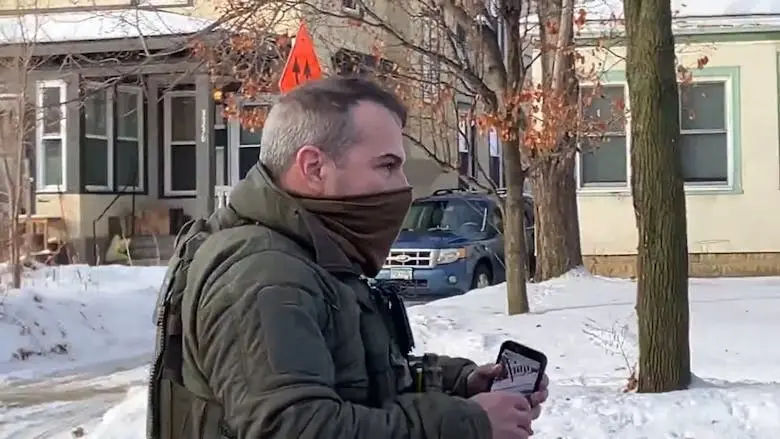
The tragic death of Good, a mother of three, occurred during an enforcement action in south Minneapolis on January 7, 2026. Since then, the public has demanded clarity, transparency, and accountability — a demand that has only intensified following the release of Ross’s identity.
Who Is Jonathan Ross?
According to local media reporting, Jonathan Ross is an ICE officer with more than a decade of experience, including service on the agency’s Enforcement and Removal Operations special response team. Ross’s name surfaced based on court records and investigative reporting after several social media users attempted to identify the masked agent shown in bystander video footage of the shooting.
Before the Minneapolis incident, Ross was reportedly injured in a separate 2025 enforcement action when a suspect dragged him with a vehicle for more than 100 feet. His history in high‑risk operations has been cited by federal officials in defense of his conduct, though critics argue that such incidents should further raise questions about training and judgment.
Despite the identification of Ross’s name by the Star Tribune and other outlets such as People magazine, government agencies including the Department of Homeland Security have not officially released his identity. The FBI has taken over the Minneapolis investigation, and state investigators have reportedly been denied access to evidence.
The Incident That Took Her Life
On January 7, 2026, Renee Good was shot and killed during an immigration enforcement operation where multiple ICE agents were present on a Minneapolis street near Portland Avenue. According to eyewitnesses and local reports, Good attempted to leave the scene in her SUV when an agent — later identified as Jonathan Ross — fired multiple shots, fatally striking her.
While federal officials initially claimed Good posed a threat to officers, local leaders and eyewitnesses have contested that narrative, with video evidence showing conflicting commands given to Good and subsequent chaotic moments before she was shot.
Good’s family and supporters say she had just dropped her young child off at school minutes before the encounter, underscoring the tragedy of the loss of her life.
Public Outrage and Calls for Accountability
The identification of Jonathan Ross has intensified public reaction. Protesters in Minneapolis and across the United States have demanded justice for Renee Good, calling for criminal charges against the ICE agent who shot her. Many activists and civil rights groups argue that Ross should be indicted for the killing, citing what they describe as an unjustified use of lethal force against a woman who posed no clear threat.
Locally, leaders including Minneapolis Mayor Jacob Frey and Minnesota Governor Tim Walz have condemned the shooting and questioned the federal handling of the investigation. Even as federal officials defend the actions of ICE agents, critics argue that the shooting reflects a broader systemic failure in federal immigration enforcement tactics.
There have also been protests criticizing federal law enforcement’s role within Minneapolis following historic policing controversies, including comparisons to past police violence in the city.
Federal Response: Defense and Denials
Meanwhile, the federal government has issued statements defending the actions of ICE agents in Minneapolis, including Jonathan Ross. Department of Homeland Security leadership has emphasized that officers were acting within their training parameters, and Vice President JD Vance has publicly supported the agent’s actions, suggesting the prior injury Ross suffered may have influenced his reaction during the January 7 incident.
The administration’s narrative has framed the shooting as a tragic outcome of a dangerous crowd environment and the alleged vehicle movements during the encounter. However, local leaders and use‑of‑force experts have sharply disputed these claims, underscoring discrepancies between official accounts and bystander video footage.
Legal and Constitutional Issues at Play
The case raises complex legal and constitutional questions, including:
The scope of authority for federal law enforcement agents to use lethal force during immigration enforcement actions, especially in urban civilian settings.Whether state or local prosecutors can indict federal agents for violence that occurs during the execution of federal duties.The obligation of national agencies to cooperate with state law enforcement investigations, especially after such high‑profile fatal incidents.
Under federal statutes and longstanding legal precedent, federal agents generally enjoy certain immunities for actions taken in the line of duty. However, many legal scholars argue that immunity should not be absolute and that accountability mechanisms — including criminal indictments — must apply if excessive force is evident.
The Minnesota attorney general and other state legal authorities have raised concerns about being excluded from the investigatory process by federal authorities — an unusual dynamic that has fueled further skepticism of federal transparency.
The Role of Media and Misinformation
Since the day of the incident, social media has played a major role in spreading both verified and unverified information. Attempts to identify the shooter quickly went viral, and some AI‑generated images falsely claimed to reveal the officer’s identity, leading to confusion and misdirected outrage. Fact‑checking organizations have clarified that many of these images and claims were not factual.
Despite misinformation attempts, reputable outlets such as Minnesota Star Tribune and People have reported that Jonathan Ross is the agent involved. Still, authorities have not made a formal statement confirming the name.
Why Today Feels Pivotal
For many advocates and Good’s supporters, the identification of Jonathan Ross feels like a crucial step toward justice — even though no charges have yet been filed.
The discomfort with federal investigators leading the inquiry and blocking local involvement has bolstered demands that Ross should face criminal indictment and that the Department of Homeland Security be held accountable.
The grassroots movement pushing for accountability now sees the naming of Jonathan Ross as a rallying point for broader calls for transparency, legal consequences, and reform of federal immigration enforcement policies.
Conclusion: A Community Demanding Answers
The tragic death of Renee Good and the identification of Jonathan Ross as the ICE agent involved have transformed this incident from a local tragedy into a national flashpoint. The reaction from community leaders, civil rights organizations, and outraged citizens underscores a deep‑seated desire for justice, accountability, and systemic change.
Whether Jonathan Ross will be indicted and held accountable in a court of law remains uncertain — but for many, today indeed feels like a pivotal moment in the ongoing struggle to hold powerful institutions and their agents accountable for their actions.
As the investigation continues, the world watches closely, demanding transparency, fairness, and justice for Renee Good and her family.