In early January 2026, the United States launched a major military operation in Venezuela, culminating in the capture of Venezuelan President Nicolás Maduro and his wife. The mission — ordered by President Donald Trump — has prompted widespread international condemnation, claims of international law violations, and emerging calls for impeachment and even criminal prosecution of the president for breaches of both U.S. constitutional and international legal norms.
The legal controversy stems from whether the U.S. had any lawful justification — under the U.N. Charter, U.S. law, or customary international law — to use military force against a sovereign nation without clear authorization from the United Nations Security Council or Congress. Critics say the operation amounts to a serious breach of international law and potentially a federal offense, leading to renewed calls for accountability, including impeachment and prosecution under U.S. and international statutes.
What Happened: Trump’s Military Operation in Venezuela
On January 3, 2026, U.S. forces conducted airstrikes and ground operations in Venezuela’s capital, Caracas, under a mission reportedly codenamed Operation Absolute Resolve. Forces targeted various locations and seized President Nicolás Maduro and his wife, then transported them to the United States to face criminal charges.
According to international law experts, these actions included significant attacks on Venezuelan military and civilian areas, characterizing it as a military intervention without lawful basis. Professor Geoffrey Robertson and other legal scholars assert the U.S. strike violated Article 2(4) of the UN Charter — a core rule prohibiting the use of force against another sovereign state except in narrowly defined circumstances like self‑defense or with Security Council authorization.
The operation was justified publicly by the Trump administration as part of a broader campaign against “narco‑terrorism” and to enforce U.S. indictments against Maduro. However, critics argue that capturing a foreign head of state and using military force in this manner is internationally unlawful, especially since Venezuela had not attacked the United States and no Security Council mandate was sought.
International Legal Violations and Global Backlash
The legal implications of the U.S. strikes are severe. United Nations officials, including Secretary‑General António Guterres, expressed deep alarm at the escalation in Venezuela and indicated that the actions lacked a valid legal basis under the U.N. Charter.
Legal scholars have gone further, describing the U.S. operation as potentially constituting the “crime of aggression” — the gravest offense under international law. UN special rapporteurs and experts concluded that the forced removal of Maduro and the military assaults “amount to a grave, manifest and deliberate violation of the most fundamental principles of international law”, potentially destabilizing the region.
Many countries worldwide condemned the U.S. operation. Latin American leaders from Brazil, Colombia, Mexico, and Cuba harshly criticized the intervention as illegal aggression and a threat to regional sovereignty. Other nations raised concerns at emergency sessions of the U.N. Security Council, with demands for respect for international legal norms.
Global civil society groups have echoed these diplomatic protests, labelling the U.S. action as a violation of the prohibition on the use of force and an affront to the international order structured after World War II.
U.S. Constitutional Issues: Congress vs. Presidential War Powers
Under the U.S. Constitution, only Congress has the authority to declare war. However, U.S. presidents have long engaged in military actions without formal declarations, relying on Commander in Chief powers. Critics of Trump’s action argue that this strike — especially given its broad scale — required congressional authorization under the War Powers Resolution and constitutional tradition.
Congressional Democrats and some Republicans have sharply criticized the Trump administration for not notifying Congress before the operation, raising constitutional concerns. They argue the president’s failure to secure prior consent or timely notification breaches domestic law and negates any legal basis for unilateral military action.
Calls are growing among lawmakers for articles of impeachment to be filed, asserting that Trump may have committed high crimes and misdemeanors by ordering an unauthorized attack on a sovereign state. Some legal experts and members of Congress argue that ignoring both constitutional and statutory requirements in matters of war powers could be grounds for impeachment.
International Law: Crime of Aggression and Sovereignty
Under international law, acts of aggression — such as invading a sovereign nation without lawful justification — are among the most serious offenses. The International Criminal Court (ICC) defines the “crime of aggression” as planning, initiating, or executing an act of aggression that constitutes a manifest violation of the U.N. Charter. While the U.S. is not a party to the ICC, this framework reflects global legal norms condemning such conduct.
Experts also note that capturing another nation’s elected leader by force challenges principles of national sovereignty and non‑intervention. This could expose individuals responsible to international scrutiny or legal claims in jurisdictions willing to assert universal jurisdiction for serious international crimes.
The Case for Impeachment and Criminal Charges
Supporters of impeachment argue that Trump’s actions not only breached international law but also violated domestic legal frameworks and constitutional safeguards. If Congress determines that the president willfully sidestepped its war powers authority, it could pursue impeachment — a political process that may lead to removal from office.
Beyond impeachment, some legal scholars have controversially suggested the possibility of criminal liability for unauthorized acts constituting international aggression. While U.S. presidents traditionally enjoy broad authority as Commander in Chief, knowingly violating both U.S. and international law might expose an individual to legal proceedings if they leave office — especially if domestic courts or international tribunals interpret the acts as crimes under applicable law.
Political Realities and Opposition
Despite growing calls for impeachment, political realities make such a process difficult. Republicans hold significant power in both chambers of Congress, and many support Trump’s Venezuela strategy. Even among some Democrats, strategic concerns about impeachment timing and priorities remain.
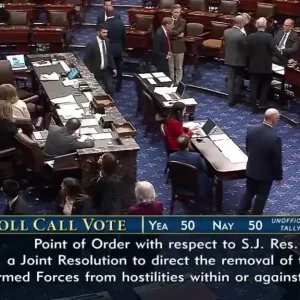
At the same time, the Senate recently advanced a War Powers Resolution aimed at limiting Trump’s ability to authorize further military action against Venezuela without congressional approval — reflecting bipartisan concern about executive military overreach.
Conclusion: A Legacy of Legal and Political Controversy
The U.S. strike on Venezuela and subsequent capture of President Maduro have generated severe legal and political controversy, both domestically and internationally. With scholars describing the actions as incompatible with international law and others arguing for constitutional violations at home, the debate over impeachment and legal accountability is intensifying.
Whether Congress will pursue impeachment or whether any legal proceedings may follow remains uncertain. What is undeniable, however, is that the actions in Venezuela have thrust questions of executive power, constitutional limits, and international legal responsibility into the center of global debate — with potential consequences for U.S. foreign policy and the international rule of law for years to come.