Updated: Latest developments in U.S.–Mexico cartel strategy and diplomatic response

In a major escalation of the United States’ longstanding effort to combat drug cartels, U.S. President Donald Trump has publicly announced that American forces may soon conduct land-based military strikes targeting drug cartel operations in Mexico. This shift comes after months of maritime anti-narcotics operations in the Pacific and Caribbean and has intensified debate over sovereignty, international law, and regional security.
Trump’s statements — made during a televised Fox News interview — mark one of the most overt suggestions yet that the U.S. is prepared to escalate its anti-cartel strategy beyond traditional law enforcement measures. In the interview, Trump said, “We are going to start now hitting land with regard to the cartels. The cartels are running Mexico…”, signaling a willingness to use military force if necessary to dismantle narcotics networks perceived as a threat to U.S. security.
What Trump Actually Said — and What It Might Entail
According to multiple reports, Trump’s comments did not explicitly state that the U.S. will “launch bombing operations inside Mexico” as an imminent action, but rather that land-based military action against cartels is being considered and signaled as a policy direction. In the Fox News interview, Trump described cartel influence in Mexico as extensive and claimed that cartel-related drugs are responsible for significant deaths in the United States, although independent data on those figures vary. He urged Mexico to allow U.S. forces to operate on Mexican soil, a request that has been firmly rejected by Mexican leaders.
It’s important to note that while Trump’s remarks suggest a push toward military engagement, no formal U.S. military invasion or bombing campaign inside Mexico has been officially announced with deployment orders or detailed plans from the Pentagon at this time based on current reporting.
Mexico’s Response: Sovereignty and Cooperation
The prospect of U.S. Forces potentially operating inside Mexican territory has drawn swift and strong responses from the Mexican government. Mexican President Claudia Sheinbaum has publicly rejected proposals for U.S. military intervention, emphasizing that Mexico’s sovereignty must be respected and that any anti-cartel efforts should be coordinated, not imposed. Sheinbaum has called for closer security cooperation with the United States but has made clear that Mexico will not permit unilateral U.S. action on its soil.
In a press conference, Sheinbaum reiterated Mexico’s willingness to work with the U.S. on shared concerns — such as extraditions, intelligence sharing, and coordinated operations — while maintaining strict control over Mexican territory and policy decisions. Analysts also stress that Mexico’s situation differs significantly from scenarios where the U.S. has used military force abroad, such as the recent military operation in Venezuela. Diplomatic channels remain open, but Mexico’s firm stance on sovereignty presents clear limits on any unilateral U.S. military involvement.
Historical Context: Trump’s Cartel Strategy
The Trump administration’s tough stance on drug cartels is not entirely new. Since returning to the White House, President Trump has taken several steps to intensify the U.S. approach:
Designation of major drug cartels as foreign terrorist organizations, giving them a status similar to groups like ISIS or al-Qaeda in some policy frameworks.Aggressive maritime operations targeting drug-trafficking vessels in the Caribbean Sea and eastern Pacific Ocean.Increased pressure on Mexican authorities to agree to U.S. assistance and cooperation in combating cartel networks.
These actions reflect a broader shift from traditional law enforcement collaboration toward a harder line that, if implemented, could blur the line between law enforcement and military engagement.
Legal and Political Implications
The idea of using U.S. armed forces on foreign soil without explicit invitation raises significant legal and diplomatic questions. Under international law, military action in another sovereign nation typically requires consent from that nation or a UN mandate — neither of which appears to be in place for operations inside Mexico.
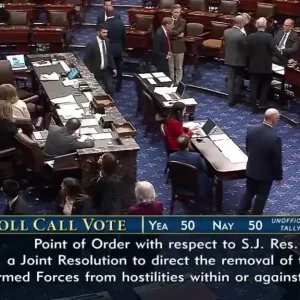
Domestically, U.S. lawmakers have also debated the role of executive power in authorizing foreign combat operations without Congressional approval. Some legislators have introduced resolutions aimed at limiting or clarifying war powers when it comes to extended anti-crime actions abroad.
In Mexico, Sheinbaum’s rejection of U.S. military intervention has tempered speculation about an invasion scenario, but it highlights the diplomatic balancing act required to address transnational cartel violence while preserving national sovereignty.
Impact on U.S.–Mexico Relations
The cartels operate across borders, and bilateral law enforcement cooperation has historically been a critical tool for disrupting trafficking networks. Mexico has participated in extraditions, intelligence exchanges, and joint task forces with U.S. authorities aimed at cartel leaders.
However, the recent rhetoric about military land strikes has put those cooperative efforts under strain. Mexican leaders are concerned that security cooperation could be overshadowed by geopolitical tensions if Washington pursues harder military options.
U.S.–Mexico trade relations and border operations could also be affected, especially if the Mexican public perceives U.S. policy as aggressive or threatening to national autonomy.
What Comes Next?
At this stage, President Trump’s statements represent a policy direction and rhetorical escalation rather than a confirmed operational blueprint. It remains unclear whether the U.S. will proceed with actual military strikes inside Mexican territory or continue with other tools such as:
Increased law enforcement cooperationTargeted operations with Mexican consentDiplomatic pressure and sanctionsEnhanced financial counter-narcotics measures
Mexico’s firm rejection of military intervention, combined with legal and diplomatic constraints, suggests that a full-scale military campaign is not imminent as of the most recent reporting.
Nevertheless, Trump’s comments have already influenced regional security discussions, raised public awareness of cartel violence, and sparked debate about the limits of U.S. military power in foreign affairs.
Conclusion
The idea of U.S. military land strikes against Mexican drug cartels — while promoted by President Trump as part of a broader anti-narcotics strategy — remains controversial and diplomatically fraught. Without explicit authorization from the Mexican government, international bodies, or clear legal frameworks, any such action would face significant barriers.
As leaders on both sides of the border continue to respond, the world will be watching closely to see whether the rhetoric results in meaningful cooperative actions, escalated tensions, or a re-evaluation of how best to combat transnational crime in the Americas.