Lawmaker’s Statement Sparks Political Firestorm in Washington
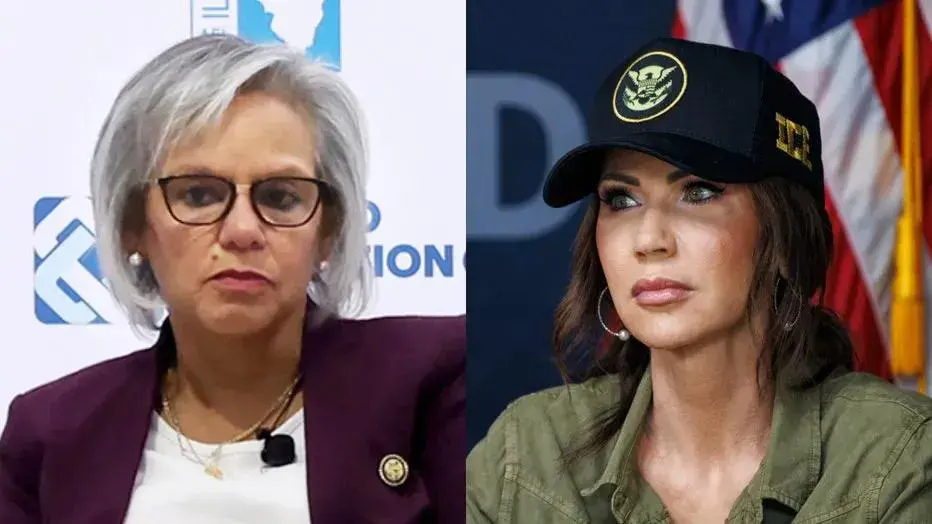
In a dramatic and controversial statement, Democratic Congresswoman Robin Kelly announced that she intends to pursue impeachment proceedings against Secretary Kristi Noem, declaring, “I am impeaching Secretary Kristi Noem — an incompetent leader unfit for democracy.” The remarks, made during a public appearance and quickly circulated online, have triggered intense debate across Washington and reignited broader discussions about accountability, executive leadership, and the growing use of impeachment as a political tool.
While the statement has drawn strong reactions from both parties, it is important to note that impeachment is a formal constitutional process that requires specific procedural steps and majority support in Congress. Kelly’s declaration represents a political initiative rather than a completed action.
Who Is Robin Kelly and Why Her Statement Matters
Congresswoman Robin Kelly, a Democrat representing Illinois, has long been active on issues related to governance, public accountability, and civil rights. Her announcement immediately drew national attention due to both the high-ranking position held by Kristi Noem and the unusually direct language used.
By publicly accusing a sitting Cabinet secretary of being “unfit for democracy,” Kelly escalated what had previously been policy disagreements into a constitutional confrontation. Political analysts say the move reflects rising tensions within Congress and an increasingly confrontational political climate.
The Target: Secretary Kristi Noem
Kristi Noem, a prominent Republican figure and Cabinet secretary, has been a polarizing presence in national politics. Supporters describe her as a strong conservative leader, while critics argue her leadership style and policy decisions raise serious concerns.
Congresswoman Kelly did not immediately release detailed articles of impeachment, but her statement suggests allegations related to leadership competence, governance standards, and democratic norms. As of now, Noem has not been convicted of any wrongdoing, and any impeachment effort would require formal charges and congressional debate.
Understanding the Impeachment Process
Impeachment of a Cabinet official is constitutionally possible but historically rare. The process begins in the House of Representatives, where articles of impeachment must be introduced and approved by a simple majority.
If passed, the process moves to the Senate, which conducts a trial. Conviction and removal from office require a two-thirds majority in the Senate—a high bar that makes successful impeachment difficult without bipartisan support.
Kelly’s announcement signals intent, but it does not guarantee that impeachment proceedings will move forward or succeed.
Democrats Frame the Issue as Accountability
Democratic allies of Kelly argue that impeachment is a legitimate constitutional mechanism designed to protect democratic institutions. They say her statement reflects deep concerns about leadership standards and the responsibilities of executive officials.
According to this view, impeachment is not about partisanship but about ensuring that high-ranking officials uphold democratic principles, competence, and public trust. Supporters argue that strong language is warranted when democratic norms are perceived to be at risk.
Republicans Push Back, Call the Move Political Theater
Republican lawmakers and conservative commentators quickly criticized Kelly’s statement, describing it as inflammatory and politically motivated. They argue that labeling a Cabinet secretary as “unfit for democracy” without presenting formal charges undermines the seriousness of impeachment.
Critics also warn that frequent impeachment threats risk normalizing a process that was intended to be extraordinary. From their perspective, Kelly’s remarks reflect broader political polarization rather than a legal or constitutional necessity.
The Broader Trend: Impeachment as a Political Tool
Kelly’s statement fits into a broader trend in American politics where impeachment has become more common in public discourse. Once considered a last resort, impeachment is now frequently discussed as a political strategy or warning.
Political scientists note that this shift has consequences. While it may increase accountability, it can also deepen partisan divisions and reduce public confidence in democratic institutions if overused or perceived as symbolic.
Public Reaction and Media Coverage
Public response to the announcement has been sharply divided. Supporters praise Kelly for what they see as moral clarity and courage, while opponents accuse her of reckless rhetoric.
Media coverage has focused heavily on the language used, the feasibility of impeachment, and the lack of immediate procedural follow-through. Many outlets emphasize that Kelly’s declaration does not automatically trigger impeachment proceedings, despite the dramatic framing.
On social media, the statement quickly trended, with hashtags both supporting and opposing the move gaining traction.
What Happens Next?
For impeachment efforts to advance, Kelly or her allies would need to:
Draft formal articles of impeachmentSecure committee reviewObtain majority support in the House
Without these steps, the announcement remains a political statement rather than a formal action. Congressional leadership has not yet indicated whether it will prioritize or support such proceedings.
Meanwhile, Secretary Noem and her allies are expected to respond more fully, potentially framing the situation as partisan overreach.
Implications for American Democracy
The controversy highlights a deeper issue: how impeachment is used and perceived in modern democracy. When accusations are framed in absolute terms—such as being “unfit for democracy”—they raise the stakes of political disagreement.
Supporters argue that strong language is necessary to defend democratic values. Critics counter that democracy depends on restraint, due process, and institutional stability.
Conclusion: A Moment That Reflects a Polarized Era
Congresswoman Robin Kelly’s declaration that she is impeaching Secretary Kristi Noem marks a significant moment in today’s political climate. Whether the effort advances or fades, the statement reflects growing polarization and the increasing use of impeachment as a political signal.
As the situation develops, the key question will be whether this announcement leads to formal action—or remains a symbolic flashpoint in America’s ongoing political battles.