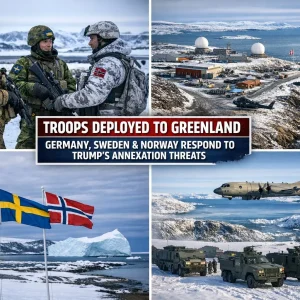
In an unprecedented political move, all five major political parties in Greenland have come together to issue a joint statement emphasizing national identity and sovereignty. The declaration, stating, “We don’t want to be Americans. We don’t want to be Danish.
We want to be Greenlanders,” highlights growing nationalist sentiment and the push for greater autonomy in the Arctic nation. This remarkable display of political unity signals a potential shift in Greenland’s domestic and foreign policy priorities, with far-reaching implications for international relations, economic development, and cultural preservation.
Greenland’s Political Landscape
Greenland, the world’s largest island, is an autonomous territory within the Kingdom of Denmark. Its political landscape is dominated by five major parties: Siumut, Inuit Ataqatigiit, Democrats, Partii Naleraq, and Atassut.
Historically, these parties have differed on key issues such as independence, economic development, and foreign investment, particularly in strategic sectors like mining and fisheries.
The joint statement represents a rare moment of unity across ideological lines, suggesting a shared commitment to reinforcing Greenlandic identity and pursuing policies that prioritize the nation’s long-term interests. It also reflects widespread public sentiment that Greenland’s future should be shaped by its people rather than external powers.
Assertion of Greenlandic Identity
The statement, “We don’t want to be Americans. We don’t want to be Danish. We want to be Greenlanders,” underscores a clear desire to assert Greenlandic identity in the face of foreign influence.
Historically, Greenland has maintained a complex relationship with Denmark, relying on Danish subsidies while gradually expanding local governance and autonomy.
Meanwhile, Greenland’s strategic location in the Arctic has attracted international interest, particularly from the United States, which maintains military and geopolitical interests in the region.
The political statement can be interpreted as a message to both Denmark and other foreign powers that Greenland seeks to chart its own path, guided by local priorities and cultural heritage.
Implications for U.S.-Greenland Relations
Greenland has long been a focal point for U.S. strategic interests in the Arctic, including defense and resource exploration.
The island’s political leadership has historically maintained close ties with Washington, occasionally sparking controversy, such as former President Donald Trump’s 2019 proposal to purchase Greenland—a suggestion firmly rejected by Danish and Greenlandic officials.
The joint statement from Greenland’s parties signals a nuanced shift: while Greenland may continue to engage economically and diplomatically with the United States, it also asserts that foreign involvement should not overshadow local governance or identity. For U.S.
policymakers, this may require careful diplomacy to maintain influence without provoking nationalist backlash.
Greenland-Denmark Relations
Denmark has exercised authority over Greenland for centuries, providing financial support and diplomatic representation. However, Greenland’s autonomy has steadily increased, culminating in the Self-Government Act of 2009, which granted the island control over most domestic affairs while retaining Denmark’s role in defense and foreign policy.
The recent statement reflects a growing sentiment among Greenlanders to assert further independence in shaping their political and economic future. It could signal calls for deeper sovereignty or eventual independence, potentially reshaping Denmark-Greenland relations and prompting discussions about financial arrangements, resource management, and governance.
Cultural Significance
Beyond politics, the statement is a profound affirmation of Greenlandic culture and heritage. Language, traditions, and local governance are central to the island’s identity, and there is increasing concern about preserving these elements amid globalization and foreign investment.
By emphasizing “We want to be Greenlanders,” the political parties signal that cultural preservation is as important as economic or strategic considerations.
The statement may also inspire civic engagement among Greenlanders, particularly youth, who increasingly advocate for policies that balance modernization with cultural continuity. Public education, media, and cultural institutions may play a central role in reinforcing this national identity.
Economic Implications
Greenland’s economy is heavily dependent on fishing, mining, and government subsidies, with emerging opportunities in tourism and energy. The push for a distinct Greenlandic identity could influence economic policy, prioritizing local control over resources and foreign investments.
Foreign investors, particularly from the U.S. and European countries, may need to navigate this sentiment carefully. Policies that align with Greenlandic interests, respect cultural priorities, and involve local stakeholders are likely to be more successful. Conversely, projects perceived as undermining local identity could face political resistance or social pushback.
Arctic Geopolitics and Strategic Considerations
Greenland’s geographic location makes it a critical player in Arctic geopolitics. The island is strategically important for military, shipping, and natural resource considerations.
With climate change opening new Arctic routes and access to minerals, Greenland’s political unity sends a clear message: while foreign engagement is welcome, sovereignty and local decision-making are non-negotiable.
This could have implications for regional security, international collaborations, and multinational projects in the Arctic. Countries with interests in the region, including the United States, Canada, and European nations, may need to recalibrate their strategies to respect Greenland’s assertion of self-determination.
Political Unity and National Consensus
The rare consensus among Greenland’s five major political parties reflects a broader national commitment to a shared vision. This unity could facilitate policy-making and accelerate initiatives that prioritize Greenlandic interests, from infrastructure development to environmental protection and education.
Moreover, this solidarity strengthens Greenland’s bargaining position in international negotiations. A unified political front ensures that Greenlandic priorities are represented consistently, whether in dealings with Denmark, the United States, or multinational corporations.
International Response
The international community is likely to view Greenland’s joint political statement with interest. Observers in Denmark, the U.S., and Europe will assess how this assertion of identity impacts economic, diplomatic, and strategic relationships.
Multilateral institutions may also take note, particularly as Arctic governance and climate change policy become increasingly important on the global stage.
While some nations may perceive Greenland’s statement as a nationalist assertion, others may view it as a legitimate expression of self-determination. How Greenland balances these perspectives will be crucial in shaping its global partnerships.
Looking Ahead
Greenland’s declaration—“We don’t want to be Americans. We don’t want to be Danish. We want to be Greenlanders”—represents a pivotal moment in the island’s political evolution. It reflects a growing desire for autonomy, cultural preservation, and strategic self-determination.
In practical terms, this could translate into policy initiatives emphasizing local governance, economic independence, and protection of cultural heritage. It may also influence Greenland’s foreign relations, requiring careful diplomacy to maintain constructive engagement with Denmark, the United States, and other international partners.
For Greenlanders, the statement is more than political rhetoric—it is a reaffirmation of identity, pride, and a vision for the future. For the global community, it signals that Greenland is ready to assert its place as a distinct, sovereign actor in both Arctic and international affairs.
Conclusion
The joint statement from all five political parties in Greenland marks an extraordinary moment of political unity and national affirmation. By declaring, “We don’t want to be Americans. We don’t want to be Danish.
We want to be Greenlanders,” Greenland’s leaders send a clear message: the island’s future will be determined by its people, culture, and priorities.
This development has far-reaching implications for Greenland’s domestic policy, international relations, and strategic positioning in the Arctic. As the world watches, Greenland is making it clear that its identity, autonomy, and sovereignty will guide its path forward—an inspiring example of national unity in an increasingly complex global landscape.