In recent days, a political controversy has erupted in Washington following claims that Democratic Senator Elissa Slotkin is under criminal investigation for allegedly encouraging U.S. troops to disobey what she described as “illegal” orders from President Donald Trump. The developing situation has sparked intense debate across political, legal, and military circles, raising fundamental questions about civilian oversight of the armed forces, the definition of lawful orders, and the limits of political speech.
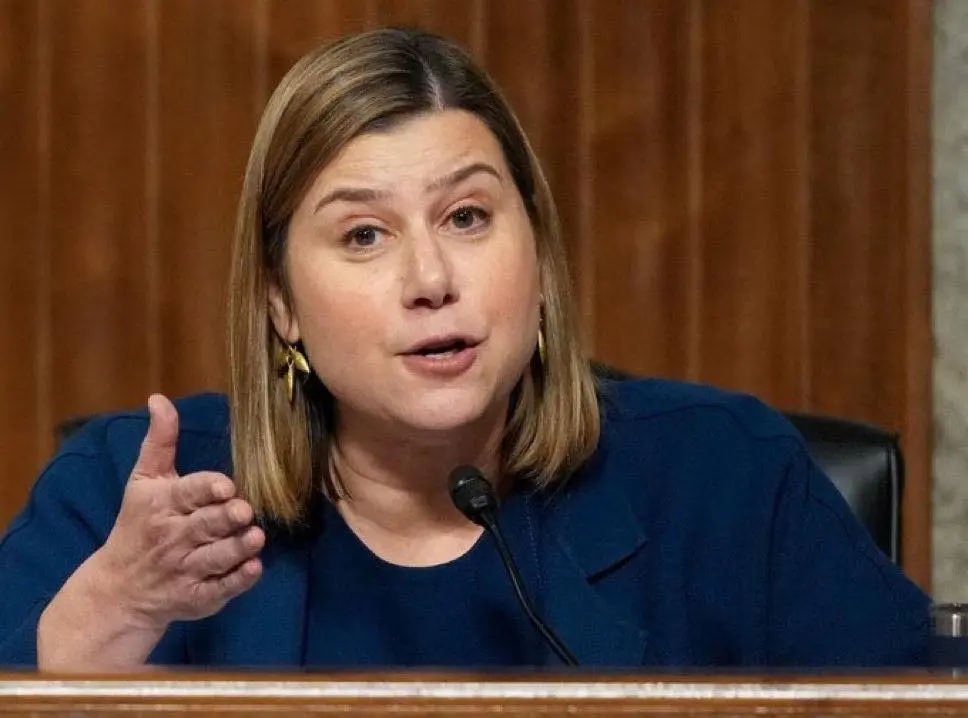
It is important to note from the outset that this issue remains highly contested. Public reporting and official confirmations are limited, and many aspects of the story are still unclear. Supporters and critics of Senator Slotkin are offering sharply different interpretations of her remarks and their legal implications.
Background on Senator Elissa Slotkin
Elissa Slotkin is a Democratic senator from Michigan and a former CIA analyst and Pentagon official. Her background in national security has been a central part of her political identity, often lending weight to her statements on military and defense issues. Throughout her career, Slotkin has emphasized the importance of the U.S. Constitution, the rule of law, and the obligation of service members to uphold both.
This background is now at the center of the controversy, as critics argue that her comments crossed a legal line, while supporters insist she was simply reiterating long-standing principles of military law.
The Alleged Statements
According to claims circulating in conservative media and on social platforms, Senator Slotkin told U.S. troops that they have a duty to refuse “illegal” orders from President Trump. Critics argue that such statements could undermine military discipline and civilian control of the armed forces, potentially violating federal law.
Supporters counter that U.S. service members are already legally obligated to refuse unlawful orders under the Uniform Code of Military Justice (UCMJ). From this perspective, Slotkin’s comments were not a call for insubordination, but a reminder of existing legal and ethical standards that govern military conduct.
Is There a Criminal Investigation?
The most explosive element of the story is the claim that Senator Slotkin is under criminal investigation. As of now, there has been no universally acknowledged public confirmation from the Department of Justice that a formal investigation is underway.
Legal experts caution that the term “under investigation” is often used loosely in political discourse and can range from a preliminary inquiry to a full criminal probe.
Without official documentation or statements from federal authorities, it remains uncertain whether any investigation exists, what its scope might be, or whether it could lead to formal charges. This uncertainty has not stopped the story from gaining traction, especially during an already polarized political climate.
Legal Context: Lawful vs. Unlawful Orders
Under U.S. military law, service members are required to obey lawful orders and are equally required to disobey unlawful ones. Orders that violate the Constitution, federal law, or international humanitarian law are considered illegal.
Legal scholars emphasize that discussing this principle in abstract terms is not inherently unlawful. However, issues can arise if a public official is perceived as directly encouraging troops to defy specific commands from the president, who serves as commander-in-chief.
The legal line between education and incitement is narrow and highly fact-dependent, which is why this controversy has drawn so much attention from constitutional lawyers.
Political Reactions
Republican lawmakers and conservative commentators have called for accountability, arguing that any suggestion for troops to disobey the president threatens national security. Some have demanded investigations, hearings, or even resignation if wrongdoing is proven.
Democrats and civil liberties advocates have pushed back, framing the situation as a political attack designed to silence dissent and intimidate officials who challenge presidential authority. They argue that reminding troops of their duty to the Constitution is not only legal, but essential.
Implications for Civil-Military Relations
Beyond the immediate political fallout, the controversy raises broader questions about civil-military relations in the United States. The armed forces depend on clear chains of command, but also on adherence to law and ethics. Public disputes between elected officials over military obedience risk eroding trust and clarity within the ranks.
Experts warn that politicizing military obedience could have long-term consequences, particularly if service members feel caught between competing political narratives.
Media and Public Response
The story has spread rapidly online, with headlines emphasizing its most dramatic elements. Supporters of President Trump see the situation as evidence of disrespect for the presidency, while critics view it as another example of political weaponization of the justice system.
Public opinion appears deeply divided, largely along partisan lines, highlighting the challenges of navigating complex legal issues in a polarized media environment.
Conclusion
The claim that Senator Elissa Slotkin is under criminal investigation for telling troops to disobey “illegal” orders from President Trump remains a developing and disputed story. While the legal principles surrounding unlawful orders are well established, whether Slotkin’s remarks crossed a legal boundary is far from settled.
As more information emerges, clarity from official sources will be essential. Until then, this controversy serves as a reminder of how fragile the balance is between political speech, military discipline, and constitutional responsibility in the United States.
For readers, the key takeaway is caution: separating verified facts from political rhetoric is crucial in understanding what may become a significant legal and political test in the months ahead.